

Ukrainian Air Force Fails to Intercept Kyiv Ballistic Missiles Amid Shortage
The Ukrainian Air Force reported it failed to intercept any of the 23 Russian ballistic missiles fired at Kyiv due to a serious shortage of interceptor missiles.
The attack involved 68 missiles and 351 strike drones, killing at least 13 people in Kyiv and six more in the surrounding region.
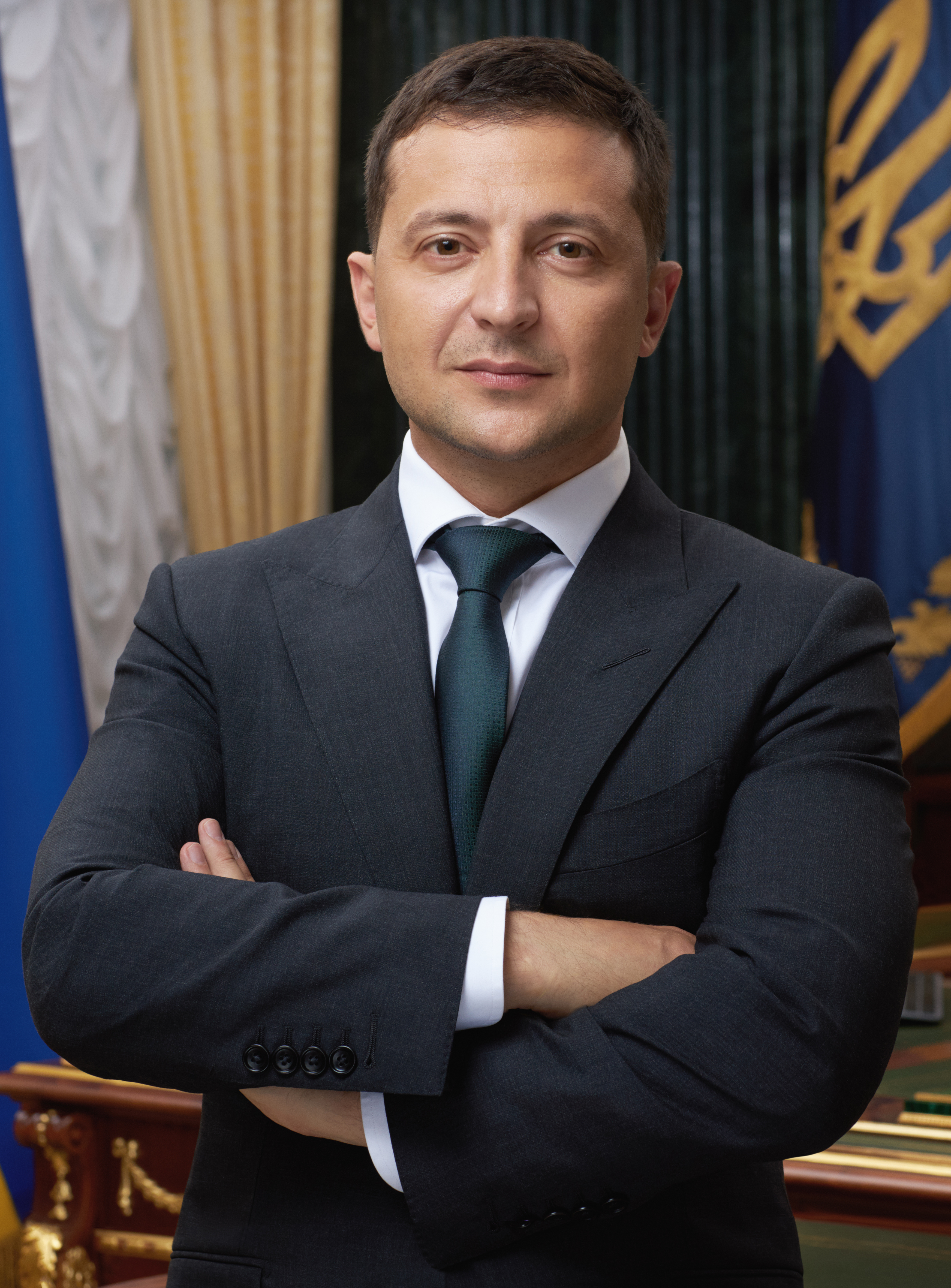
Ukrainian President Zelensky urged NATO allies to provide stronger air defenses at the upcoming summit to protect civilians.
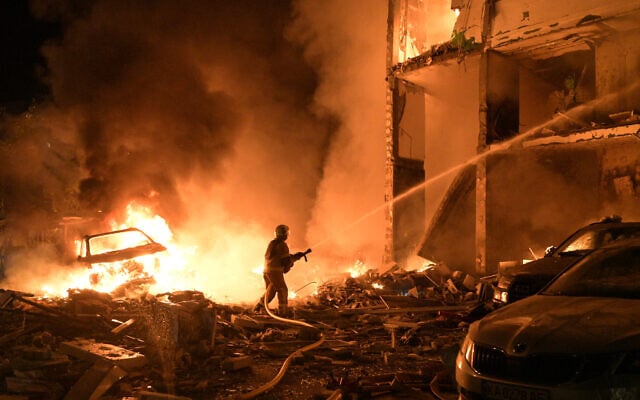
The missile strikes caused significant infrastructure damage, including partial collapse of residential buildings.
Ukrainian forces intercepted cruise missiles and drones but struggled against ballistic threats.
Ukrainian Air Force Reports Failure to Intercept Russian Ballistic Missiles in Kyiv Attack Due to Missile Shortage
The Ukrainian Air Force reported that a shortage of interceptor missiles prevented it from shooting down any of the 23 ballistic missiles Russia fired at Kyiv on Sunday night. This attack, part of a large-scale Russian offensive involving 68 missiles and 351 strike drones, resulted in at least 13 deaths in Kyiv and six more in the wider Kyiv region. Ukrainian President Volodymyr Zelensky has called on NATO allies to provide stronger air defenses during the upcoming summit to protect civilians.
Ingress
Russia launched a massive missile and drone strike against Kyiv, with none of the ballistic missiles intercepted due to Ukraine's lack of interceptor missiles. The attack caused significant casualties and property damage. Ukrainian President Zelensky urgently appealed for international support to bolster Kyiv's air defense systems. This incident highlights the ongoing challenge in defending against Russian missile attacks amid the seven-month conflict since Russia's full-scale invasion began in February 2022.
Key Points
- Russia fired 23 ballistic missiles at Kyiv; none were intercepted due to a "serious shortage" of interceptor missiles in Ukraine’s arsenal.
- The attack included a total of 68 missiles and 351 strike drones.
- At least 13 people were killed in Kyiv, with six additional deaths in the broader Kyiv region.
- Ukrainian forces successfully intercepted cruise missiles and drones but were unable to stop ballistic missiles.
- President Zelensky called on NATO allies to deliver strong air defense support at the upcoming summit.
- Significant infrastructure damage occurred, including partial collapse of three large residential blocks.
- Russian claims of territorial advances, particularly the seizure of Kostyantynivka, have been disputed by Ukrainian officials and independent assessments.
- Russia continues to face manpower and logistical challenges, including efforts to protect its energy infrastructure through mobile fire groups against Ukrainian drone strikes.
- Ukrainian forces maintain active counterattacks and continue strike campaigns targeting Russian military and energy infrastructure in occupied territories.
- The conflict remains intense with ongoing missile and drone attacks from both sides, while international diplomatic engagements continue.
Detailed Article
Russian Missile Strike on Kyiv and Ukrainian Air Defense Response
On the night of the missile strike, Russia launched 68 missiles and 351 drones against Ukraine, focusing heavily on Kyiv. Ukrainian Air Force reports indicated that 37 missiles and 326 drones were intercepted or suppressed, but none of the 23 ballistic missiles were stopped. The air defense shortage critically impacted Kyiv’s ability to protect its population and infrastructure from the more difficult-to-intercept ballistic threats.
The aftermath revealed widespread destruction, including partially collapsed residential buildings and numerous fires. Rescue efforts involved sniffer dogs and cranes removing rubble as officials searched for survivors. At least 13 deaths were confirmed in Kyiv with an additional six fatalities in the surrounding region. President Zelensky condemned the attacks and pressed NATO nations to supply Ukraine with Patriot missile systems to bolster defenses. He underscored the risk to civilians as long as allies hold these interceptors in stockpiles without transferring them to Ukraine.
Residents expressed fear and exhaustion after repeated attacks, with multiple people wounded and tens registering property losses. The psychological impact of the missile strikes compounded four years of wartime strain.
Disputed Russian Claims on Battlefield Advances
In parallel with military operations, Kremlin sources have propagated claims of significant Russian gains, especially concerning Kostyantynivka in Donetsk Oblast. Russian officials, including President Putin and Security Council Deputy Chair Dmitry Medvedev, asserted control over Kostyantynivka as a strategic victory, which they framed as paving the way for wider progress in Donbas.
These claims are contested by Ukrainian military authorities and independent analysts, who assert that Russian forces have infiltrated but not consolidated control in Kostyantynivka. Assertions that Ukraine refused Russian ceasefire proposals to facilitate casualty recovery are also viewed skeptically, seen as part of Russia’s strategic information campaign aiming to pressure Ukraine and sway Western perceptions ahead of diplomatic talks.
Ongoing Military Operations and Ukrainian Counterattacks
The intense fighting continues across multiple fronts:
- Northern and Eastern Ukraine: Russian offensives in Sumy and Kharkiv oblasts show minimal gains amid Ukrainian counterattacks.
- Donetsk Oblast: Russian forces focus on capturing the region and advancing into Dnipropetrovsk, with continued fighting around Kostyantynivka and Slovyansk.
- Southern Axis: Russian forces try to hold positions near Zaporizhzhia and advance toward key areas but face stiff Ukrainian resistance.
Ukraine maintains a robust drone and missile strike campaign targeting Russian military assets, ammunition depots, and energy infrastructure deep inside occupied territories, including Crimea and Kherson oblast. Ukrainian forces also inflict damage to logistical networks, impairing Russian troop movements and supply lines.
Russian Manpower and Defensive Challenges
Russia’s efforts to reinforce its military and protect critical rear infrastructure face significant challenges. The Russian state energy company Gazprom has partnered with the Defense Ministry to create "mobile fire groups" tasked with defending energy facilities from Ukrainian long-range drone attacks. These teams receive specialized training and compensation, operating while allowing members to maintain civilian employment.
Despite these efforts, ongoing Ukrainian strikes repeatedly damage Russian oil refineries and infrastructure, exacerbating an existing fuel crisis in Russia and occupied Ukraine.
Diplomatic Developments and International Support
The conflict's dynamics coincide with diplomatic maneuvers. President Zelensky is expected to meet US President Donald Trump on the sidelines of the NATO summit, emphasizing the urgent need for enhanced air defense aid. The European Commission President Ursula von der Leyen confirmed that Ukraine’s air defense needs will be a priority topic during the summit.
Russian information operations aim to influence Western policymakers by overstating battlefield successes and portraying Ukraine as an unwilling negotiation partner, particularly via short-term ceasefire offers they anticipate will be rejected.
Broader Conflict Implications
Since Russia's full-scale invasion in February 2022, the war has resulted in heavy military and civilian casualties and territorial disputes. Currently, Russia controls about one-fifth of Ukraine’s territory amid intense ongoing conflict.
The recent attacks and military engagements demonstrate the continued high intensity of this conflict phase, with missile and drone warfare increasingly important. Ukraine’s air defense shortages remain a critical vulnerability, underscoring the necessity for international support to counter Russian aggression effectively and protect civilian populations.
This summary covers the current military situation, operational challenges, humanitarian impact, and diplomatic context surrounding the recent Russian missile attack on Kyiv and ongoing conflict in Ukraine.
Questions and answers
Q: Why Ukraine failed to intercept Russian missiles in Kyiv
A: Ukraine's failure to intercept some Russian missiles in Kyiv can be attributed to several factors including the high volume and sophistication of the missile attacks, limitations in the quantity and capability of air defense systems, and potential intelligence or early warning challenges. Russian forces have utilized advanced hypersonic and cruise missiles designed to evade interception. Additionally, the wear and tear on Ukraine's defense infrastructure after prolonged conflict has strained their ability to respond effectively to every incoming threat.
Q: Impact of missile shortage on Ukrainian air defense
A: A shortage of missiles has significantly hampered Ukraine's air defense effectiveness by limiting the number of opportunities to engage and destroy incoming threats. This shortage forces Ukraine to prioritize targeting decisions and can leave critical assets and population centers vulnerable. It also increases reliance on older or less advanced systems and compels continuous international efforts to supply Ukraine with defensive missiles to maintain a robust shield against Russian attacks.
Q: Details of Russian missile attack on Kyiv
A: Russian missile attacks on Kyiv typically involve multiple high-speed missiles aimed at strategic infrastructure, military targets, and urban areas. These strikes often cause damage to buildings, disrupt utilities like electricity and water, and lead to civilian casualties. The attacks are part of Russia's broader strategy to undermine Ukraine's defense capabilities and morale by targeting the capital and its surroundings.
Q: Ukrainian President Zelensky air defense requests
A: President Volodymyr Zelensky has repeatedly called on international allies to provide advanced air defense systems to protect Ukraine's cities and critical infrastructure from Russian missile and drone strikes. His requests emphasize the need for long-range and more accurate missile interceptors, such as those supplied by NATO members, to enhance the country's defensive capabilities. These appeals highlight the urgency of sustaining Ukraine's resistance and safeguarding its population amid ongoing aggression.
Q: Current status of Ukraine-Russia conflict
A: As of mid-2024, the Ukraine-Russia conflict remains active with ongoing military engagements primarily in eastern and southern Ukraine. Ukraine continues to resist Russian advances with support from Western military aid, while Russia maintains control over certain occupied territories. Diplomatic efforts for resolution face significant challenges, and both sides experience substantial humanitarian and economic impacts amid the prolonged fighting.
Key Entities
Ukrainian Air Force: The Ukrainian Air Force is the aerial warfare branch of Ukraine's military, responsible for defending the country's airspace. It has played a crucial role in the ongoing conflict by conducting air operations against Russian forces.
Russia: Russia is a major Eurasian country involved in a significant military conflict with Ukraine, aiming to exert geopolitical influence in the region. Its actions have led to widespread international condemnation and sanctions.
Kyiv: Kyiv is the capital and largest city of Ukraine, serving as the political and cultural center of the country. It has been a focal point in the conflict due to its strategic importance and role in national governance.
Volodymyr Zelensky: Volodymyr Zelensky is the President of Ukraine, leading the country through the ongoing conflict with Russia. He has gained international recognition for his leadership and efforts to secure support from Western nations.
NATO: NATO is a military alliance of North American and European countries established for collective defense. It has provided support to Ukraine during its conflict with Russia, including military aid and political backing.
External articles
- Zelenskyy asks Trump to send missiles after Russian ...
- Kyiv strikes (2022–present)
- Ukraine faces missile shortage due to Middle East war ...
Articles in same category
- 2025 Naturalization Civics Test: Harder Requirements for U.S. Citizenship Applicants
- Maine Senate Race: Progressive Ex-Marine Graham Platner’s Controversy Threatens Democrats’ Bid Against Susan Collins
- Senate Democrats Block GOP Stopgap Bill, Government Shutdown Enters 21st Day
YouTube Video
Title: Russia Launches Ballistic Missiles On Kyiv Ahead Of NATO Summit In Ankara
URL: https://www.youtube.com/shorts/DzqgWkjuQxc
Politics