

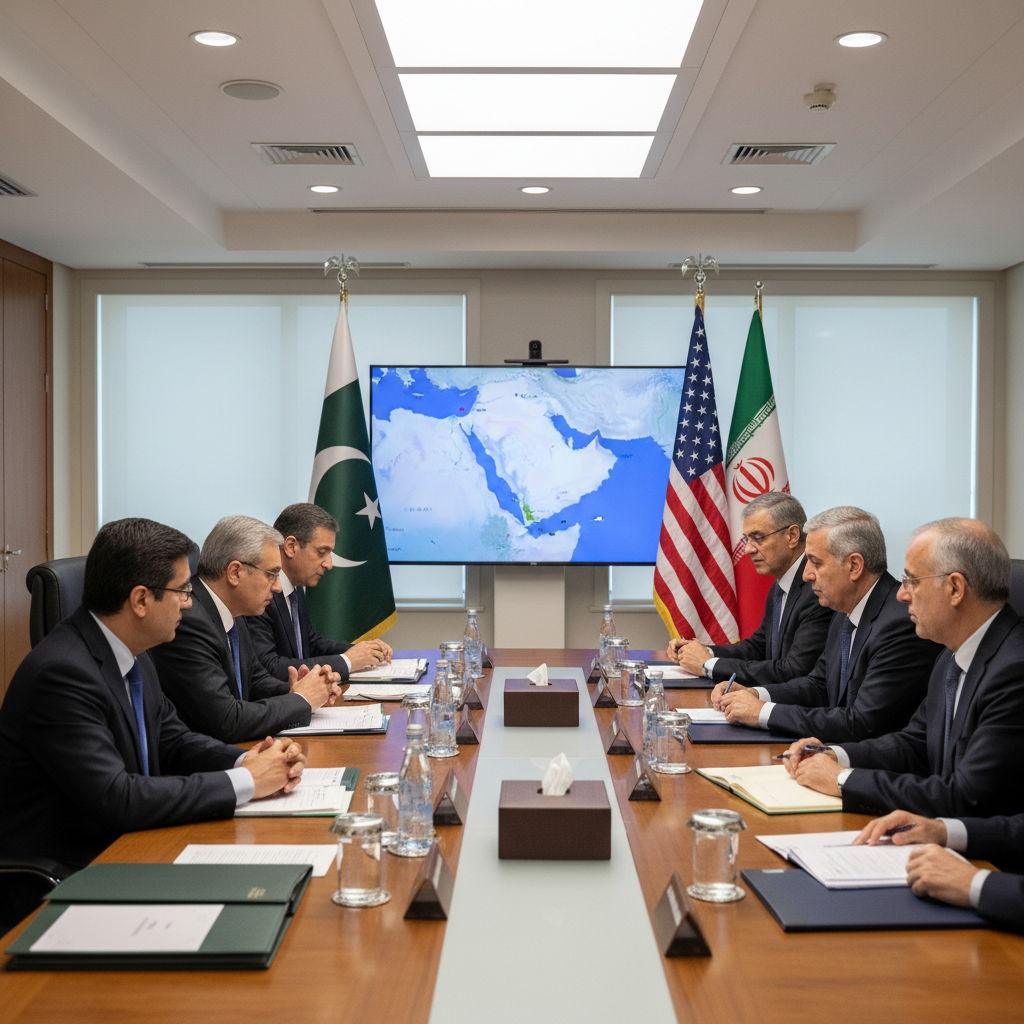
Pakistan Urges Restraint Amid US-Iran Tensions
Pakistan’s Deputy Prime Minister and Foreign Minister Ishaq Dar repeatedly urged all parties to de-escalate and pursue diplomacy as the US-Iran confrontation intensified, stressing dialogue as the only viable path to regional peace.
In conversations with Iranian Foreign Minister Abbas Araghchi, Dar reaffirmed Pakistan’s readiness to play a constructive mediating role and highlighted the Islamabad Memorandum of Understanding, signed in June 2026, as framework for restraint.
The messages were issued amid updates of strikes and counterstrikes in the Strait of Hormuz and Gulf region, with Pakistan calling for de-escalation even as Iran warned it could widen its campaign and the US conducted targeted strikes on Iranian targets.
Across the remarks, Pakistan emphasized keeping channels open and maintaining close contact between Islamabad and Tehran to reduce instability.
The consistent outreach underscores Pakistan’s position as a mediator seeking diplomatic resolution to prevent further spillover into the wider Gulf region.

Pakistan urges US and Iran to exercise restraint and resolve conflict through dialogue amid renewed tensions
Pakistan has called on the United States and Iran to exercise restraint and resolve their differences through sustained engagement, dialogue, and diplomacy following renewed military escalation between the two countries. Islamabad emphasized that further conflict serves no one’s interests and risks undermining regional peace and stability.
Key Points
- Pakistan urged Washington and Tehran to honor the June 18 memorandum of understanding, which aimed at maintaining a ceasefire and securing navigation in the Strait of Hormuz.
- The memorandum has come under strain due to Iranian attacks on commercial vessels and subsequent U.S. strikes, with U.S. President Donald Trump declaring the agreement ended.
- Pakistan remains actively engaged with regional leaders and supports resuming technical-level talks under the Islamabad Memorandum of Understanding and the Pakistan-Qatar Joint Statement.
Pakistan’s diplomatic efforts to support de-escalation
Pakistan’s Foreign Ministry and officials, including Prime Minister Shehbaz Sharif and Foreign Office spokesperson Tahir Andrabi, have reiterated the importance of diplomatic efforts to prevent broader regional conflict. Sharif held talks with Iranian and Qatari leaders stressing restraint, while Foreign Minister Ishaq Dar engaged Saudi and Iranian counterparts to remain in close contact. Pakistan continues to advocate for dialogue as the sole solution to regional tensions.
Strain on the Islamabad-brokered ceasefire and regional implications
The 14-point Islamabad Memorandum of Understanding signed on June 17 sought to end hostilities and reopen the Strait of Hormuz to commercial traffic within 60 days. However, disagreements over implementation—especially regarding sanctions relief, oil exports, and frozen assets—have led to renewed hostilities. The situation threatens global energy supplies and regional economies, escalating concerns beyond the immediate conflict zone. Pakistan shares a 900-kilometer border with Iran and is also pursuing enhanced bilateral trade by improving border infrastructure and transport links.
Questions and answers
Q: Pakistan calls for US and Iran restraint
A: Pakistan has urged both the United States and Iran to exercise restraint amid rising tensions between the two countries. Islamabad emphasizes dialogue and peaceful resolution to avoid escalation. The call reflects Pakistan's interest in regional stability and preventing conflict spillover into neighboring areas.
Q: Islamabad Memorandum of Understanding details
A: The Islamabad Memorandum of Understanding (MoU) typically refers to an agreement signed in Pakistan's capital that outlines cooperation between parties on specific issues such as trade, security, or diplomatic collaboration. Details often include commitments to mutual goals, terms of engagement, and mechanisms for implementation. The MoU serves as a formal framework to strengthen bilateral or multilateral relations.
Q: Strait of Hormuz ceasefire agreement
A: A Strait of Hormuz ceasefire agreement refers to arrangements aimed at halting hostilities or preventing conflict escalation in this strategically critical waterway. The Strait is a vital passage for global oil shipments, and any ceasefire ensures safe navigation and regional security. Such agreements typically involve naval powers and regional countries committing to non-aggression and conflict avoidance in the area.
Q: Pakistan diplomatic efforts on Iran-US tensions
A: Pakistan has actively engaged in diplomatic efforts to ease tensions between Iran and the United States, positioning itself as a mediator promoting dialogue and peaceful resolution. Islamabad advocates for de-escalation and confidence-building measures to reduce the risk of conflict. These efforts reflect Pakistan's strategic interest in maintaining regional stability and fostering peaceful international relations.
Q: Impact of Iran-US conflict on regional stability
A: The Iran-US conflict significantly affects regional stability by increasing the risk of military confrontations, disrupting trade routes, and fueling sectarian and geopolitical rivalries in the Middle East and South Asia. Tensions can lead to proxy conflicts, affecting neighboring countries' security and economic environments. Overall, the conflict undermines efforts toward peaceful cooperation and development in the region.
Key Entities
Pakistan: Pakistan is a South Asian country located at the crossroads of Central and South Asia. It has a complex political landscape and plays a significant role in regional geopolitics, especially in relation to Iran and the United States.
United States: The United States is a global superpower with extensive political and economic influence worldwide. It often engages with Pakistan and Iran on matters of security and foreign policy.
Iran: Iran is a Middle Eastern country known for its strategic geopolitical position and complex relations with both Pakistan and the United States. It frequently features in regional diplomatic and security discussions.
Shehbaz Sharif: Shehbaz Sharif is the Prime Minister of Pakistan, overseeing the country's domestic and foreign policies. His leadership is central to Pakistan's engagement with neighboring countries and global powers.
Donald Trump: Donald Trump served as the 45th President of the United States from 2017 to 2021. His administration was marked by a distinctive approach to foreign relations, including with Pakistan and Iran.
External articles
- Pakistan: A New Player in the Quest for a U.S.-Iran ...
- Why Pakistan is Mediating Between the United States and ...
- Islamabad Talks
Articles in same category
- 2025 Naturalization Civics Test: Harder Requirements for U.S. Citizenship Applicants
- Maine Senate Race: Progressive Ex-Marine Graham Platner’s Controversy Threatens Democrats’ Bid Against Susan Collins
- Senate Democrats Block GOP Stopgap Bill, Government Shutdown Enters 21st Day
YouTube Video
Title: Pakistan’s Diplomatic Push: Efforts To Ease US-Iran Tensions & Restore Regional Peace | Daily Mumtaz
URL: https://www.youtube.com/shorts/yYffINghAOE
Politics