


Iran's Supreme Leader pledges revenge after father's death
Iran’s new leader Mojtaba Khamenei has vowed to avenge the deaths of his father and other martyrs in recent U.S. and Israeli strikes, framing revenge as a demand of the Iranian nation that will be carried out regardless of circumstances.
He tied the pledge to the legacy of Imam Hussein and his father, stressing unity at home and across regional ties as Iran pursues those responsible.
Iran’s judiciary chief also announced plans to seek international legal action against the United States and Israel, signaling a broader push for accountability.
The developments come amid heightened U.S.-Iran tensions and ongoing mediation efforts in the region, including Oman’s involvement and other regional actors like Qatar and Pakistan.
Reports indicate ongoing discussions about maritime security in the Strait of Hormuz, with mediation efforts evolving as the US and Iran navigate a fragile ceasefire.
Trump, as the U.S. president, has publicly weighed in on the tensions, underscoring the risk of military responses, while Iran’s leadership insists the pursuit of vengeance is a national mandate that transcends individual leaders.
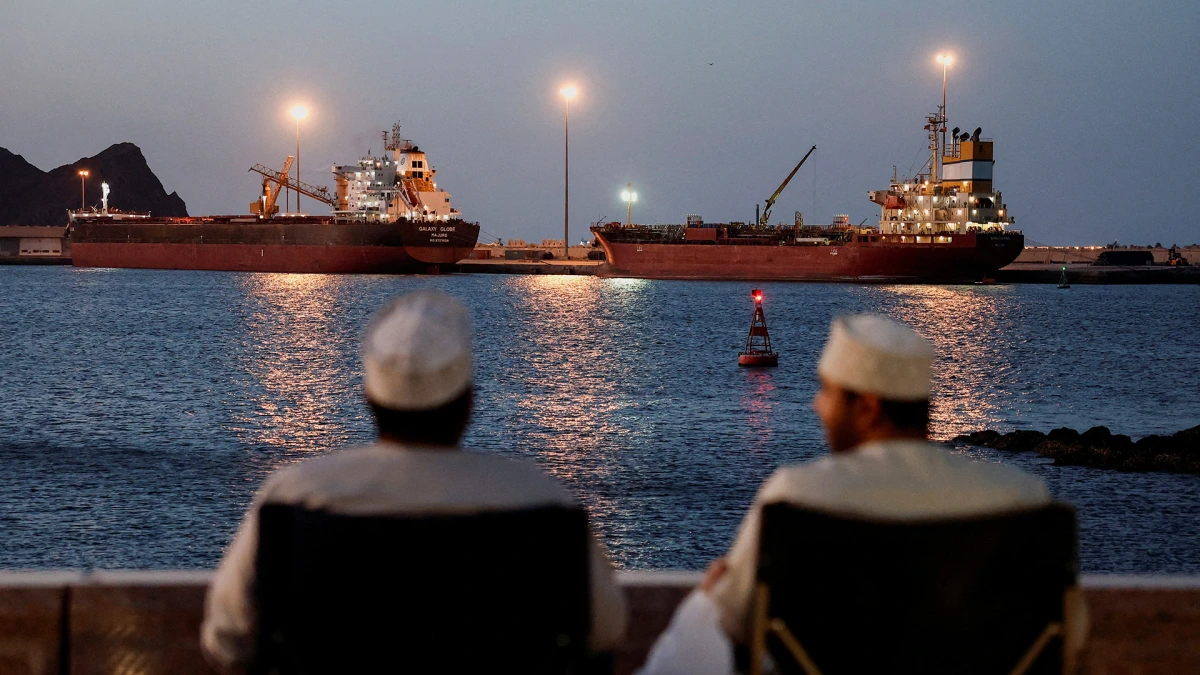
Oman and Iran Discuss Safe Passage Through Strait of Hormuz Amid Renewed Conflict
Iranian Foreign Minister Abbas Araghchi and Omani Foreign Minister Sayyid Badr Albusaidi met to discuss arrangements ensuring the safe passage of vessels through the Strait of Hormuz, following recent attacks on commercial ships by Iran. This discussion aims to uphold terms of a ceasefire agreement, despite US President Donald Trump declaring the ceasefire over while agreeing that talks will continue.
Key Points
- Iran struck at least three commercial vessels in the Strait of Hormuz earlier this week, reigniting conflict with the US.
- Oman proposed free navigation under pre-war conditions in its territorial waters, while vessels in Iranian waters would require prior approval without tolls.
- The US demands Iran publicly pledge to stop attacks on ships and keep all navigation lanes open without tolls.
- Iran’s Islamic Revolutionary Guard Corps navy declared the Strait of Hormuz closed until US interference ends, warning no vessel will be allowed transit.
- Iranian Supreme Leader Mojtaba Khamenei vowed revenge for the assassination of his father, former Supreme Leader Ali Khamenei, in an airstrike.
Negotiations and Diplomatic Efforts
Iranian and Omani foreign ministers exchanged views on mechanisms for safe maritime passage in line with ceasefire provisions. Oman presented a draft proposal supporting unimpeded navigation in its territorial waters. However, Iran insists on controlling all vessel movement in the strait, demanding fees from passing ships. Meanwhile, the US is pushing for a clear Iranian public commitment to halt attacks to safeguard global maritime trade. Conflicting reports have surfaced about whether Iran seeks to continue negotiations, with some Iranian sources denying such requests.
Security and Military Developments
Following Iran’s closure of the Strait of Hormuz and attacks on ships, the US Central Command launched retaliatory strikes against Iranian targets. The IRGC warned of a forceful response to any military strikes and targeted additional bases in the region. The strait remains a critical route, responsible for about one-fifth of the world’s oil supply before the conflict. Iranian Supreme Leader Mojtaba Khamenei’s pledge for vengeance and ongoing US threats underscore heightened tensions. The international community continues to monitor these developments, given their potential impact on global energy security and regional stability.
Questions and answers
Q: Safe passage through Strait of Hormuz
A: Safe passage through the Strait of Hormuz is critical as it is one of the world's most important maritime chokepoints for oil transport. International maritime law generally guarantees freedom of navigation, allowing ships to pass through without interference. However, regional tensions and military presence can pose risks, so vessels often rely on diplomatic protocols and security measures to ensure safe transit.
Q: Iran Oman maritime talks
A: Iran and Oman regularly engage in maritime talks to strengthen cooperation and address security concerns in the strategically important waters of the Strait of Hormuz. These discussions focus on enhancing navigation safety, combating piracy, and managing maritime traffic. Oman's neutral stance often positions it as a mediator that encourages dialogue between Iran and other Gulf countries to maintain regional stability.
Q: Strait of Hormuz conflict updates
A: The Strait of Hormuz has experienced periodic conflicts and security incidents, often tied to broader geopolitical tensions between Iran and Western countries. Recent updates highlight incidents such as vessel seizures and naval confrontations, which increase the risk of disruption to global energy supplies. Efforts by international stakeholders continue to focus on de-escalation and maintaining open shipping lanes to prevent further instability.
Q: US Iran tensions in Strait of Hormuz
A: US-Iran tensions in the Strait of Hormuz revolve around military presence, oil export restrictions, and strategic control of this narrow waterway. The US conducts freedom of navigation operations to challenge what it sees as Iranian attempts to restrict passage, while Iran asserts its right to defend its territorial waters. These tensions have led to occasional confrontations, raising concerns about a potential escalation impacting global trade.
Q: Navigation rules in Strait of Hormuz
A: Navigation rules in the Strait of Hormuz follow international maritime laws, including the United Nations Convention on the Law of the Sea (UNCLOS), which governs transit passage rights. Ships must adhere to traffic separation schemes designed to manage heavy vessel traffic safely. Additionally, coastal nations like Iran and Oman may impose specific regulations for safety and security, but these must align with international standards to ensure uninterrupted passage.
Key Entities
Iran: Iran is a Middle Eastern country that plays a strategic role in regional politics and controls significant oil exports through the Strait of Hormuz. It frequently engages in diplomatic and security discussions concerning the security and governance of this vital maritime passage.
Oman: Oman is a Gulf country located on the southeastern coast of the Arabian Peninsula, bordering the Strait of Hormuz. It often acts as a mediator in regional disputes and supports maintaining stability in the strategic strait shared with Iran.
Strait of Hormuz: The Strait of Hormuz is a narrow, crucial waterway connecting the Persian Gulf to the Arabian Sea, serving as a transit route for a significant portion of the world's oil exports. Control and security of this strait are vital for regional and global energy markets.
Abbas Araghchi: Abbas Araghchi is a senior Iranian diplomat involved in foreign policy, particularly concerning Iran's relations and security matters in the Persian Gulf region. He plays a key role in negotiations and discussions about maritime security in the Strait of Hormuz.
Sayyid Badr Albusaidi: Sayyid Badr Albusaidi is Oman's Minister of Foreign Affairs, responsible for shaping the country's international diplomacy and regional relations. He is actively engaged in efforts to promote stability and cooperation in the Strait of Hormuz and the broader Gulf area.
External articles
- Oman and Iran hold talks regarding Strait of Hormuz
- HORMUZ CRISIS DEEPENS: Iran's Top Diplomat Lands In ...
- Oman and Iran to pursue talks on managing navigation in ...
Articles in same category
- 2025 Naturalization Civics Test: Harder Requirements for U.S. Citizenship Applicants
- Maine Senate Race: Progressive Ex-Marine Graham Platner’s Controversy Threatens Democrats’ Bid Against Susan Collins
- Senate Democrats Block GOP Stopgap Bill, Government Shutdown Enters 21st Day
YouTube Video
Title: Araghchi Heads to Oman as Iran-U.S. Tensions Put Strait of Hormuz in Focus | APT
URL: https://www.youtube.com/shorts/gQ5QDApCEjQ
Politics