

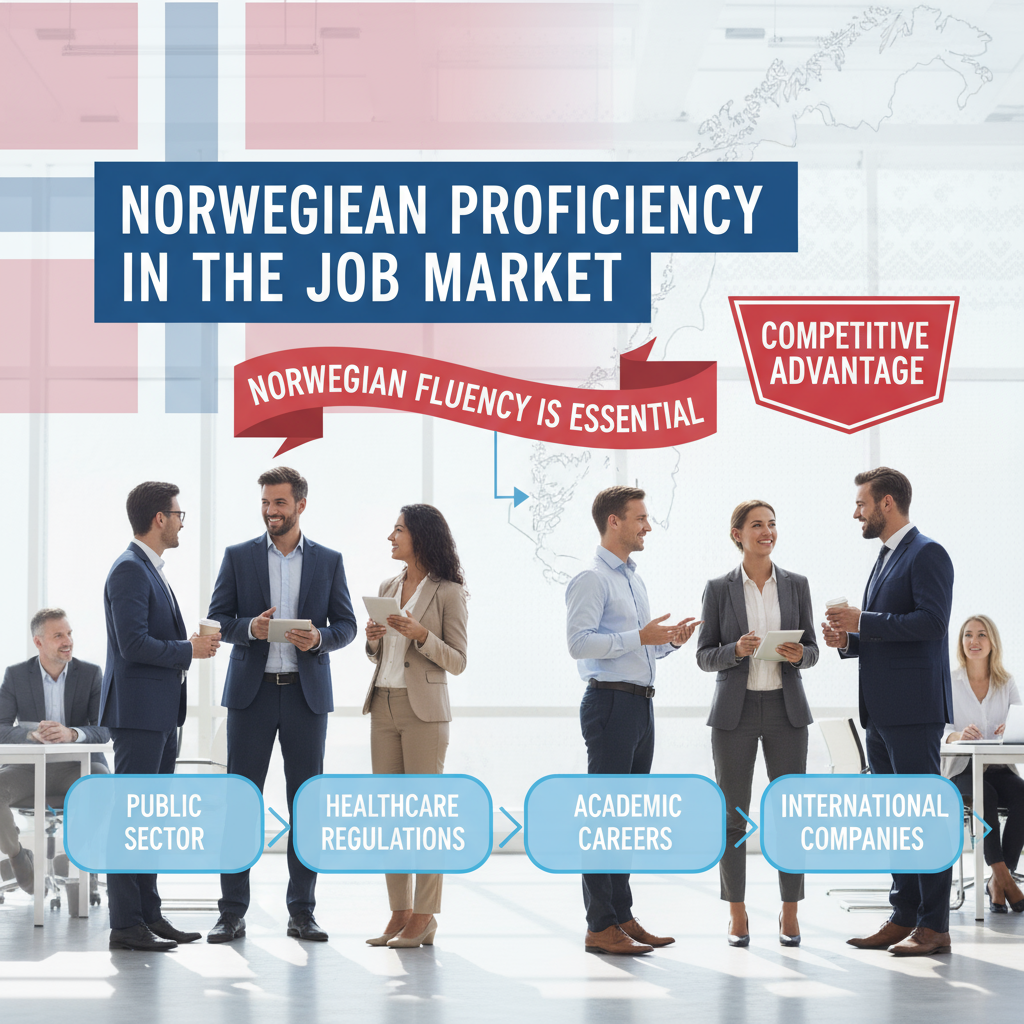
Norwegian Proficiency: Essential for Success in Norway's Job Market
Norwegian proficiency is crucial for success in Norway's job market, especially in public service, healthcare, and regulated trades, where effective communication and cultural integration are essential. While English may suffice in certain international or specialized roles, Norwegian fluency provides a significant competitive advantage and is often mandatory for career advancement and permanent residency. Learning Norwegian also facilitates social integration, networking, and access to a wider range of opportunities, making it indispensable for long-term career growth and naturalization in Norway.
The Importance of Norwegian Proficiency in the Norwegian Job Market
Navigating the job market in Norway requires understanding the critical role that language proficiency plays. While English can open doors in specific sectors, Norwegian fluency is often a non-negotiable requirement for career advancement and social integration within the country.
General Job Market and Language Expectations
In Norway, Norwegian proficiency is typically a prerequisite for employment, especially within the public sector, regulated professions, and roles that involve direct interaction with clients. This necessity stems from the need for effective communication and cultural integration. However, there are exceptions where English proficiency suffices, particularly in international business environments or in specialized fields experiencing global skill shortages, such as IT or AI. Yet, these cases are the minority, with Norwegian fluency providing a competitive advantage in a market filled with qualified local candidates [1][3][6].
For long-term career growth, learning Norwegian is advised even in English-speaking workplaces. It enhances social integration, facilitates better networking, and prevents professional isolation, which can occur when one is not part of the linguistic community [3][6]. Moreover, for those aiming for permanent residency, passing an oral Norwegian test at A2 level or higher, along with a social studies test, is mandatory as of September 2025, irrespective of one's employment sector [2].
Sector-Specific Language Requirements
Healthcare Regulations in Norway are stringent, with non-EU/EEA educated health professionals requiring a B2 level language certification in Norwegian to practice. This regulation underscores the importance of Norwegian for patient safety and effective healthcare delivery, with no exceptions for English speakers [4].
In academic careers, while English is the lingua franca for research, learning Norwegian is encouraged for deeper integration and access to a wider array of opportunities. Not doing so can create cultural and career barriers, limiting one's professional scope within Norway [3].
For those in trades requiring technical certification, such as electricians or plumbers, Norwegian proficiency is crucial for passing certification exams. However, in unregulated construction jobs, while there might not be a formal requirement, on-site communication predominantly occurs in Norwegian [1].
International companies might operate in English, but even here, language fluency in Norwegian aids in social integration and career mobility, as informal networks often operate in the local language [1][3].
Fluency vs. Basic Proficiency
Achieving fluency in Norwegian is generally necessary for most professional roles, with basic or intermediate proficiency (B1 level) often deemed insufficient. Non-fluent speakers find their opportunities largely confined to international firms, niche markets with skill shortages, or roles not legally requiring Norwegian [1].
Integration and Naturalization
Language fluency is not just about employment; it's a key component of social integration and naturalization. Delaying learning Norwegian can lead to a form of 'technical debt' in one's career, reducing opportunities for advancement and mobility within Norway [3].
Conclusion
To thrive in Norway's job market, Norwegian proficiency is essential, particularly in sectors like public service, healthcare, and regulated trades. While English can be sufficient in limited scenarios, the strategic advantage of learning Norwegian cannot be overstated. It is vital for job market integration, career progression, and becoming a part of the social fabric of Norway [1][3][4][6]. Even in fields where English is predominant, Norwegian fluency opens up broader prospects and enhances one's professional and social life.

Frequently Asked Questions
Q: do I need to speak Norwegian to get a job in Norway
A: While speaking Norwegian can improve your job prospects in Norway, it is not always mandatory, especially in international companies or sectors like IT and engineering where English is commonly used. However, many employers value Norwegian language skills as it helps with workplace communication and integration. Learning basic Norwegian can be beneficial and increase your chances of securing a wider range of jobs.
Q: jobs in Norway without Norwegian language skills
A: It is possible to find jobs in Norway without Norwegian language skills, especially in industries such as IT, engineering, oil and gas, and tourism where English is commonly used. Many multinational companies and startups operate in English, making it easier for non-Norwegian speakers to work. However, learning basic Norwegian is recommended to improve job prospects and integrate better into the workplace and society. Jobs in hospitality, cleaning, or manual labor may also not require Norwegian but can be more competitive and lower paying.
Q: language requirements for nurses in Norway
A: Nurses wishing to work in Norway must demonstrate proficiency in the Norwegian language, typically at a minimum B2 or C1 level according to the Common European Framework of Reference for Languages (CEFR). This proficiency ensures they can communicate effectively with patients and colleagues. Language skills are assessed through recognized language tests or by completing language courses approved by Norwegian authorities. Good command of Norwegian is mandatory for registration with the Norwegian Registration Authority for Health Personnel (SAK).
Q: working in Norway as a foreigner
A: Working in Norway as a foreigner typically requires obtaining a valid work permit or residence permit, depending on your nationality and the type of job. Citizens of EU/EEA countries have more straightforward access to the Norwegian labor market, while others usually need a job offer before applying for a permit. Norway offers diverse opportunities in sectors like oil and gas, engineering, IT, and healthcare. Proficiency in Norwegian can be beneficial but is not always mandatory, especially in international companies.
Q: how to learn Norwegian for employment
A: To learn Norwegian for employment, start by focusing on relevant vocabulary and phrases used in your industry. Enroll in a Norwegian language course, either online or in-person, that emphasizes conversational skills and workplace communication. Practice regularly with native speakers and use language learning apps to build grammar and comprehension. Additionally, familiarize yourself with cultural norms and business etiquette in Norway to enhance your job readiness.
Key Entities
Norway: Norway is a Nordic country known for its extensive coastline, fjords, and rich natural resources such as oil and gas. It operates a well-developed economy with a strong emphasis on public welfare and sustainable development.
Jon Ward: Jon Ward is referenced in the context of Norwegian companies experiencing an increase in state agency ownership. His role or contributions relate to the analysis or reporting on these changes in ownership structures within Norway.
Norwegian companies: Norwegian companies increasingly see greater ownership from state agencies, reflecting government strategic interests. These businesses operate across various sectors, contributing significantly to Norway's economy.
municipality: A municipality in Norway functions as a local administrative unit responsible for providing public services and governance at the community level. Municipalities have a growing ownership role in local companies, influencing regional economic development.
state agency: State agencies in Norway manage governmental interests and investments, including increased ownership stakes in domestic companies. Their involvement reflects the government's aim to maintain control over key sectors and support public objectives.
External articles
- is it possible to live and work in Norway only speaking ...
- Porttrait: Working in Norway – without speaking Norwegian?
- Can someone find a job in Norway without speaking ...
Related Articles
- Navigating the Norwegian Job Market: Overcoming Immigrant Hiring Challenges
- Snikskryting: Norway’s Unique Humblebragging Reflecting Social Inequality
- How Norwegians Achieve Unique English Proficiency Through Education and Culture
YouTube Video
Title: Struggling with small talk in Norway? 🌧
URL: https://www.youtube.com/shorts/CcVUfMGTVvg
Domestic