

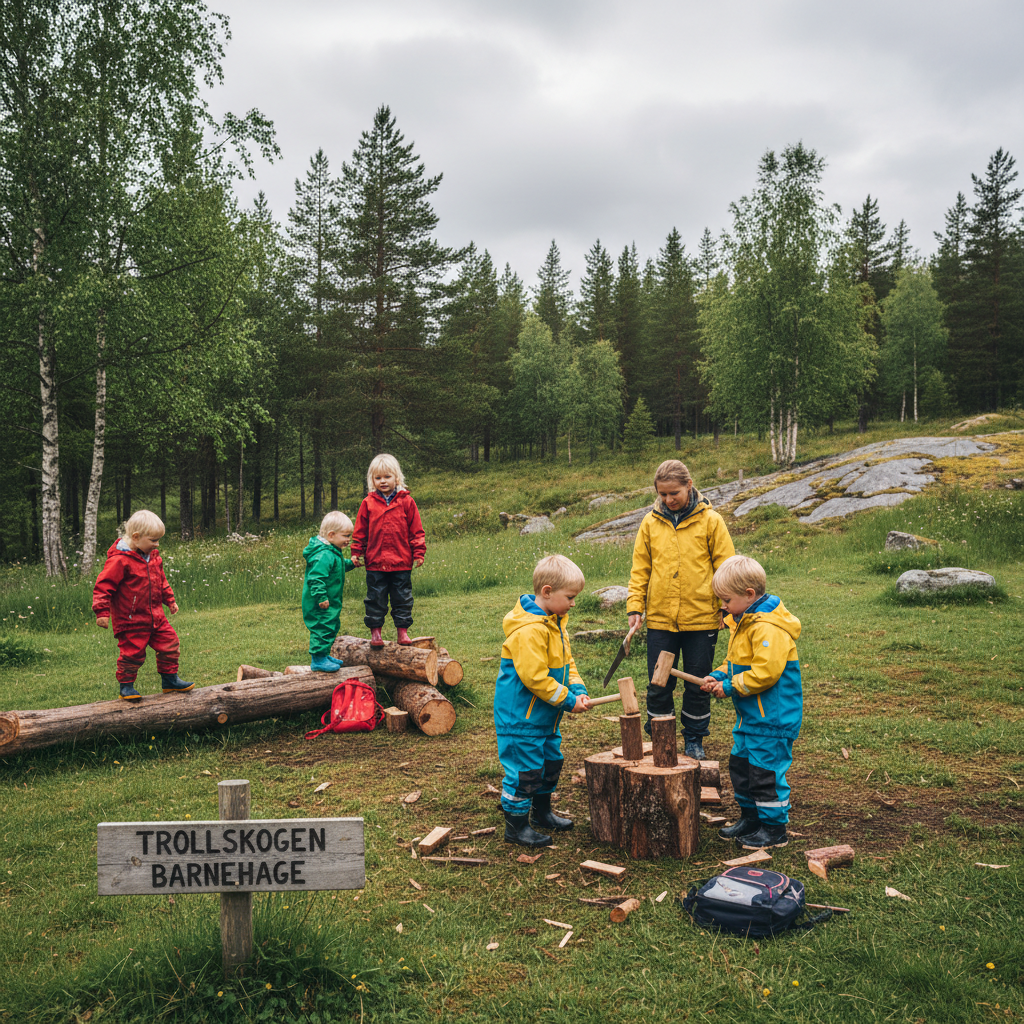
Norwegian Kindergartens Embrace Risky Play and Friluftsliv for Child Development
Norwegian kindergartens emphasize *friluftsliv*, encouraging outdoor play and risky activities like supervised tool handling to promote physical development and resilience.
Supported by universal healthcare, parents accept risks that help children build confidence and social skills.
This approach contrasts with more protective systems elsewhere and reflects cultural values of early independence.
The social code *Janteloven* fosters humility and emotional restraint, influencing professional and social interactions.
Together, these elements create a balanced framework for child development rooted in cultural adaptation and respect for nature.
Frequently Asked Questions
Q: Why do Norwegian kindergartens let children use axes?
A: Norwegian kindergartens often allow children to use axes as part of their outdoor, nature-based learning approach. This practice promotes practical skills, responsibility, and a connection with nature, emphasizing hands-on experiences. Proper supervision and safety measures are in place to ensure children's well-being while they learn to handle tools carefully. This method reflects Norway's cultural values of independence and respect for the environment from an early age.
Q: How is childhood different in Norway compared to France?
A: Childhood in Norway often emphasizes outdoor activities and connection with nature, supported by a strong welfare system that encourages work-life balance and parental leave. Norwegian children typically enjoy access to extensive public services, including free education and healthcare. In contrast, childhood in France is marked by a structured education system with a strong focus on academics and cultural exposure from an early age. French children attend école maternelle (preschool) and may have longer school hours, while social activities can be more formalized compared to the more relaxed, nature-centered approach in Norway.
Q: What are the cultural expectations in Norwegian job interviews?
A: In Norwegian job interviews, cultural expectations emphasize equality, honesty, and straightforward communication. Interviewees are expected to be punctual, well-prepared, and humble about their achievements, avoiding exaggeration. Norwegian interviewers value a balanced discussion, where candidates demonstrate both professional competence and social skills. There is generally a relaxed and informal atmosphere, so being polite yet genuine and showing an understanding of the company culture are important.
Q: How to show confidence in a Norwegian job interview?
A: To show confidence in a Norwegian job interview, prepare thoroughly by researching the company and role. Speak clearly and maintain good eye contact without appearing arrogant, as Norwegians value humility and straightforwardness. Demonstrate your competence through specific examples and be ready to discuss your achievements openly but modestly. Additionally, showing genuine interest in the company's values and culture can enhance your confident impression.
Q: What does Janteloven mean for job seekers in Norway?
A: Janteloven is a cultural concept in Norway that emphasizes humility, equality, and discourages standing out or boasting about personal achievements. For job seekers, this means it's important to present oneself modestly rather than overly self-promote. Employers often value team players who fit into the collective culture, so demonstrating collaboration and respect for others can be more effective than highlighting individual accomplishments. Understanding Janteloven helps job seekers navigate social expectations and workplace dynamics in Norway.
Key Entities
Norway: Norway is a Nordic country known for its extensive welfare system and high living standards. The article references Norway in the context of its public services and regional administrative concerns.
Espen Skorstad: Espen Skorstad is a Norwegian journalist associated with Aftenposten, one of Norway’s leading newspapers. He has reported on issues related to public administration and social services in Norway.
Aftenposten: Aftenposten is a major Norwegian newspaper headquartered in Oslo, known for its comprehensive national and international coverage. The article features Aftenposten as the media source providing the report.
NAV: NAV is the Norwegian Labour and Welfare Administration responsible for social services, unemployment benefits, and pensions. The article discusses NAV in relation to challenges faced in service delivery.
Sørlandet: Sørlandet is a region in southern Norway characterized by its coastline and cultural heritage. The article highlights Sørlandet in the context of regional public service challenges and local administration.
External articles
- Safety concerns limit opportunities for risky play
- “We Don't Allow Children to Climb Trees” How a Focus on ...
- My 5-Year-Old Learned to Use an Axe at Kindergarten
Articles in same category
- How Norwegians Achieve Unique English Proficiency Through Education and Culture
- Navigating the Norwegian Job Market: Overcoming Immigrant Hiring Challenges
- Snikskryting: Norway’s Unique Humblebragging Reflecting Social Inequality
YouTube Video
Title: Social life in Norway 🇳🇴
Channel: Adam Matheson
URL: https://www.youtube.com/watch?v=R50TXnU8Hxs
Published: 1 year ago
Domestic