


Global Central Banks’ 2025 Rate Decisions and Their Impact on the World Economy
As 2025 ends, nine global central banks including the ECB, BoE, and BoJ are set to announce critical policy decisions.
Europe’s inflation stabilizes near 2%, likely keeping ECB rates steady through 2026.
The Bank of England faces divided views amid sluggish growth and inflation.
Japan’s BoJ may raise rates amid growth but faces geopolitical risks.
The US Fed’s December rate cut depends on key economic data.
Global flash PMIs indicate moderated growth with regional variations.
The IMF highlights gold’s enduring value amid financial innovation.
Read more:
perplexity.aiSummary
Global Central Banks at a Crossroads: What This Week’s Rate Decisions Mean for the World Economy
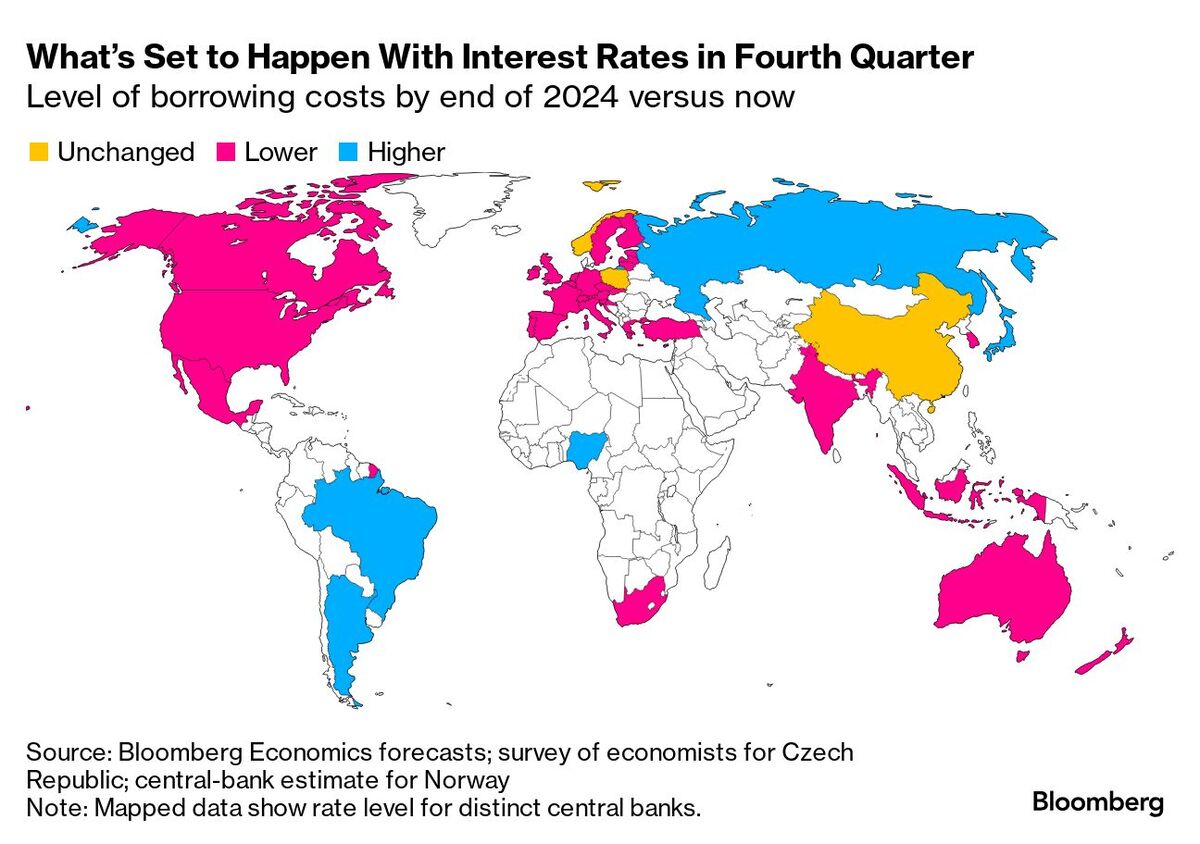
As the final days of 2025 approach, financial markets find themselves on tenterhooks. This week, nine of the world's most influential central banks, including the European Central Bank (ECB), Bank of England (BoE), and Bank of Japan (BoJ), are set to unveil critical policy decisions that could shape the economic trajectory for months, if not years, to come.
The economic landscape is a mosaic of mixed signals. Inflation rates in Europe are quietly stabilizing near the 2% target, prompting the ECB to likely maintain steady interest rates through 2026. This cautious optimism contrasts sharply with the Bank of England, where policymakers are divided—one foot pressing towards rate cuts in response to sluggish growth and stubborn inflation, the other wary of letting go too quickly amid a fragile labour market. The outcome here will hinge heavily on fresh UK labour data and December’s flash Purchasing Managers' Indices (PMIs), which spotlight the nuanced pulse of business confidence and economic momentum.
Meanwhile, Japan joins the fray with a more assertive stance. The BoJ seems poised to raise rates, buoyed by accelerating growth and rising price pressures. Yet, geopolitical clouds loom, potentially delaying any further tightening until late 2026, a factor that could ripple through its crucial export and tourism sectors. The Bank’s upcoming decision will be closely watched, as it signals Japan's response to evolving domestic and international challenges.
Across the Atlantic, the United States stands at a pivotal junction. The delayed release of October’s nonfarm payrolls, alongside crucial inflation data and retail sales figures, will put the Fed’s December rate cut under scrutiny. Will the US economic engine continue its resilient hum or show signs of faltering momentum? Answers here will resonate globally, influencing market expectations and shaping monetary policy signals.
Meanwhile, beyond central banks, December’s flash PMIs across major economies—from the US and Eurozone to India and Australia—offer the earliest glimpse into the global economic rhythm at year’s end. These surveys collectively tell a story of moderated growth, with intriguing regional variations reflecting local policy climates and external pressures.
Lastly, amid digital finance’s rise, the International Monetary Fund reminds us of the timeless value of gold, a steadfast beacon amid financial innovation. This nod to tradition underscores the delicate balance investors navigate—between embracing futuristic assets and honoring long-standing stores of wealth.
As policymakers deliberate and data rolls in over the coming days, one thing is clear: the world economy is balancing on a knife-edge, where each decision carries weight not just for markets, but for the lived realities of millions worldwide. For those watching the horizon, this week promises not just news, but a narrative of how economies adapt and respond to an ever-evolving global stage.
For more detailed insights on these unfolding stories, explore the latest from S&P Global Market Intelligence and IMF reports.
Questions and answers
Q: Central bank rate decisions 2025
A: Central bank rate decisions in 2025 will significantly influence global economic growth, inflation, and financial markets. These decisions involve setting benchmark interest rates to either stimulate or cool down economies. Central banks closely monitor inflation, employment, and economic data to determine whether to raise, lower, or maintain rates.
Q: Impact of ECB interest rates on economy
A: The European Central Bank's interest rate decisions affect borrowing costs, consumer spending, and investment across the Eurozone. Higher rates generally slow economic activity by making loans more expensive, helping control inflation. Conversely, lower rates encourage spending and investment, stimulating growth but potentially raising inflation risks.
Q: Bank of England inflation response
A: The Bank of England combats inflation primarily by adjusting interest rates; raising rates tends to reduce spending and borrowing, which can help lower inflation. It also uses monetary policy tools and communicates its inflation targets to guide market expectations. The bank balances controlling inflation with supporting economic growth to maintain price stability.
Q: Bank of Japan rate hike 2025
A: A Bank of Japan rate hike in 2025 would mark a shift from its long-standing low or negative interest rate policies aimed at stimulating growth. Increasing rates could help control rising inflation but may also slow economic activity and affect the yen's value. Such a decision would signal confidence in the economy’s strength and concern over overheating or inflation pressures.
Q: US Federal Reserve December rate cut forecast
A: Forecasts for a US Federal Reserve rate cut in December depend on economic indicators like inflation, employment, and growth. A rate cut can stimulate the economy by lowering borrowing costs, encouraging spending and investment. However, the Fed typically reduces rates only if economic growth slows or inflation declines significantly.
Key Entities
European Central Bank: The European Central Bank (ECB) is the central bank responsible for monetary policy within the Eurozone, managing the euro currency. It aims to maintain price stability and support economic growth across its member countries.
Bank of England: The Bank of England is the central bank of the United Kingdom, overseeing monetary policy and financial stability. It sets interest rates and supervises the banking sector to promote a healthy economy.
Bank of Japan: The Bank of Japan is the central bank responsible for implementing monetary policy and issuing currency in Japan. It works to maintain price stability and support the country's economic growth.
United States Federal Reserve: The United States Federal Reserve is the central bank of the U.S., controlling monetary policy to foster maximum employment and stable prices. It regulates banks and provides financial services to the government.
International Monetary Fund: The International Monetary Fund (IMF) is an international organization that promotes global monetary cooperation and financial stability. It provides economic advice and financial assistance to member countries facing balance of payments problems.
External articles
- Monetary Policy and Central Banking
- The Fed Explained - Monetary Policy
- Modern Central Banking: Monetary Policy Implementation ...
Articles in same category
- Frontline (FRO) Valuation and Growth Amid Rising Oil Demand
- CRISPR Therapeutics Unveils Promising AATD Gene Editing Data
- Aston Martin Issues Profit Warning on Tariff Impact
YouTube Video
Title: Inflation: Drivers and Dynamics Conference 2025
Channel: European Central Bank
URL: https://www.youtube.com/watch?v=xg3gyuRMn0g
Published: Streamed 2 months ago
Money