

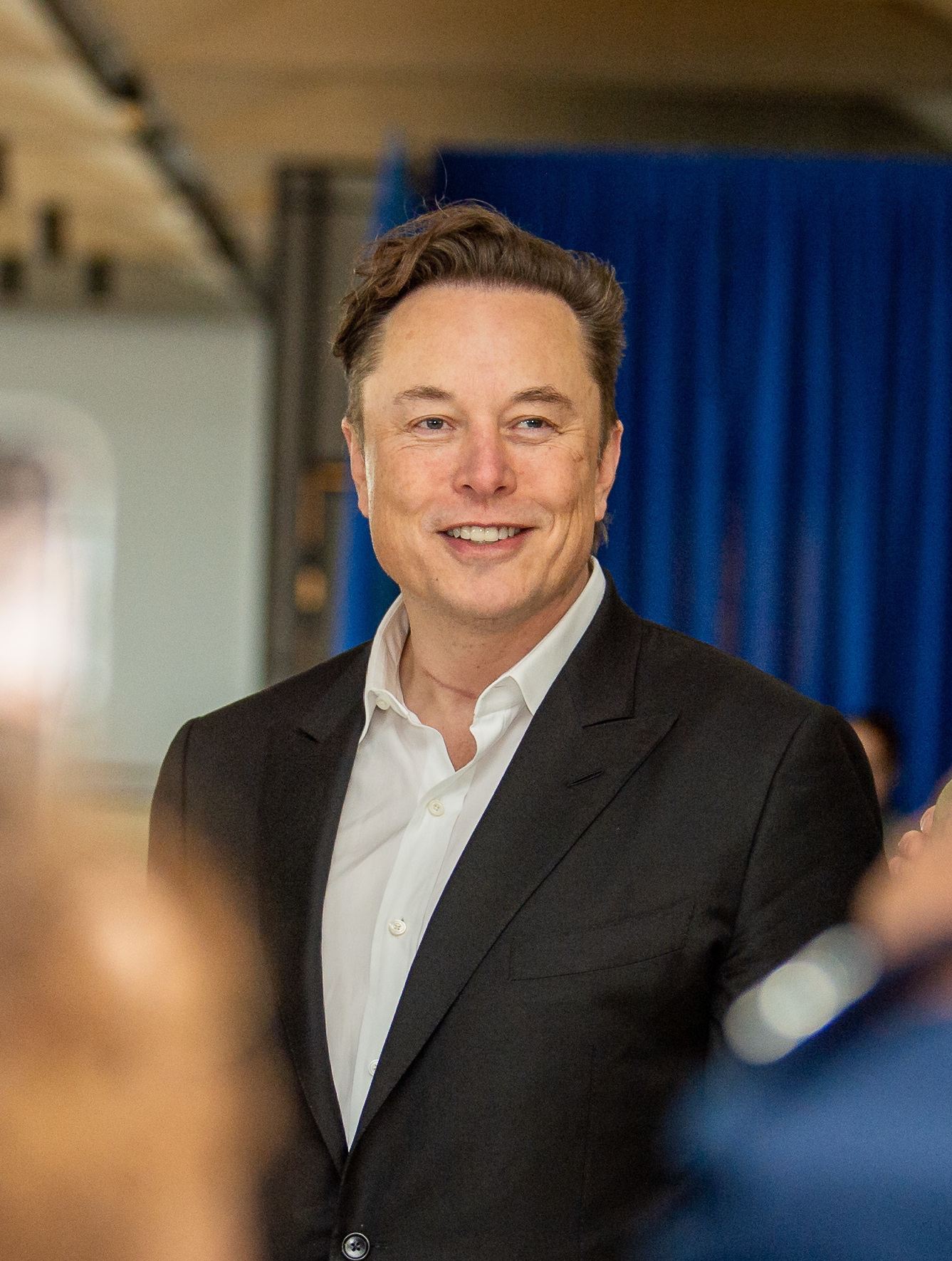
Elon Musk’s SpaceX and xAI Merge in $1.25 Trillion AI and Space Deal
Elon Musk’s SpaceX and xAI have merged in a $1.25 trillion deal, aiming to revolutionize AI by harnessing space-based computing power.
Musk envisions the cosmos becoming the cheapest location to power AI within two to three years.
This merger signals a new era where space and AI innovation intertwine, potentially redefining multiple industries.
Free from Earth’s power and cooling limits, space-based AI could fuel breakthroughs from environmental science to deep space exploration.
Globally, AI-driven tech spending is projected to reach $5.6 trillion by 2026, marking a tectonic shift in technology.
Read more:
perplexity.ai
Elon Musk’s SpaceX and xAI Merge: A $1.25 Trillion Leap into the Future of AI and Space
*When Elon Musk makes a move, the world watches. This time, it’s a cosmic dance of artificial intelligence and space exploration, promising a future where the stars may hold the keys to the AI revolution.*
In a stunning development that reads like the plot of a sci-fi blockbuster, Elon Musk’s SpaceX and his AI venture xAI have merged in a colossal deal valued at $1.25 trillion. This fusion is more than a financial milestone—it’s a bold declaration that the final frontier is about to become the epicenter of artificial intelligence innovation. Musk’s vision? To harness space-based AI compute power, driving down costs so dramatically that within just two to three years, the cosmos itself could be the cheapest place on Earth (or beyond) to power AI.
This merger doesn’t just set the stage for interstellar advancements; it hints at a new era where space and AI intertwine seamlessly. For Musk, famed for pushing boundaries from electric cars to Mars colonization, this deal precedes a potential SpaceX IPO, coupling finance with ambition in a dance that could redefine both industries.
But why does this matter beyond the buzzwords? The idea of space-based AI compute promises vast untapped potential—free from terrestrial constraints of power, cooling, and scaling. Imagine AI models growing exponentially, fueled by a cosmic supercomputer orbiting Earth, catalyzing breakthroughs from environmental science to deep space exploration.
This development ripples through the tech world as well. Palantir’s stock surge, fueled by strong AI-driven earnings, underscores the exploding demand for smart data insights across sectors. Meanwhile, giants like OpenAI are exploring alternatives to Nvidia chips, signaling a fiercely competitive race to power AI’s next generation efficiently.
Globally, tech spending is skyrocketing. Forrester projects a staggering $5.6 trillion spend in 2026, dominated by AI integrations that extend far beyond Silicon Valley to impact industries worldwide. It’s a trillion-dollar bet that AI isn’t just the next tech wave—it’s the tectonic shift shaping our future.
With Musk steering a cosmic ship laden with AI’s promise, the next few years could see the most extraordinary marriage of technologies yet. For travelers, dreamers, and futurists alike, the horizon is no longer the limit—it’s just the beginning.
Questions and answers
Q: Elon Musk SpaceX xAI merger details
A: Elon Musk's announcement of a merger between SpaceX and xAI highlights a strategic move to integrate advanced artificial intelligence with space technology. This partnership aims to leverage SpaceX's aerospace capabilities and xAI's AI innovations to enhance space missions and autonomous operations. Specific details about the merger focus on developing AI systems that can operate efficiently in space environments, potentially revolutionizing data processing and exploration.
Q: Space-based AI compute power advantages
A: Space-based AI compute power offers significant advantages, including reduced latency for processing data collected from space, improved real-time decision-making capabilities, and the ability to handle vast amounts of data without relying on ground-based infrastructure. Operating AI directly in space can enhance satellite autonomy, support deep space missions, and enable faster responses to dynamic conditions. Additionally, space environments provide unique opportunities for AI hardware to benefit from reduced interference and specialized radiation-hardened designs.
Q: Future of AI and space exploration
A: The future of AI and space exploration is poised for transformative growth as AI technologies enable more autonomous spacecraft, advanced data analysis, and enhanced mission planning. AI will support navigating complex environments, managing onboard systems, and accelerating discoveries by analyzing vast datasets from space missions. Collaborative advancements could lead to sustained human presence on other planets, improved satellite operations, and a deeper understanding of the cosmos through intelligent machines.
Q: Impact of SpaceX IPO on AI industry
A: A SpaceX IPO could have a profound impact on the AI industry by providing significant capital to expand research and development at the intersection of space and artificial intelligence. Public funding would likely accelerate innovations in AI-powered aerospace technologies, stimulate partnerships with AI firms, and increase investments in AI infrastructure for space applications. This heightened financial and public attention can drive new AI advancements that benefit not only space exploration but also terrestrial AI deployments.
Q: Companies innovating in AI hardware
A: Several companies are leading innovation in AI hardware, including NVIDIA, known for its powerful GPUs optimized for AI workloads; Intel, which develops specialized AI chips like the Nervana and Habana processors; and Google, with its Tensor Processing Units (TPUs) designed for efficient machine learning. Other notable players include AMD, Qualcomm, and startup firms focusing on neuromorphic and quantum computing hardware. These innovations aim to improve AI processing speed, energy efficiency, and scalability across diverse applications.
Key Entities
Elon Musk: Elon Musk is the CEO of SpaceX and the founder of the AI company xAI. He is known for his work in advancing space exploration and artificial intelligence technologies.
SpaceX: SpaceX is a private aerospace manufacturer and space transport company founded by Elon Musk. It aims to revolutionize space travel with reusable rockets and missions to Mars.
xAI: xAI is an artificial intelligence company founded by Elon Musk with the goal of understanding the universe through AI. It represents Musk's latest venture into AI development alongside other technology firms.
Palantir: Palantir is a software company specializing in big data analytics and intelligence platforms. It is mentioned in the context of AI collaborations and technological innovations in data processing.
OpenAI: OpenAI is an AI research organization known for creating advanced language models like GPT. It is a significant player in the artificial intelligence landscape alongside companies like xAI.
External articles
- Musk's SpaceX and xAI merge to make world's most ...
- The Numbers, and Questions, Behind Musk's Mega-Merger
- Musk's xAI, SpaceX merger valued at $1.25 trillion, the ...
Articles in same category
- Frontline (FRO) Valuation and Growth Amid Rising Oil Demand
- CRISPR Therapeutics Unveils Promising AATD Gene Editing Data
- Aston Martin Issues Profit Warning on Tariff Impact
YouTube Video
Title: Elon Musk's Space Merger: A New Era in Space Tech!
URL: https://www.youtube.com/shorts/Ci-kGcSUdSo
Money