


CoreWeave’s AI Data Center Growth Fueled by Nvidia’s $2B Investment and Hyperscaler Demand
The rapid growth of AI has driven unprecedented demand for AI data center capacity, with CoreWeave emerging as a key provider fueled by Nvidia’s GPUs.
Nvidia invested $2 billion in CoreWeave to expand its AI data centers aiming for over 5 GW capacity by 2030.
CoreWeave’s revenue backlog reached nearly $56 billion by Q3 2025, supported by contracts with OpenAI and Meta.
While CoreWeave offers high-growth potential with some risks, Alphabet presents a more diversified and stable AI infrastructure investment option.
Both companies play critical roles in the evolving AI ecosystem.
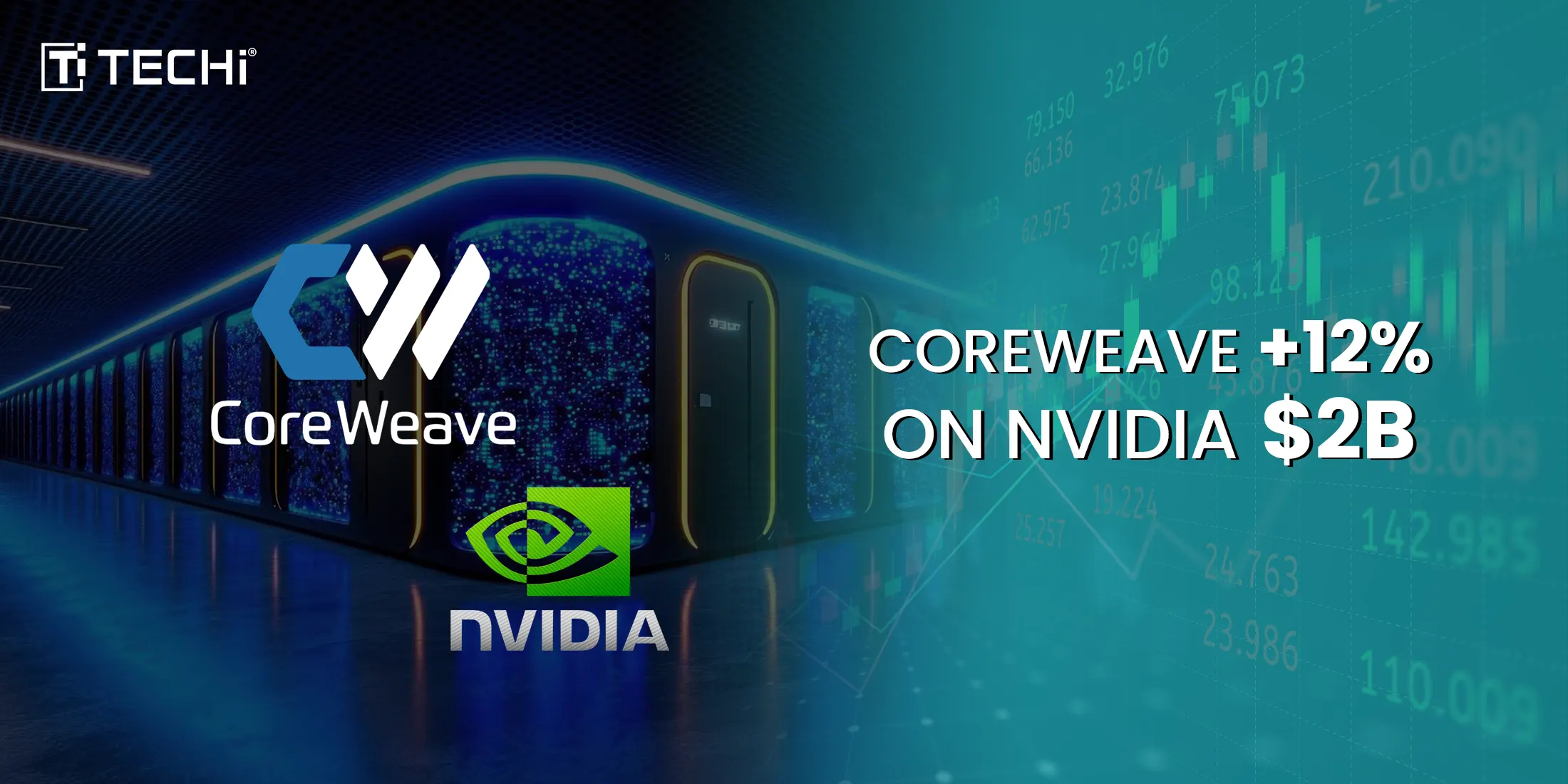
Demand for artificial intelligence (AI) data center capacity is insatiable, and hyperscalers and AI companies have been taking up all that's available
The rapid growth of artificial intelligence (AI) has led to an unprecedented demand for AI data center capacity, with hyperscalers and AI companies like Microsoft, Meta Platforms, and OpenAI securing vast amounts of this resource. CoreWeave, a neocloud provider specializing in AI infrastructure powered primarily by Nvidia's GPUs, has experienced spectacular growth, driven largely by long-term contracts with these major players. Nvidia recently made a significant $2 billion investment in CoreWeave to accelerate its expansion plans, signaling strong confidence in the company’s future. This development underscores CoreWeave’s critical role in the evolving AI infrastructure landscape and raises important questions about its investment appeal compared to larger tech conglomerates like Alphabet (Google).
Key Points: - CoreWeave rents AI data center capacity to major hyperscalers and AI firms, fueling accelerated revenue growth. - Nvidia invested $2 billion in CoreWeave to support expansion of AI data centers aiming for over 5 GW of capacity by 2030. - CoreWeave's revenue backlog soared to nearly $56 billion by Q3 2025, driven by large contracts with OpenAI and Meta Platforms. - CoreWeave’s stock experienced volatility but gained significantly since its IPO in early 2025. - Alphabet (GOOGL) presents a more diversified and less risky AI infrastructure investment, but CoreWeave offers high-growth potential for aggressive investors.
CoreWeave’s role in the explosive AI infrastructure market
CoreWeave has positioned itself as a leading GPU-as-a-Service provider, enabling clients to rent access to cutting-edge Nvidia GPUs on flexible terms. This service meets a critical need in AI development, where the cost and complexity of building proprietary AI data centers can be prohibitive for many companies. CoreWeave’s infrastructure is vital for training and deploying large language models and other complex AI applications.
Its business model hinges on leveraging Nvidia’s advanced GPUs to deliver high-performance computing efficiently. The company has reported strong financial results, with its revenue more than doubling to $1.3 billion in the most recent quarter. This growth reflects surging demand for AI compute power and has been driven by substantial partnerships and long-term contracts, reinforcing CoreWeave’s position as an essential AI infrastructure provider.
Nvidia’s $2 billion investment: A vote of confidence
The expansion of the partnership between Nvidia and CoreWeave is a pivotal development. Nvidia’s additional $2 billion investment in CoreWeave’s Class A common stock, at $87.20 per share, follows their prior agreement whereby Nvidia committed $6.3 billion to purchase any unsold capacity through 2032. This fresh infusion supports CoreWeave’s ambitious plans to build more than 5 gigawatts of AI data center capacity by 2030.
Nvidia’s financial backing will not only fund data center construction and operational costs, including land acquisition and energy procurement, but it will also strengthen CoreWeave’s AI software capabilities. This is expected to help CoreWeave evolve into a full-stack AI solutions provider, offering customers more than just computing hardware—enabling them to build, deploy, and scale AI applications swiftly and effectively.
Importantly, the investment proceeds are earmarked mainly for research and development, workforce enhancement, and other operational costs—not for purchasing Nvidia hardware—alleviating concerns about circular financing.
CoreWeave’s financial and market trajectory
Since its initial public offering in March 2025, CoreWeave’s shares surged over 300% amidst excitement about its AI infrastructure services. Despite a stock price correction towards the end of 2025 due to concerns over potential AI spending slowdowns and heavy debt load risk, CoreWeave’s stock finished the year with a solid 79% gain. Currently, the stock remains volatile but exhibits strong momentum, with a 172% gain since IPO and over 50% growth so far in 2026.
The company’s revenue backlog stands at an impressive $56 billion as of Q3 2025, reflecting massive contracts with clients such as Meta and OpenAI. Its rapid scaling includes widespread deployment of hundreds of thousands of GPUs and contracted capacity nearing 2.9 gigawatts, affirming its expanding role in powering AI workloads across the U.S. and Europe.
However, CoreWeave faces challenges including heavy capital expenditures (CapEx), a high debt burden, and customer concentration risks, chiefly because a large share of its revenue depends on a few major clients.
Comparing CoreWeave to Alphabet: Divergent strategies in AI infrastructure
While CoreWeave focuses intensively on GPU-accelerated AI computing, Alphabet (NASDAQ: GOOGL), the parent company of Google, offers broader cloud computing and AI services that integrate AI across consumer and enterprise platforms. Alphabet benefits from a strong financial position, demonstrated by $98.5 billion in cash reserves and a diverse revenue base exceeding $100 billion quarterly as of Q3 2025.
Google Cloud, a key division of Alphabet, is experiencing strong momentum, with cloud revenues growing 33.5% year-over-year, driven largely by AI adoption. Alphabet continues expanding its AI infrastructure footprint through strategic acquisitions like Intersect, which enhances data center energy infrastructure capabilities.
Alphabet’s diversified approach reduces single-customer dependency and mitigates risk, but the company faces fierce competition from Amazon AWS, Microsoft Azure, and others in cloud and AI markets, often leading to pricing pressure and margin challenges. Additionally, regulatory scrutiny and data-sovereignty concerns add operational complexities.
Investment outlook: High-growth opportunity versus diversified stability
CoreWeave presents a compelling growth opportunity for investors willing to accept higher risk. Its laser focus on GPU-accelerated AI workloads and strong Nvidia partnership position it to capitalize heavily on the booming AI infrastructure market, which is forecasted to reach over $200 billion by 2031. However, the company’s high leverage, execution challenges, and dependency on a limited client base heighten investment risk.
By contrast, Alphabet’s large scale, diversified business model, and robust balance sheet offer a more stable, long-term AI investment with diversified revenue streams. Its integrated AI strategy across multiple sectors potentially provides resilience against market fluctuations and regulatory pressures.
For aggressive investors seeking high-octane growth tied directly to AI compute capacity, CoreWeave may be more attractive. More cautious investors might prefer the steady growth potential and lower volatility of Alphabet.
Conclusion
The insatiable demand for AI data center capacity is rapidly reshaping the technology landscape. CoreWeave has emerged as a key beneficiary of this transformation, securing major contracts with leading AI companies and receiving substantial support from Nvidia. While CoreWeave's potential is immense, it faces inherent risks related to growth execution and financial leverage.
Alphabet, despite operating in the same AI infrastructure space, offers a broader, more diversified approach, serving as a safer, long-term play in the AI revolution.
Together, these companies illustrate two distinct paths investors can consider in the evolving AI ecosystem: lean-focused high-growth versus diversified tech behemoth resilience. Both remain critical players in the future of AI infrastructure.
Questions and answers
Q: CoreWeave AI data center capacity
A: CoreWeave operates specialized data centers optimized for AI workloads, with a focus on GPU-rich infrastructure. Their capacity includes thousands of GPUs, such as Nvidia A100 and H100 models, supporting large-scale AI training and inference tasks. The company prioritizes high-performance, scalable compute resources to meet growing demand for AI development and deployment.
Q: Nvidia investment in CoreWeave
A: Nvidia has invested strategically in CoreWeave as part of its efforts to support cloud-based AI infrastructure providers that utilize Nvidia GPUs. This investment helps CoreWeave expand its data center capacity with cutting-edge Nvidia technology, enhancing AI computational power. Nvidia's collaboration with CoreWeave aligns with its goal to accelerate AI innovation through ecosystem partnerships.
Q: Compare CoreWeave and Alphabet AI infrastructure
A: CoreWeave specializes in providing flexible, GPU-powered cloud infrastructure tailored for AI workloads, primarily serving external clients and AI developers. Alphabet, through Google Cloud, operates a vast AI infrastructure with custom-designed TPUs and extensive global data centers supporting both internal AI research and cloud customers. While CoreWeave offers niche, GPU-focused services, Alphabet’s infrastructure is broader, integrating proprietary hardware and comprehensive cloud AI services.
Q: AI infrastructure market growth 2025
A: The AI infrastructure market is expected to experience significant growth in 2025, driven by increasing AI adoption across industries. Expansion in GPU demand, specialized AI chips, and cloud AI services contribute to this trend. Market projections indicate strong investment in hardware, data center expansion, and software optimized for AI workloads, supporting the rapid development and deployment of AI applications.
Q: Best AI infrastructure investments 2026
A: Best AI infrastructure investments in 2026 are likely to focus on companies providing advanced GPU and AI accelerator hardware, cloud AI platforms, and scalable AI infrastructure services. Key areas include GPU manufacturers, AI cloud infrastructure providers, and firms developing specialized AI chipsets. Investments in companies enabling efficient, high-performance AI training and inference at scale are expected to be particularly viable.
Key Entities
CoreWeave: CoreWeave is a specialized cloud computing provider focused on GPU-accelerated infrastructure for AI and visual effects workloads. The company supports AI model training and inference at scale, positioning itself as a key player in advanced computing resources.
Nvidia: Nvidia is a leading technology company renowned for its graphics processing units (GPUs) widely used in gaming, AI, and data centers. Its hardware forms the backbone of many AI training and cloud computing platforms, including those operated by specialists like CoreWeave.
Microsoft: Microsoft is a global technology company providing software, cloud services, and AI platforms such as Azure. It plays a major role in enabling enterprise-scale AI applications through its infrastructure and partnerships with companies like CoreWeave.
Meta Platforms: Meta Platforms is a social technology company that develops products like Facebook and invests heavily in AI research and infrastructure. The company's AI work often requires scalable computing resources, linking it with cloud and GPU providers.
Alphabet: Alphabet is the parent company of Google, a leader in internet services and AI development. Its advancements in machine learning and cloud infrastructure influence the broader AI ecosystem, including GPU cloud providers.
External articles
- GPUs for AI Models and Innovation
- NVIDIA and CoreWeave Strengthen Collaboration to ...
- Industry-Leading AI Infrastructure
Articles in same category
- Frontline (FRO) Valuation and Growth Amid Rising Oil Demand
- CRISPR Therapeutics Unveils Promising AATD Gene Editing Data
- Aston Martin Issues Profit Warning on Tariff Impact
YouTube Video
Title: Nvidia invests US$2 billion in Coreweave, expands partnership
URL: https://www.youtube.com/shorts/WTuLtlaCR4M
Money