

US Greenland Acquisition Attempts and Arctic Strategy Impact on US-Denmark Relations
Greenland's strategic importance in the Arctic has prompted longstanding US interest and acquisition attempts dating back to the 19th century.
The Trump administration renewed these efforts amid rising concerns over Russian and Chinese activities.
Despite significant US military presence and security claims, Greenlanders and Denmark strongly oppose any sovereignty transfer.
Legal experts affirm such acquisition violates international norms without local consent.
This tension strains US-Denmark relations and complicates NATO cooperation, also impacting Nordic renewable energy collaborations.
The evolving Arctic geopolitics highlight the need to balance strategic interests with respect for sovereignty and alliance stability.
Frequently Asked Questions
Q: Why did Trump want to buy Greenland?
A: Donald Trump expressed interest in buying Greenland in 2019 because he saw it as strategically important and economically valuable due to its natural resources. He believed that acquiring Greenland would strengthen the United States' geopolitical position in the Arctic region. Additionally, Trump suggested that the purchase made sense economically, similar to the U.S. acquisition of Alaska from Russia in 1867. However, the idea was met with criticism and was eventually dismissed by both Greenland and Denmark.
Q: Impact of US policies on Nordic countries
A: US policies influence Nordic countries primarily through economic relations, security cooperation, and global diplomacy. Trade policies, such as tariffs or sanctions, can affect Nordic exports and imports, while US foreign policy decisions impact regional security dynamics, especially regarding NATO partnerships and Arctic policy. Additionally, US initiatives on climate change, technology, and digital governance often guide or complement Nordic domestic strategies, reflecting transatlantic ties and shared democratic values.
Q: Equinor offshore wind project controversies
A: Equinor, a major energy company, has faced several controversies related to its offshore wind projects, primarily around environmental concerns and community impact. Critics have raised issues such as potential harm to marine ecosystems, effects on local fishing industries, and visual pollution along coastlines. Additionally, some projects have encountered opposition due to questions about permitting processes and the involvement of local stakeholders. These controversies highlight the challenges in balancing renewable energy development with environmental preservation and community interests.
Q: Norway's response to US Arctic policies
A: Norway has generally emphasized cooperation and dialogue in response to US Arctic policies, focusing on shared interests such as environmental protection, sustainable development, and security. While Norway supports the US's efforts to strengthen Arctic defense and infrastructure, it also advocates for adherence to international law, notably the United Nations Convention on the Law of the Sea (UNCLOS). Norwegian officials encourage collaboration through multilateral forums like the Arctic Council to address challenges posed by climate change and increased geopolitical activity in the region.
Q: Trump's effect on US-NATO relations
A: During Donald Trump's presidency, US-NATO relations experienced strains due to his critical stance on the alliance. Trump frequently pressured NATO member states to increase their defense spending, arguing that the US was shouldering an unfair financial burden. While his approach caused some tensions, it also prompted some allies to boost their military budgets. Overall, Trump's tenure led to renewed discussions about burden-sharing within NATO but did not dismantle the alliance's core functions.
Key Entities
Donald Trump: Donald Trump is the former president of the United States, known for his outspoken leadership style and significant impact on international relations. He expressed interest in acquiring Greenland, a rare move highlighting the island's strategic importance.
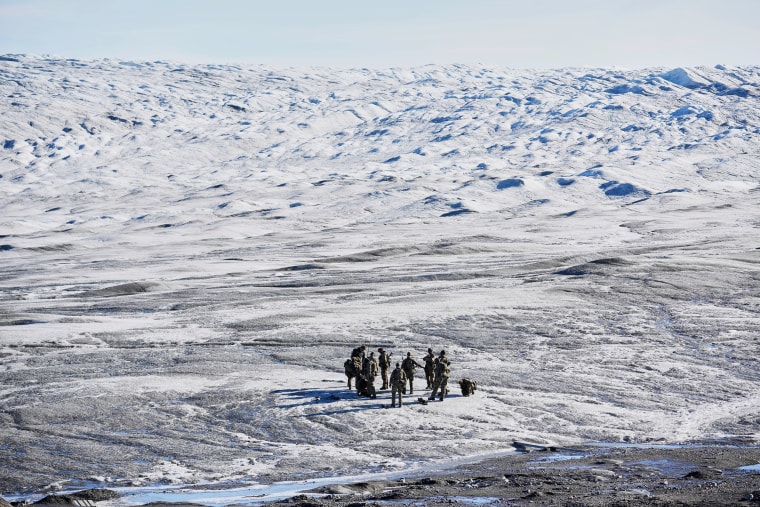
Greenland: Greenland is the world's largest island, located between the Arctic and Atlantic Oceans, known for its vast ice sheets and natural resources. It has drawn international attention for its potential geopolitical and economic value, especially regarding sovereignty and resource development.
Norway: Norway is a Nordic country rich in oil and gas resources, playing a key role in global energy markets. It is involved in Arctic affairs and energy projects which are relevant to discussions about Greenland's strategic importance.
Equinor: Equinor is Norway's state-owned energy company focused on oil, gas, and renewable energy. The company has interests in Arctic exploration and production, linking it to geopolitical dynamics in the Greenland region.
Jonas Gahr Støre: Jonas Gahr Støre is the Norwegian Prime Minister, leading the country's government and shaping Norway's energy and foreign policies. His role includes addressing Norway’s position on Arctic development and international cooperation with Greenland.
External articles
- but He's Not Alone in the Arctic Tug of War
- Analysis: Who can save NATO from Trump as he escalates ...
- 'We need Greenland': Trump repeats threat to annex ...
Articles in same category
- Georgia Man Arrested for Terroristic Threats to Shoot Up Hartsfield-Jackson Airport
- Norway’s Oil Fund Revises Ethical Investment Guidelines Amid Political Debate
- Kristian Berg Harpviken Named Director of Norwegian Nobel Institute: Shaping the Future of the Nobel Peace Prize
YouTube Video
Title: Why Trump Wants Greenland?🤔
URL: https://www.youtube.com/shorts/u5RwlVkDuco
News