


US Expands Travel Ban to 39 Countries in 2026, Impacting Global Travel
As of January 1, 2026, the United States expands its travel ban to 39 countries, nearly doubling the previous list from 19.
This move, announced on December 16, 2025, affects travelers without valid US visas from newly included nations such as Burkina Faso, Laos, and Syria.
The restrictions disrupt tourism, academics, business, and family visits, with some exceptions for permanent residents and diplomats.
This policy shift reflects a global trend toward heightened security alongside streamlined visa processes.
Travelers must now plan carefully and stay informed amid this changing landscape.
Read more:
perplexity.ai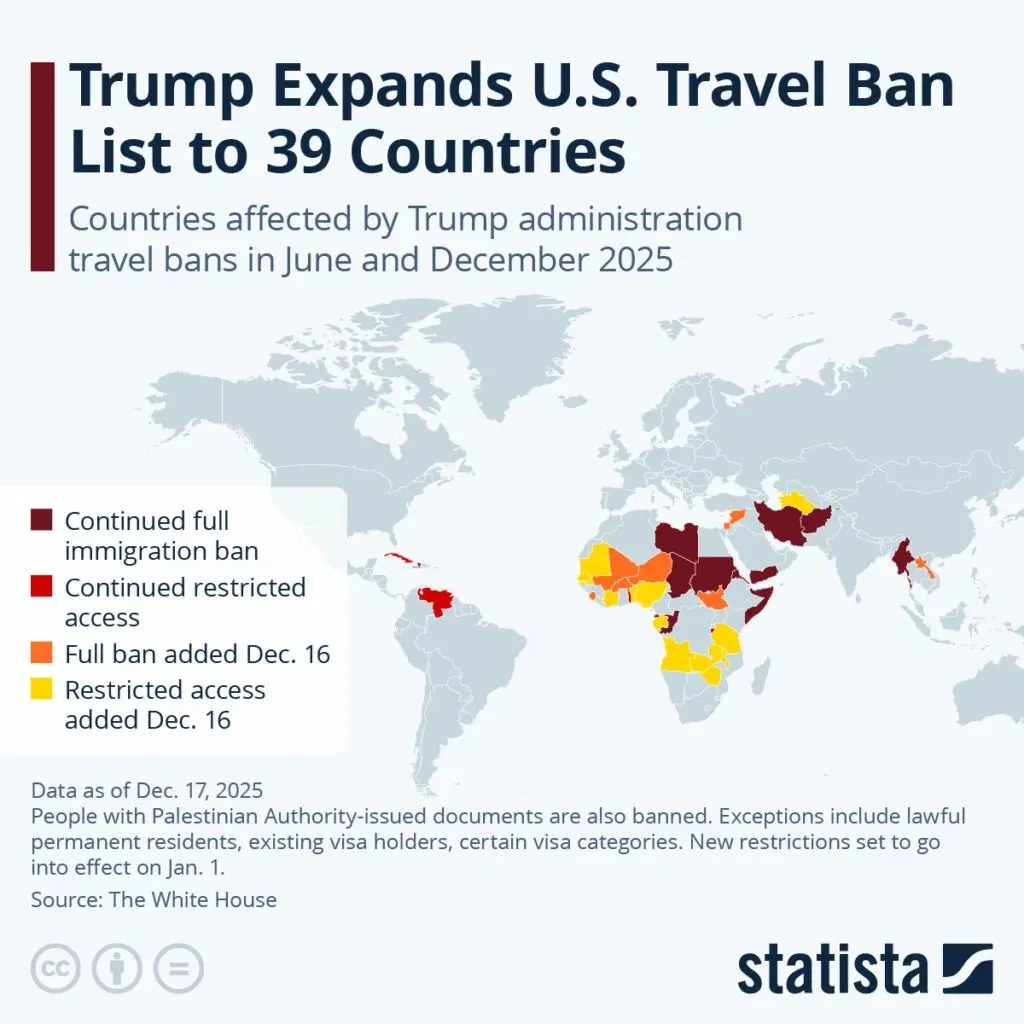
US Expands Travel Ban to 39 Countries, Reshaping Global Travel Landscape in 2026
As the dawn of 2026 ushers in new hopes and adventures, the travel world faces a significant upheaval. Come January 1, the United States enforces an expanded travel ban encompassing 39 countries—a dramatic leap from the previous 19. This broad sweep, announced by the White House on December 16, 2025, adds 20 nations plus Palestinian Authority document holders to the list of restricted entrants, ushering in a new era of tightened borders and disrupted journeys.
Why does this matter? For travelers, students, business professionals, and families, these changes cast a long shadow. Nationals from affected countries without valid US visas now face a near total suspension of entry. Tourist plans are abruptly halted, academic pursuits put on hold, business collaborations delayed, and heartfelt family reunions left in limbo. Although exceptions linger—for lawful permanent residents, dual nationals, and specific diplomatic cases—the message is clear: the American gateway narrows its embrace.
The countries newly caught in this net include Burkina Faso, Laos, Mali, Niger, Sierra Leone, South Sudan, and Syria, among others. Visa issuance freezes for these nationals mirror heightened security concerns voiced by US authorities. Employers, too, must navigate this tightening labyrinth, balancing compliance and workforce mobility against an uncertain backdrop.
Beyond mere policy, this shift symbolizes a broader trend. The US joins global powerhouses like the UK and nations in the Schengen zone, which are implementing sophisticated visa and travel authorization systems to enhance security without sacrificing streamlining efforts. While Europe turns to ETIAS and ETA systems, Brazil introduces a user-friendly e-visa format, and the US revamps its H-1B visa priorities toward top-tier high-skill applicants. Yet, paradoxically, these advancements coexist with widening restrictions.
For adventurers, entrepreneurs, and hopeful students eyeing the American dream, 2026 demands vigilance and adaptability. Planning ahead is no longer optional; it’s essential. Travelers must scrutinize visa statuses, explore exemptions, and brace for potentially longer waits amid a transformed geopolitical landscape.
In a world growing simultaneously more connected and cautious, the expanded US travel ban underscores an unsettling paradox—a reminder that borders remain potent lines of control amid global aspirations for openness. Travelers, in turn, must navigate this new reality with resilience, foresight, and a keen awareness of what lies beyond the next customs checkpoint.
*For further details on the affected countries and exemptions, visit [BookMyBooking](https://www.bookmybooking.com/news/united-states-of-america-usa/us-expands-travel-ban-to-39-countries-effective-january-1-2026).*
Questions and answers
Q: Which countries are on the US travel ban list in 2026?
A: As of 2026, the US travel ban list includes countries identified by the Department of Homeland Security based on security, health, or diplomatic concerns. The list may vary over time, but typically includes nations with heightened security risks or ongoing conflicts. For the most current and official list, travelers should consult the US Department of State or DHS websites.
Q: How to check US visa status with new travel restrictions?
A: To check your US visa status amid new travel restrictions, visit the official US Department of State visa application website or the Consular Electronic Application Center (CEAC). Enter your visa application or passport details to get the latest updates. Additionally, the US embassy or consulate handling your case can provide status information, especially if restrictions have affected processing times.
Q: US travel ban exemptions for permanent residents
A: Permanent residents (green card holders) are generally exempt from US travel bans, meaning they can return to the US even if restrictions apply to their country of origin. However, they must carry valid documentation proving their status and may face additional screening at entry points. It's important for permanent residents to stay updated on specific exemptions and any procedural changes.
Q: Impact of US travel ban on business and students
A: The US travel ban can create significant challenges for businesses and students by restricting travel from certain countries, causing delays in visa approvals, and limiting opportunities for international collaboration. Students may face difficulties enrolling or continuing studies in the US, while businesses might experience disruptions in staffing and operations. Many affected individuals seek alternative arrangements or legal assistance to navigate these impacts.
Q: How to apply for US visas amid expanded travel restrictions
A: Applying for US visas during expanded travel restrictions requires careful preparation, including checking current eligibility criteria and banned nationalities on official government sites. Applicants should gather all required documents, complete application forms accurately, and book appointments at US embassies or consulates. It's advisable to allow extra time for processing and stay informed about any policy changes that might affect visa issuance.
Key Entities
United States: The United States is a federal republic in North America, comprising 50 states and a diverse population. It plays a significant role in global politics, economics, and military affairs.
White House: The White House is the official residence and workplace of the President of the United States, located in Washington, D.C. It serves as a symbol of the U.S. presidency and executive branch authority.
Burkina Faso: Burkina Faso is a landlocked country in West Africa, known for its rich cultural heritage and diverse ethnic groups. It faces challenges including political instability and security issues related to insurgent violence.
Laos: Laos is a Southeast Asian nation characterized by mountainous terrain and the Mekong River flowing through it. It is a socialist republic with a rapidly developing economy focused on hydropower and natural resources.
Palestinian Authority: The Palestinian Authority is a semi-autonomous government body responsible for administering parts of the West Bank. It was established as part of the Oslo Accords to govern Palestinian territories and negotiate peace with Israel.
External articles
- President Trump Expands His Travel Ban: What You Need ...
- Suspension of Visa Issuance to Foreign Nationals to Protect ...
- Restricting and Limiting the Entry of Foreign Nationals to ...
Articles in same category
- FAA Flight Reductions During Government Shutdown: Staffing Shortages or Political Motives?
- Iconic Luxury Resorts in Hawaii Featuring Polynesian Architecture and Premium Hospitality
- Luxury Hotel Openings to Watch in 2025: Exclusive Resorts and Historic Charm
YouTube Video
Title: New US Visa Rules Take Effect #uspolitics #immigrationpolicy #BorderSecurity #republicnews
URL: https://www.youtube.com/shorts/WQU8LDHRxzs
Travel