

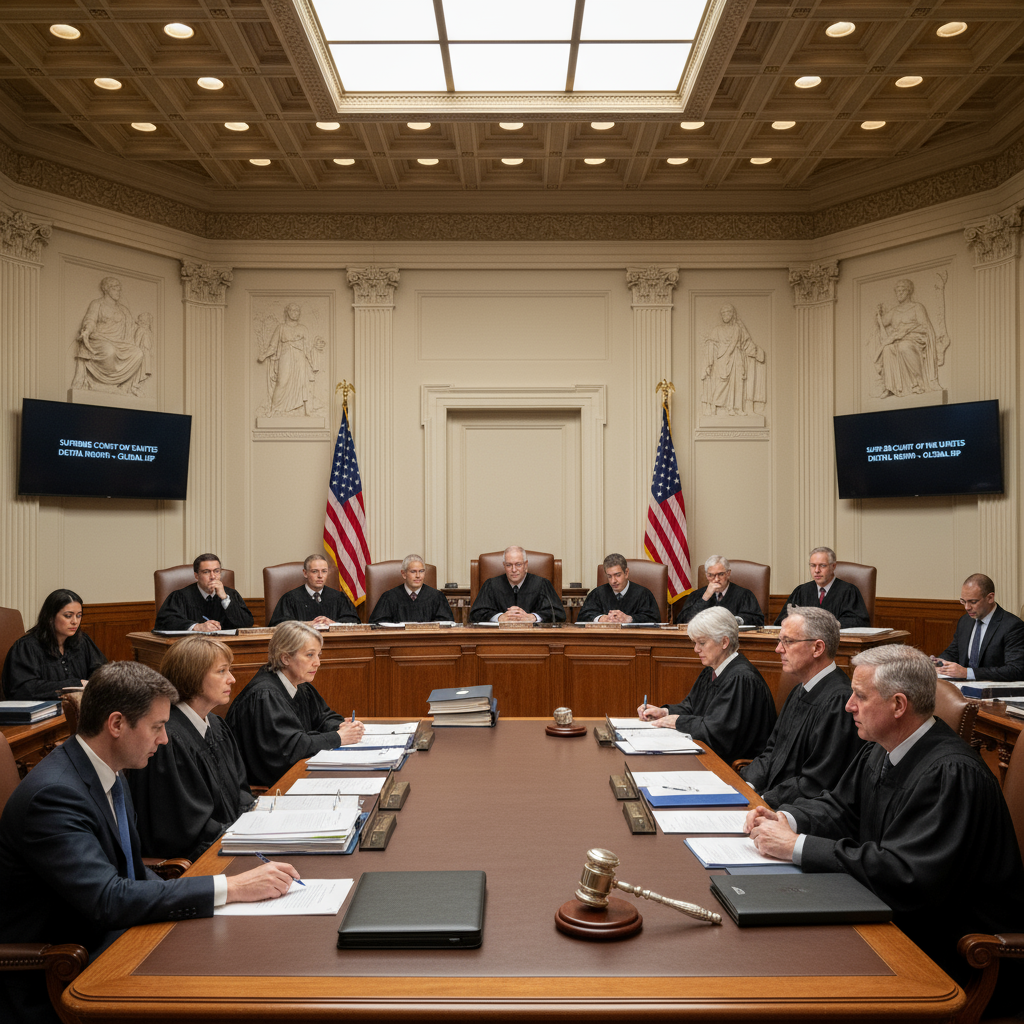
Supreme Court to Decide ISP Liability in Cox Communications v. Sony Music Case
The Supreme Court will hear the landmark copyright case Cox Communications, Inc. v. Sony Music Entertainment in December 2026, focusing on whether ISPs can be held liable for copyright infringements committed by their users under contributory infringement laws. The case arose from allegations that Cox failed to terminate accounts repeatedly involved in piracy despite numerous infringement notices. While a 2019 jury awarded nearly $1 billion to Sony Music, a 2024 appellate court partially reversed this, dismissing vicarious liability but upholding contributory infringement liability due to Cox’s continued service to repeat infringers. The key issues before the Supreme Court include whether ISPs’ mere knowledge of infringement is enough for liability or if affirmative actions to promote infringement are required, and how willfulness is defined regarding statutory damages. The ruling will significantly impact copyright enforcement, ISP responsibilities, and the balance between protecting intellectual property and maintaining an open, innovative internet. Advocates warn that broad ISP liability could lead to aggressive content filtering and stifle lawful online activities, while a narrower standard would protect ISPs from undue burdens yet still address clear infringement cases.
Supreme Court to Deliberate ISP Liability in Landmark Cox Communications v. Sony Music Case
The Supreme Court is set to hear arguments in the significant copyright law case Cox Communications, Inc. v. Sony Music Entertainment, scheduled for December 2026. This case addresses a pivotal question in digital rights and copyright enforcement: whether internet service providers (ISPs) like Cox Communications can be held liable for copyright infringements committed by their users under contributory infringement doctrines.
Background and Legal Issues
The dispute traces back to allegations that Cox Communications failed to terminate accounts associated with repeated piracy despite receiving extensive infringement notices from copyright holders. A 2019 district court jury found Cox liable for vicarious and contributory infringement, imposing statutory damages nearing $1 billion in favor of Sony Music Entertainment.
However, the U.S. Court of Appeals for the Fourth Circuit partially reversed these findings in 2024. While it dismissed vicarious liability — which requires a direct financial benefit and control over infringing activities — it upheld contributory infringement liability based on Cox’s continued provision of service to repeat infringers despite knowledge of their actions.
At the heart of the Supreme Court’s review is the interpretation of two critical legal principles:
- Material Contribution Standard: Whether ISPs can be held liable merely because they had “mere knowledge” of infringement and failed to terminate services for repeat infringers, or whether liability requires affirmative acts that promote or facilitate copyright infringement.
- Willful Infringement and Statutory Damages: Whether knowing about infringement suffices to establish willfulness under 17 U.S.C. § 504(c), triggering enhanced statutory penalties, or whether a higher threshold of intent or active participation is necessary.
Broader Implications for Copyright, Innovation, and the Open Internet
This case is poised to set a crucial legal precedent shaping the enforcement of copyright law in the digital ecosystem. If the Supreme Court endorses the “mere knowledge” standard applied by the Fourth Circuit, ISPs could face substantial exposure to statutory damages simply for failing to police user piracy, even without direct involvement in infringement.
Such an expansive interpretation raises concerns highlighted by amicus briefs from technology and public interest organizations including the Electronic Frontier Foundation, Center for Democracy & Technology, and the American Library Association. These groups underscore potential risks to the open internet, warning that broad ISP liability may compel providers to implement aggressive content filtering and over-blocking measures, which could chill lawful online activities and innovation.
Conversely, adoption of the “affirmative contribution” standard would require demonstrating that ISPs actively fostered or encouraged infringement to be held liable. This narrower liability framework promotes balance by protecting ISPs from undue burdens while still preserving mechanisms to address clear instances of contributory infringement.
Impact on the ISP Industry and Digital Rights Enforcement
The Supreme Court’s decision will also influence how willfulness is interpreted for statutory damages under copyright law, a key factor in potential financial penalties facing ISPs. Clarifying these standards will guide provider behavior regarding user piracy, content filtering, and compliance with digital rights enforcement, while impacting consumer access and privacy protections.
From a regulatory standpoint, the ruling aims to balance intellectual property rights protection against the imperative to maintain an open and accessible internet that fosters innovation. The outcome will define the limits of ISP liability for user-conducted copyright infringement and set a precedent for future cases involving digital platforms’ roles in copyright enforcement.
Conclusion
The Cox Communications, Inc. v. Sony Music Entertainment case represents a critical juncture in copyright law, digital rights, and internet access. The Supreme Court’s ruling will clarify the legal standards for contributory infringement liability of ISPs, deciding whether passive inaction to known piracy suffices for liability or if affirmative contribution is required. This decision will profoundly influence copyright enforcement strategies, ISP responsibilities, and the broader balance between protecting intellectual property and preserving an innovative, open digital ecosystem.
Frequently Asked Questions
Q: Supreme Court Cox v. Sony Music case date
A: The Supreme Court case Cox Communications, Inc. v. Sony Music Entertainment was argued on March 21, 2023, and the decision was issued on June 8, 2023. This case addressed important questions about internet service provider liability for copyright infringement by users. It clarified the standards under the Digital Millennium Copyright Act (DMCA) regarding safe harbor protections for ISPs.
Q: Cox Communications copyright infringement lawsuit
A: Cox Communications has faced lawsuits alleging copyright infringement primarily because its internet subscribers were accused of illegally sharing copyrighted material, such as movies and music, via peer-to-peer networks. In these cases, copyright holders argued that Cox did not take adequate measures to stop repeat infringers from using its service for piracy. Notably, a significant 2019 verdict ordered Cox to pay substantial damages for failing to terminate accounts of repeat infringers, highlighting the company's legal responsibility to police copyright violations on its network.
Q: Sony Music legal battle with ISP
A: Sony Music has engaged in legal battles with Internet Service Providers (ISPs) over copyright infringement issues. These disputes typically involve Sony Music seeking to hold ISPs accountable for allowing users to share copyrighted content illegally through their networks. The legal conflict often centers on whether ISPs must monitor and take action against copyright violations by their customers. Such cases highlight the tension between copyright enforcement and internet privacy, with courts varying in their rulings on the responsibilities of ISPs.
Q: Understanding contributory copyright infringement liability
A: Contributory copyright infringement liability arises when a person or entity knowingly contributes to another's infringement of copyrighted material. This means they do not directly infringe the copyright themselves but facilitate or enable the infringement by others. To be held liable, they must have knowledge of the infringing activity and materially contribute to it, such as by providing the means or tools for infringement. This concept helps hold parties accountable beyond the direct infringers, encouraging responsible conduct.
Q: Impact of affirmative contribution standard on ISPs
A: The affirmative contribution standard affects Internet Service Providers (ISPs) by clarifying their liabilities related to user-generated content. Under this standard, ISPs may be held responsible if they intentionally contribute to or promote illegal or infringing content. This creates an obligation for ISPs to actively monitor and manage content rather than passively providing access. Consequently, it can increase operational costs and legal risks for ISPs, influencing their content moderation policies and technological measures.
Key Entities
Sony Music: Sony Music Entertainment is a global music company and one of the 'Big Three' record labels. It manages a vast catalog of recordings and artists across various genres and plays a central role in music production and distribution.
Cox Communications: Cox Communications is a major American telecommunications company providing internet, cable television, and phone services. It has been involved in legal cases related to copyright infringement and digital content distribution.
U.S. Supreme Court: The U.S. Supreme Court is the highest court in the United States, responsible for interpreting constitutional and federal law. It often issues landmark rulings that shape national legal precedents on a wide range of issues.
Fourth Circuit: The United States Court of Appeals for the Fourth Circuit is a federal appellate court with jurisdiction over districts in Maryland, Virginia, West Virginia, North Carolina, and South Carolina. It reviews decisions from district courts and is influential in shaping regional and federal law.
American Intellectual Property Law Association: The American Intellectual Property Law Association is a professional organization for attorneys and others engaged in the practice of intellectual property law. It provides education and advocacy on issues related to patents, trademarks, copyrights, and trade secrets.
External articles
- Cox Communications, Inc. v. Sony Music Entertainment
- Sony Music Entertainment v. Cox Communications, Incorporated
- No. 24-171
Articles in same category
- Vince Gill Signs Lifetime Deal with MCA Records to Celebrate 50 Years in Country Music
- Rising US-China Trade Tensions: Impact on Rare Earth Minerals, TikTok Deal, and Global Supply Chains
- Independent Music Market Rise Fueled by Technology and Platforms like Revelator
YouTube Video
Title: The Synopsis - Cox Communications v. Sony Music Entertainment
Channel: University of Richmond School of Law
URL: https://www.youtube.com/watch?v=QmAcdhpHhjw
Published: 9 days ago
Music