

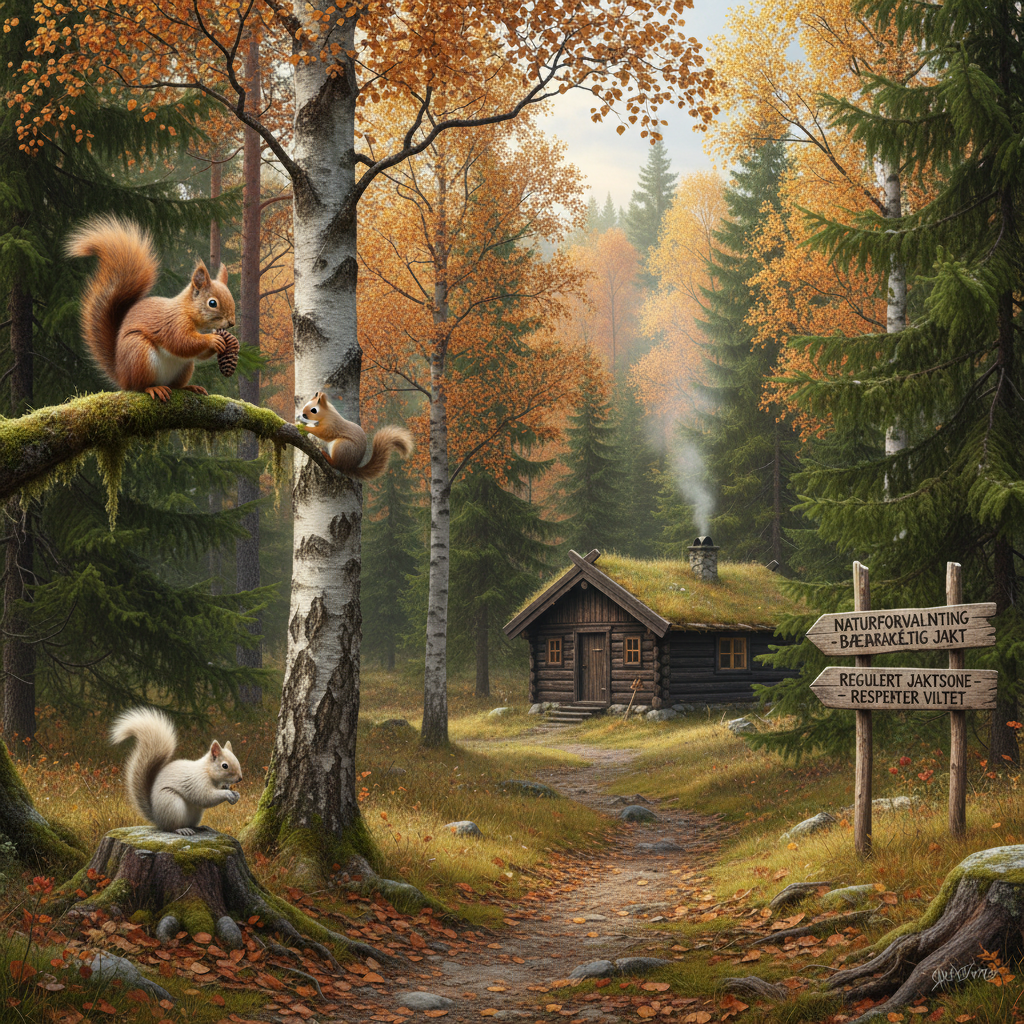
Squirrel Hunting in Norway: Tradition, Regulation, and Sustainable Management
Squirrel hunting in Norway is a legally permitted tradition managed through strict regulations and mandatory reporting to ensure sustainability.
Annually, around 800 to 1800 squirrels are harvested, with monitoring supporting population viability.
The practice holds cultural and economic importance, linked to the fur economy and local hunting communities.
Ethical debates continue, but proponents emphasize regulated harvesting aligned with conservation.
Norway’s approach balances tradition, wildlife management, and sustainability within a regulated legal framework.

Frequently Asked Questions
Q: Why is squirrel hunting allowed in Norway
A: Squirrel hunting is allowed in Norway primarily as a traditional recreational activity and a means of managing squirrel populations to prevent overpopulation. The Eurasian red squirrel, common in Norway, can compete with other wildlife and affect forest ecosystems if their numbers grow too large. Hunting regulations are in place to ensure sustainable population control, supporting a balanced natural environment. Additionally, squirrel hunting is regulated during specific seasons to maintain ecological balance and protect wildlife health.
Q: Is squirrel hunting legal in Norway
A: Squirrel hunting is generally legal in Norway, but it is subject to specific regulations and hunting seasons set by Norwegian authorities. The red squirrel is protected in some regions, and hunting is usually allowed only during designated times to ensure sustainable populations. Hunters must also comply with local wildlife laws and obtain necessary permits if required. It is important to check the current regulations with the Norwegian Environment Agency or local hunting authorities before planning a squirrel hunting trip.
Q: History of squirrel hunting in Norway
A: Squirrel hunting in Norway has a long tradition linked to both subsistence and sport. Historically, the Eurasian red squirrel, native to Norway's forests, was hunted for its fur and as a food source by rural communities. Over time, squirrel hunting evolved into a regulated outdoor activity, with seasonal restrictions to protect the population during breeding periods. Today, it is managed within Norway's wildlife conservation framework, balancing ecological needs with recreational hunting practices.
Q: Squirrel population in Norway
A: Norway is home to the Eurasian red squirrel, which is the native species found throughout the country. However, the population has faced challenges due to competition from the introduced invasive eastern grey squirrel, mainly present in southern parts of Norway. Conservation efforts focus on monitoring and controlling the grey squirrel to protect the native red squirrel population, which is considered a valuable part of Norway's natural heritage.
Q: Norwegian hunting regulations
A: Norwegian hunting regulations are designed to ensure sustainable wildlife management and conservation. Hunters must follow specific rules regarding hunting seasons, permitted species, bag limits, and methods of hunting. A valid hunting license and a Hunter's Certificate are required, which involves passing a theoretical and practical test. Additionally, hunters must respect protected areas and may need to obtain permission from landowners before hunting on private property. Regulations are regularly updated and enforced by the Norwegian Environment Agency.
Key Entities
Norwegian Association of Hunters and Anglers: The Norwegian Association of Hunters and Anglers is Norway's largest organization for outdoor enthusiasts focused on hunting and fishing. It promotes sustainable management of wildlife resources and provides training and advocacy for its members.
Statistics Norway: Statistics Norway is the official government agency responsible for collecting and publishing statistical data about Norwegian society and economy. Its data supports informed decision-making in public policy and research.
Lasse Frost Eriksen: Lasse Frost Eriksen is a Norwegian researcher affiliated with environmental studies and wildlife management. He contributes expertise on sustainable hunting practices and the ecological impact of hunting regulations.
Norwegian Institute for Nature Research: The Norwegian Institute for Nature Research (NINA) conducts applied research on biodiversity, ecosystems, and natural resource management. Its findings inform conservation policies and sustainable use of Norway's natural environment.
Aftenposten: Aftenposten is Norway's largest printed newspaper, known for comprehensive news coverage and investigative journalism. It provides in-depth reporting on national issues, including environmental and wildlife topics.
External articles
- wildlife management with a capitalistic or a socialistic flavor
- Why is squirrel hunting allowed in Norway?
- 14. Other game species in Norway
Articles in same category
- Beaver Lodges and Ecosystem Engineering: Wildlife Interactions and Conservation Insights
- NASA Pushes Artemis II Lunar Mission Amid Government Shutdown and Leadership Controversy
- Orionid Meteor Shower 2025: Peak Viewing of Halley’s Comet Debris in October
YouTube Video
Title: I Hunted Squirrels with My Hunting Dogs!
Channel: Kendall Gray Vlogs
URL: https://www.youtube.com/watch?v=b00yZRvgrhg
Published: 9 months ago
Science