


Rising Middle East Conflict and Global Travel Impact in 2026
As March 2026 unfolds, a sharp tremor shakes the global travel landscape, sending ripples that demand our keenest attention.
The U.S. government’s recent issuance of Level 4 "Do Not Travel" advisories for Iran, Iraq, Lebanon, and Afghanistan punctuates a moment of grave geopolitical tension.
Travelers worldwide navigate through disrupted flight paths and growing unease.
Meanwhile, U.S. airlines brace for a surge in domestic travel despite international cautiousness.
This moment is a cautionary tale of how politics, security, and curiosity collide, urging travelers in 2026 to stay informed and mindful.
Read more:
perplexity.ai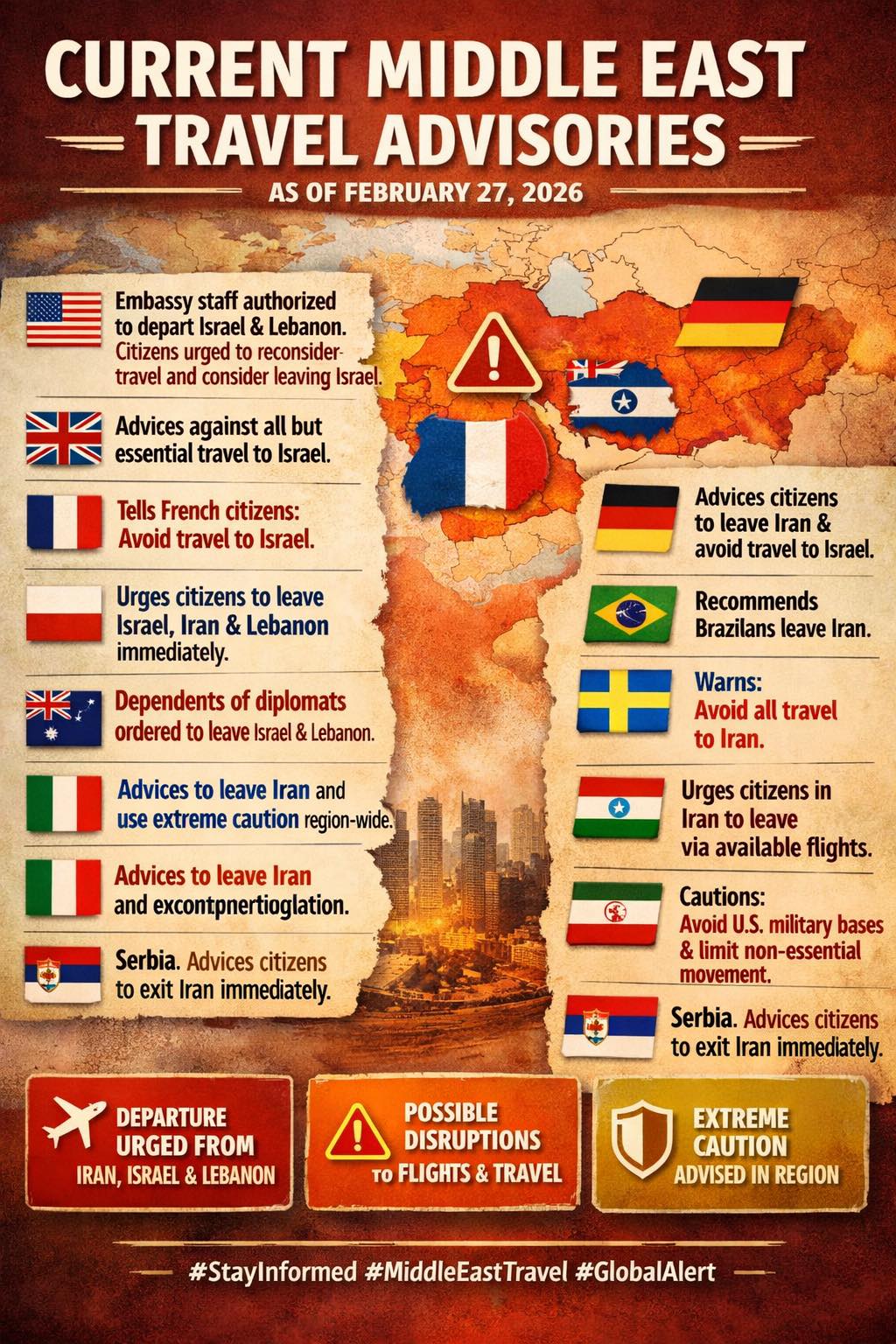
Turbulent Skies and Troubled Lands: What the Rising Middle East Conflict Means for Global Travelers
As March 2026 unfolds, a sharp tremor shakes the global travel landscape, sending ripples that demand our keenest attention. The U.S. government’s recent issuance of Level 4 "Do Not Travel" advisories for Iran, Iraq, Lebanon, and Afghanistan punctuates a moment of grave geopolitical tension, rooted in escalating conflicts involving Iran. This is more than a regional flare-up—it is a seismic event in global security that has profound consequences for the itinerant soul.
Travelers worldwide are now navigating through a storm of uncertainty. Airports and airlines strain under the weight of disrupted flight paths, rerouted itineraries, and growing unease. The Department of State’s broad “Worldwide Caution” advisory calls on Americans abroad to heighten vigilance, spotlighting risks that transcend borders. What was once an adventure now carries an undercurrent of caution, compelling everyone to rethink not just where they might go, but how and when.
Cruise passengers, particularly those eyeing West Coast departures aboard Carnival’s Firenze ship, are feeling the pinch. November’s sudden cancellations serve as a stark reminder that global instability can swiftly ripple through the travel market, impacting plans and dreams alike. Meanwhile, on the tarmac, U.S. airlines brace for an unprecedented surge this spring, forecasting 171 million passengers—a 4% climb despite geopolitical headwinds. The contrast is striking: a booming domestic travel demand amid tightened international cautiousness.
Inside this maelstrom lies a less visible but equally significant story—the “Trump Slump,” the dramatic plunge in U.S. inbound tourism, shadowed by restrictive visa policies and a fraught political climate. While global wanderlust accelerates elsewhere, American destinations witness dwindling foreign footfalls. Tourism-dependent communities brace for economic tremors while the world turns to new horizons.
The reality of this moment is complex. Beyond headlines and advisories, it is a cautionary tale about how politics, security, and human curiosity collide in unpredictable ways. For the traveler in 2026, staying informed has become as vital as packing the right gear. The allure of distant lands remains, but with it comes a call to mindfulness—understanding the world as it is, not merely as we wish it to be.
As the spring thaw ushers in more journeys, one truth is clear: global tensions have remapped the terrain of travel, reminding us all that in this era, wanderlust thrives best when tempered by wisdom and care.
Questions and answers
Q: Impact of Middle East conflict on travel
A: Conflicts in the Middle East often lead to increased security concerns, flight cancellations, and restricted airspace, disrupting travel plans in and around the region. Tourists and business travelers may face heightened risks, leading to reduced tourism and altered travel routes. Additionally, insurance costs for airlines and travelers may rise, and some countries may issue travel warnings or advisories against visiting affected areas.
Q: Current U.S. travel advisories for Middle East
A: The U.S. Department of State regularly updates travel advisories for Middle Eastern countries based on safety, security, and political stability. Travelers are encouraged to check the official U.S. travel website before planning trips, as advisories may include warnings about terrorism, armed conflict, and civil unrest. Certain regions might be designated higher risk, prompting recommendations to avoid non-essential travel or to take extra precautions.
Q: How geopolitical tensions affect airlines
A: Geopolitical tensions can disrupt airline operations by causing airspace closures, increasing fuel and security costs, and limiting flight routes. Airlines may need to reroute flights to avoid conflict zones, leading to longer travel times and higher expenses. Additionally, political instability can reduce passenger demand on certain routes, impacting airline revenues and scheduling.
Q: Reasons for decline in U.S. inbound tourism
A: Several factors contribute to the decline in U.S. inbound tourism, including stricter visa policies, increased security screenings, and rising travel costs. Global economic fluctuations and geopolitical concerns can also deter tourists. Moreover, competition from other international destinations and changing traveler preferences toward alternative locations affect the overall number of visitors to the U.S.
Q: Travel tips during global conflicts
A: When traveling during global conflicts, it's crucial to stay informed through reliable news sources and government travel advisories. Avoid conflict zones and areas with heightened security risks, and have contingency plans in case of sudden changes in safety conditions. Carry important documents, register with your embassy, and keep emergency contacts handy. It's also advisable to have travel insurance that covers conflict-related disruptions.
Key Entities
U.S. government: The U.S. government is the federal authority overseeing the executive, legislative, and judicial branches of the United States. It plays a significant role in international diplomacy and security, particularly in Middle Eastern geopolitics.
Iran: Iran is a Middle Eastern country with significant influence in regional politics and a history of tension with the U.S. government. It has strong ties with groups in Lebanon and Iraq and is often involved in regional conflicts.
Iraq: Iraq is a country in the Middle East that has experienced prolonged instability and conflict since the early 2000s. It is strategically important due to its location and natural resources, and hosts various foreign and domestic armed groups.
Lebanon: Lebanon is a Middle Eastern nation known for its diverse religious composition and complex political landscape. It has been significantly affected by regional conflicts and influences from Iran and other neighboring countries.
Carnival: Carnival is a global entertainment company known primarily for its cruise line operations. It is distinct from geopolitical topics and unrelated to Middle Eastern affairs.
External articles
- What to do when geopolitical instability impacts global travel
- What are the implications of geopolitical risks on travel and ...
- Geopolitical Conflicts and Air Travel - www .bdl .aero
Articles in same category
- FAA Flight Reductions During Government Shutdown: Staffing Shortages or Political Motives?
- Iconic Luxury Resorts in Hawaii Featuring Polynesian Architecture and Premium Hospitality
- Luxury Hotel Openings to Watch in 2025: Exclusive Resorts and Historic Charm
YouTube Video
Title: Is the US at war with Iran because of Israel?
URL: https://www.youtube.com/shorts/1KpVaQzcxCc
Travel