

Residential Clean Energy Credit Expiration 2025: Solar Adoption Impact
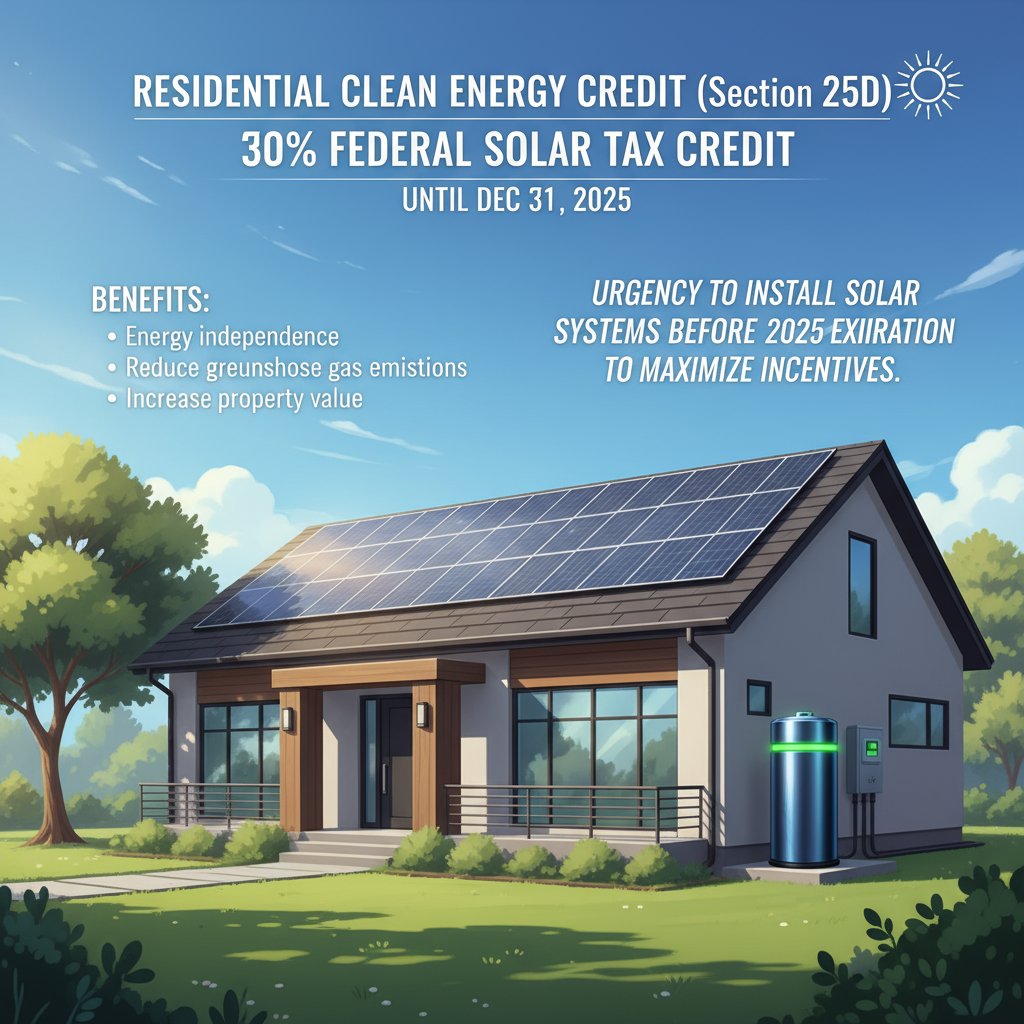
The federal Residential Clean Energy Credit, offering a 30% tax credit on solar installations, is set to expire on December 31, 2025. This impending deadline creates urgency for homeowners to install solar systems promptly to secure significant financial savings before costs rise. Beyond cost benefits, solar energy supports environmental goals by reducing carbon emissions and enhancing property values. Additionally, integrating battery storage increases energy independence and resilience. As this critical expiration approaches, homeowners are encouraged to act swiftly to maximize both economic and environmental advantages while supporting broader renewable energy adoption efforts.
The Impending Expiration of the Residential Clean Energy Credit and Its Impact on Solar Adoption
Homeowners increasingly turn to solar power for more than just financial savings. Factors such as energy independence, reducing greenhouse gas emissions, and enhancing property value play significant roles in the decision to install solar energy systems. Central to these choices is the federal solar tax credit, also known as the Residential Clean Energy Credit (Section 25D), which currently offers a 30% credit on qualifying solar system installations. However, with this incentive set to expire on December 31, 2025, homeowners face urgent deadlines to benefit from substantial tax savings before costs rise and adoption rates potentially decline.
Federal Solar Tax Credit Expiration and Its Consumer Implications
The 30% Residential Clean Energy Credit significantly lowers the upfront expense of solar panel installations. Its expiration at the end of 2025 means that any solar system installed after this date will no longer qualify for this federal incentive, leading to higher initial outlays for homeowners. Without this tax credit, the payback period for solar systems is expected to lengthen, especially in states lacking supplementary local solar incentives. This shift is anticipated to slow the pace of renewable energy adoption, which has been stimulated by the financial appeal of the tax credit.
Urgency in Solar System Installations Before 2025
Given the approaching deadline, there is heightened urgency among consumers to install solar systems promptly to secure the 30% credit. Delaying beyond December 31, 2025, could mean forfeiting thousands of dollars in savings and encountering increased installation costs. This timing consideration is influencing market trends in 2025, with a surge in installations as homeowners seek to maximize incentives.
Solar Energy’s Contributions to Environmental and Financial Goals
Beyond cost considerations, solar energy offers significant environmental benefits. By generating clean, renewable electricity, solar systems reduce reliance on fossil fuels and contribute to lowering carbon emissions. This aligns with broader federal energy policies aimed at climate mitigation and the advancement of sustainable technologies. Additionally, solar installations often increase property values, making them attractive investments for homeowners looking to enhance their real estate equity.
Enhancing Energy Self-Sufficiency Through Battery Storage Integration
The integration of battery backup solar systems complements solar panel installations by allowing homeowners to store excess energy generated during daylight hours for use during nighttime or grid outages. This capability enhances energy independence and supports self-reliance, further reducing dependence on utilities and fossil fuel-based power. Battery storage systems are increasingly seen as vital components in residential renewable energy setups, aligning with climate goals and consumer preferences.
Navigating Policy-Driven Incentives and Market Trends
Federal energy policy, specifically the Residential Clean Energy Credit, continues to play a pivotal role in shaping consumer decisions about solar adoption. As the 2025 expiration approaches, the solar market is responding with shifts in installation rates and an emphasis on combining solar with battery storage to maximize benefits. These policy-driven incentives not only affect immediate economics but also influence long-term investments into climate mitigation technologies.
Conclusion
The scheduled expiration of the federal solar tax credit in late 2025 creates a critical window for homeowners to act decisively on solar installations. Beyond financial incentives, solar energy investments contribute to energy independence, environmental responsibility, and property value enhancement. The integration of battery backup systems further strengthens energy resilience. To fully leverage these benefits and avoid increased upfront costs, homeowners are advised to expedite solar system installations before the end of 2025. This strategic timing supports both individual economic gains and broader renewable energy adoption goals essential for climate change mitigation.

Frequently Asked Questions
Q: Why choose home solar
A: Choosing home solar power offers several benefits including reducing monthly electricity bills, increasing energy independence, and decreasing your carbon footprint. Solar energy is a renewable and clean source, which helps combat climate change and reduces reliance on fossil fuels. Additionally, many regions offer incentives and tax credits for installing solar panels, making it a financially attractive option for homeowners.
Q: Benefits of solar power for homes
A: Solar power for homes offers multiple benefits including reducing electricity bills, lowering carbon footprints, and increasing energy independence. By generating clean energy from sunlight, homeowners can decrease reliance on fossil fuels and contribute to environmental sustainability. Additionally, solar panels can increase property value and may qualify for government incentives or tax credits, making them a cost-effective and eco-friendly energy solution.
Q: Impact of federal solar tax credit ending
A: The end of the federal solar tax credit would likely result in higher upfront costs for solar panel installations, reducing the financial incentive for homeowners and businesses to switch to solar energy. This could slow the growth of solar adoption, decreasing demand in the solar industry and potentially impacting jobs. Without this credit, solar energy may initially seem less affordable compared to traditional energy sources, although declining technology costs could help mitigate this effect over time.
Q: How to find reliable solar installers
A: To find reliable solar installers, start by researching companies with strong local reputations and positive customer reviews on trusted platforms. Verify that they have proper licensing, certifications such as NABCEP (North American Board of Certified Energy Practitioners), and insurance coverage. Ask for multiple quotes and check references or past project examples to assess quality and professionalism. Additionally, consult organizations like the Better Business Bureau and industry associations for recommended installers.
Q: Does home solar improve property resale value
A: Yes, home solar panels generally improve property resale value. Many buyers see solar energy systems as a valuable addition that reduces electricity bills and increases energy efficiency. Studies have shown that homes with solar panels can sell faster and at a higher price compared to those without. However, factors like the quality of the installation, age of the system, and local energy costs may influence the exact impact.
Key Entities
Electrek: Electrek is a news website specializing in electric vehicles, renewable energy, and green technology. It provides industry updates, reviews, and analysis related to sustainable transportation and clean energy innovations.
Ron Shuffield: Ron Shuffield is a real estate broker associated with Berkshire Hathaway HomeServices EWM Realty. He represents clients in the Florida real estate market, focusing on residential property transactions.
Berkshire Hathaway HomeServices EWM Realty: Berkshire Hathaway HomeServices EWM Realty is a Florida-based real estate brokerage affiliated with Berkshire Hathaway. The company offers residential and commercial real estate services across the state.
Texas: Texas is the second-largest U.S. state by both area and population, known for its diverse economy including energy, technology, and agriculture. It is a significant market for real estate, attracting residents and businesses from across the country.
Florida: Florida is a southeastern U.S. state renowned for its beaches, tourism industry, and growing population. The state's real estate market is active, driven by demand for residential and vacation properties.
External articles
- 5 Benefits of Residential Solar
- Benefits of Residential Solar Electricity
- Survey Sunday: we asked WHY you chose home solar ...
Articles in same category
- Tesla's Advertising Shift: Promoting Corporate Governance and Musk's Compensation
- Kia Boosts EV Production in Europe with New EV2 and EV4 Models
- Tilmor Super E Electric Tractor: Sustainable, American-Made Farming Innovation
YouTube Video
Title: What Is The California Solar Tax Credit? #californiarealestate #realestate
URL: https://www.youtube.com/shorts/lt1mj7KdFXA
Energy