

Reclaiming Indigenous Place Names for Cultural Identity and Sovereignty
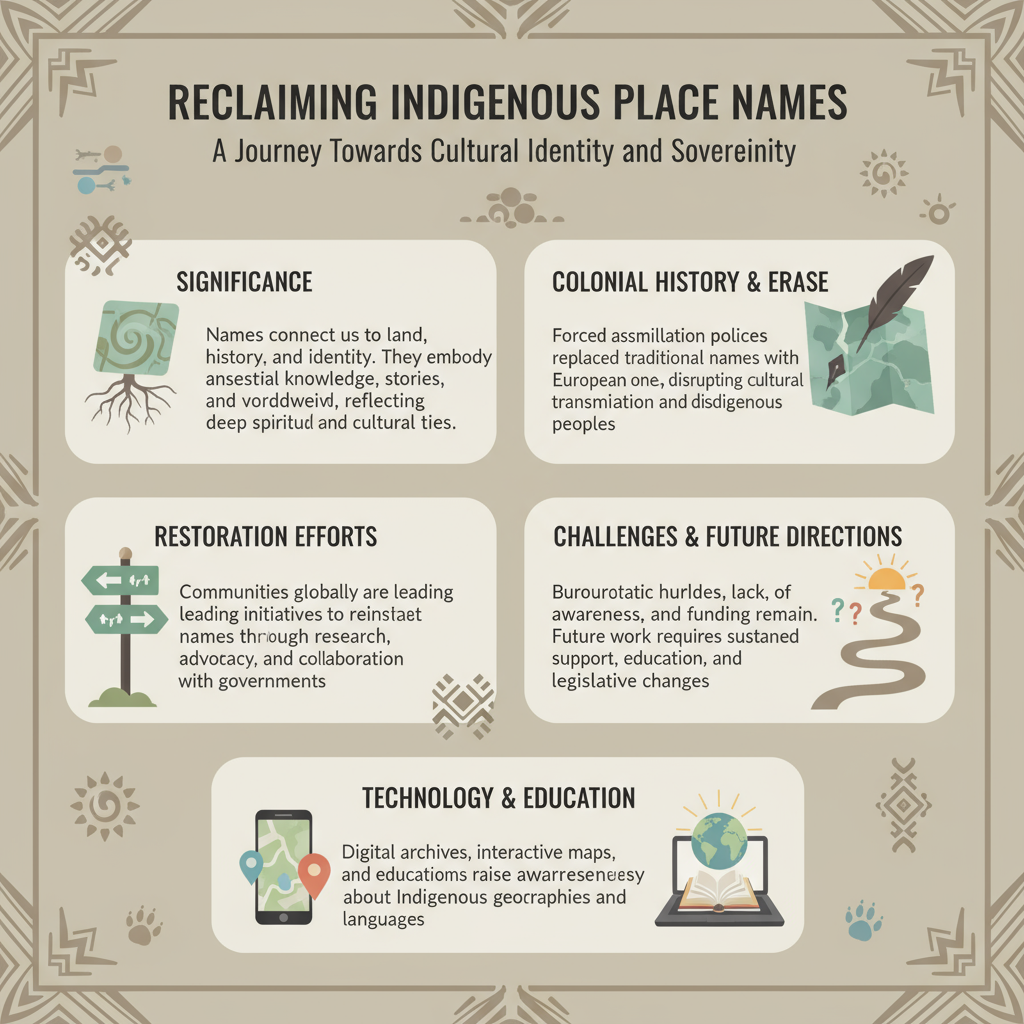
The restoration of Indigenous place names is a powerful movement central to cultural identity, social justice, and Indigenous self-determination. These names hold deep cultural, historical, and spiritual meaning, connecting communities to their land and heritage. Colonialism systematically erased these names, imposing settler names that reinforced dominance and suppressed Indigenous presence. Contemporary efforts to reclaim Indigenous place names involve documentation, activism, and education, such as projects replacing colonial names with Indigenous ones and the use of interactive maps and bilingual signage. Despite facing resistance, these initiatives emphasize the importance of authentic community engagement and policy reforms to address historical injustices. Supported by technology and education, the movement seeks not only to restore names but also to heal historical wounds and affirm Indigenous sovereignty and identity.
Title: Reclaiming Indigenous Place Names: A Journey Towards Cultural Identity and Sovereignty
Introduction
The restoration of Indigenous place names is a profound movement that transcends mere geographical labeling. It is a vital aspect of cultural identity, social justice, and self-determination for Indigenous peoples. This article explores the significance of reclaiming traditional place names, the historical context of their erasure, and the contemporary efforts to restore them, highlighting the role of technology, education, and policy in this transformative process.
The Significance of Indigenous Place Names
Indigenous place names are rich with cultural, historical, and spiritual significance. They embody the characteristics of the landscape, historical events, and the resources available, serving as a living tradition that deeply connects Indigenous communities to their environment. Reclaiming these names is not just about geography; it's a fight for cultural identity, language revitalization, and social justice, challenging the colonial power structures that have historically erased Indigenous presence and history.
Colonial History and the Erasure of Indigenous Names
Colonialism brought about a systematic renaming of Indigenous lands, often ignoring the cultural and historical depth of traditional names. This erasure has perpetuated colonial dominance by overshadowing Indigenous sovereignty with settler names, like the case of Cambridge Bay in Nunavut, originally known as Iqaluktuuttiaq. Such actions have not only marked territory but also justified the occupation of Indigenous lands, erasing cultural memory and reinforcing power dynamics.
Efforts to Restore Indigenous Place Names
Restoration efforts are multifaceted, involving documentation, activism, and the creation of educational tools. Projects like the Ogimaa Mikana Project in Toronto exemplify this by replacing colonial names with Indigenous ones, thereby supporting cultural revitalization. Interactive maps and bilingual signage in reservations and national parks further this cause, promoting Indigenous languages and reclaiming place names. However, these initiatives face resistance, highlighting the need for broader systemic change to address historical injustices.
Challenges and Future Directions
The movement to restore Indigenous place names is gaining momentum, yet it faces significant challenges. Engagement with Indigenous communities is crucial for authentic renaming processes, ensuring that the historical and cultural significance of these names is recognized. Education plays a pivotal role, with interactive maps and policy advocacy, like those proposed by Secretary Haaland's task force, helping to institutionalize these efforts. This movement not only seeks to reclaim land but also to heal historical wounds, promoting social justice and recognition of Indigenous rights.
Technology and Education in Place Naming
- Interactive Maps and Documentation: These tools provide a platform for documenting and promoting Indigenous place names, offering users an interactive way to understand their cultural significance. Digital platforms enhance the preservation of cultural identity through accessible educational resources.
- Cultural Revitalization through Language: Incorporating Indigenous languages into place naming supports language preservation and cultural identity. Educational materials and signage in these languages help connect communities to their heritage.
- Challenges to Restoration: Resistance to change and inadequate consultation with Indigenous communities pose significant barriers. Overcoming these requires systemic policy changes to address the entrenched injustices of colonial naming practices.
Conclusion
The future of Indigenous place naming is one of continued advocacy, supported by technology, education, and policy reform. A collaborative approach involving Indigenous communities, governments, and educational institutions is essential to ensure these names are not only recognized but respected. By acknowledging the cultural significance of Indigenous place names, we move towards healing historical wounds, fostering social justice, and affirming the cultural identity and sovereignty of Indigenous peoples.

Frequently Asked Questions
Q: restoring Indigenous place names
A: Restoring Indigenous place names involves recognizing and reinstating original names given to locations by Indigenous peoples before colonization or modern renaming. This practice honors Indigenous heritage, culture, and languages, contributing to cultural preservation and reconciliation. It often requires collaboration with Indigenous communities, research into historical records, and official government endorsement to change maps and signage. Restoring these names can foster greater awareness and respect for Indigenous histories and connections to the land.
Q: importance of Indigenous place names
A: Indigenous place names hold significant cultural, historical, and linguistic importance as they reflect the deep connection between Indigenous peoples and their ancestral lands. These names often convey stories, spiritual meanings, and ecological knowledge that have been passed down through generations. Recognizing and preserving Indigenous place names fosters respect for Indigenous heritage, supports cultural revitalization, and promotes awareness of Indigenous sovereignty and identity.
Q: examples of Indigenous place names in Arctic
A: Indigenous place names in the Arctic often reflect the languages and cultures of the Inuit, Sámi, and other native peoples. For example, 'Inuvik' in Canada means 'Place of Man' in the Inuvialuktun language. 'Nunavut,' the name of the Canadian territory, means 'Our Land' in Inuktitut. In the Sámi regions of Scandinavia, names like 'Kautokeino' originate from the Sámi language, reflecting local geography and culture.
Q: how colonialism affected Indigenous place names
A: Colonialism significantly impacted Indigenous place names by often replacing them with names imposed by colonizers to assert control and reflect their own cultures. This process erased or marginalized the original Indigenous names, leading to a loss of cultural heritage and historical connection to the land. In some cases, Indigenous place names were altered, mispronounced, or translated inaccurately, further distancing them from their original meanings. Today, there are efforts to reclaim and restore Indigenous place names as a way to honor Indigenous identities and histories.
Q: Indigenous place naming activism
A: Indigenous place naming activism involves efforts by Indigenous peoples to reclaim and restore original place names that reflect their languages, cultures, and histories. This movement challenges colonial names imposed during colonization, promoting recognition of Indigenous heritage and sovereignty. Activists often work with governments and communities to officially change place names, raising awareness about Indigenous connection to the land and correcting historical erasures.
Key Entities
Ella Marie: Ella Marie is a Norwegian-Sámi singer and songwriter known for promoting Sámi culture through her music. She incorporates traditional joik elements into contemporary styles, contributing to the visibility of indigenous Sámi art.
Katarina Barruk: Katarina Barruk is a Swedish-Sámi artist and musician dedicated to preserving the Southern Sámi language through her songs. Her work combines traditional joik with modern genres, enhancing awareness of Sámi heritage.
Sámi: The Sámi are an indigenous people inhabiting the Arctic areas of Norway, Sweden, Finland, and Russia. They have a distinct culture, language, and traditional practices such as reindeer herding.
Inuit Heritage Trust: The Inuit Heritage Trust is an organization focused on preserving and protecting Inuit cultural heritage in Canada. It manages traditional knowledge, artifacts, and supports the practice of Inuit customs.
Dena'ina: The Dena'ina are an Alaska Native Athabaskan people with their own language and cultural traditions. They traditionally inhabit the south-central region of Alaska, including areas around Anchorage and Kenai Peninsula.
External articles
- Reclaiming Indigenous Place Names
- The power of reclaiming Indigenous place names
- Restoration of Indigenous Place Names
Related Articles
- Victoria’s Secret Brand Identity Crisis and Shift to Inclusivity
- Assessing Donald Trump's Prospects for the Nobel Peace Prize: Independence, Criteria, and Controversies
- Rising Interest in Norwegian Language and Culture Among Young Americans
YouTube Video
Title: Lüvllesjh - From the Ume Sámi theatre piece where we connected again
Channel: Katarina Barruk - Topic
URL: https://www.youtube.com/watch?v=qss1n0RDllk
Life