

Process for Professional Golfers to Regain USGA Amateur Status Explained
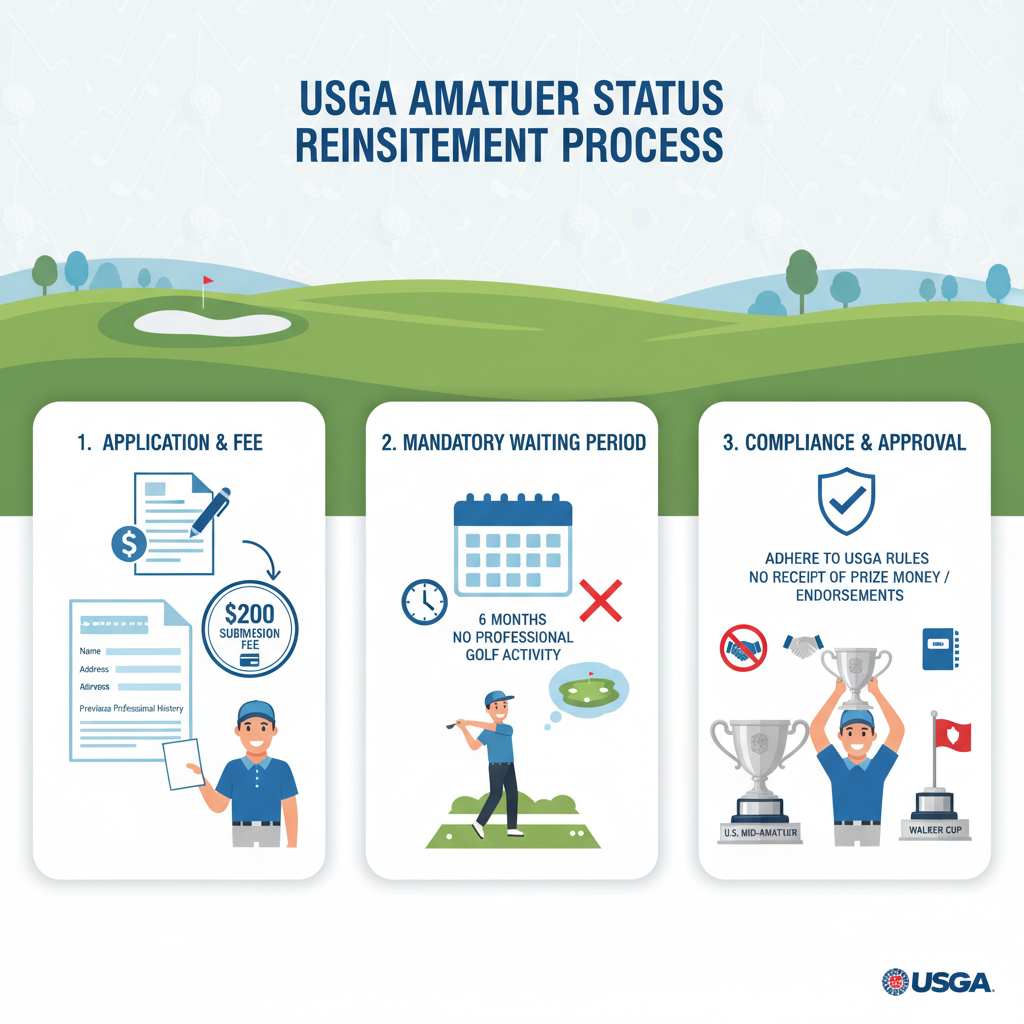
Professional golfers who wish to regain their USGA amateur status must undergo a reinstatement process managed by national governing bodies like the USGA. This process involves submitting a detailed application disclosing professional history, paying a fee, and serving a mandatory waiting or "cooling-off" period—typically at least six months—during which all professional activities, including coaching for pay and accepting prize money, must cease. The length of this waiting period may be adjusted based on the extent of the golfer’s professional career to ensure fairness in amateur competition. Compliance is closely monitored before amateur status is restored. Notable examples, such as Bud Cauley and Scott Harvey, show that former professionals can successfully return to compete as amateurs. This reinstatement framework balances fair access to amateur tournaments with the integrity and spirit of amateur golf.
Process and Rules for Professional Golfers to Regain USGA Amateur Status
Golfers who have competed professionally—including participating on tours such as the PGA Tour, providing paid instruction, or accepting prize money—lose their amateur status under the United States Golf Association (USGA) amateur status rules. To compete again as amateurs, these individuals must undergo a reinstatement process administered by the national governing body, such as the USGA in the United States. This article outlines the detailed process, compliance requirements, and rationale behind reinstatement, as well as notable examples of former professionals who successfully regained amateur status.
The Reinstatement Process: Application, Waiting Period, and Compliance
The path to regaining amateur status begins with submitting a comprehensive application through the USGA. Applicants must disclose their playing history, professional actions, employment, and prize money earned, supported by references who can verify this information. An application fee, generally around $200, accompanies the submission.
Following the application, applicants enter a mandatory waiting period, often referred to as a "cooling-off period," lasting at least six months from the last professional activity. This period encompasses any professional play, paid instruction, or receiving prohibited prizes. Importantly, the national governing body evaluates the length and success of each applicant's professional career on a case-by-case basis, potentially extending the waiting period to maintain competitive equity in amateur events.
During the waiting period, strict adherence to the USGA amateur status rules is required. Applicants must refrain from all professional actions, including coaching for pay or accepting prize money. The governing body carefully verifies compliance before formally restoring amateur status. The official reinstatement date occurs at the conclusion of the waiting period, subject to approval by the national governing body, which holds exclusive authority to grant, extend, or deny reinstatement.
Notable Examples of Reinstated Golfers
Several golfers have successfully transitioned back to amateur status, demonstrating the efficacy and fairness of the reinstatement system. Bud Cauley, formerly a PGA Tour professional, regained his amateur status and became eligible for prestigious competitions such as the U.S. Mid-Amateur. Scott Harvey, who had a brief professional career, returned to amateur ranks and achieved multiple USGA championship victories, including in the U.S. Mid-Amateur, and represented the United States in the Walker Cup. Similarly, Todd White rebuilt his amateur career after reinstatement, captaining the 2021 Walker Cup team and competing in several USGA amateur events.
These examples illustrate that the reinstatement process accommodates golfers transitioning from the professional ranks while preserving the integrity and competitive balance of amateur tournaments.
Ensuring Fairness Through Regulatory Measures
The USGA’s reinstatement framework serves to balance access to amateur competition with fairness and integrity in the sport. The mandatory cooling-off period prevents immediate re-entry that could confer an unfair advantage gained from recent professional experience. The national governing body’s case-by-case evaluation adjusts waiting period length based on the professional career’s duration and professional success, thus ensuring equitable treatment among applicants.
Full disclosure requirements facilitate transparency, enabling verification against known public and professional records to avoid misrepresentation. Moreover, the applicant’s continuous compliance with amateur status rules throughout the waiting period reinforces the commitment to fair play.
Through these measures, the USGA and other national governing bodies maintain confidence in amateur competition by rigorously enforcing amateur status rules. This system accords former professionals the opportunity to participate in amateur events while safeguarding the spirit and competitive integrity of tournaments like the U.S. Mid-Amateur and Walker Cup.
Conclusion
Regaining amateur status after a professional golf career involves a structured process overseen by national governing bodies such as the USGA. By requiring detailed applications, imposing tailored waiting periods, and enforcing strict compliance with amateur rules, the system ensures fairness for all competitors. The reinstatement framework respects the accomplishments of former professionals while preserving the integrity and spirit of amateur golf, allowing players to reengage in amateur competition on equitable terms.
Frequently Asked Questions
Q: how to regain amateur status in golf
A: To regain amateur status in golf after turning professional, you must apply to the governing body of golf in your region, such as the USGA or The R&A. This process typically involves a waiting period, which can range from one to two years, during which you cannot compete for prize money. You must also refrain from activities that violate amateur status rules. Once the waiting period is complete and requirements are met, the governing body will reinstate your amateur status, allowing you to compete in amateur competitions again.
Q: USGA rules on amateur reinstatement
A: The USGA allows golfers who have lost their amateur status, typically by playing for money or accepting prize money above certain limits, to apply for amateur reinstatement. The process involves a waiting period which varies depending on the nature and extent of the violation, usually ranging from one to two years. During this time, the golfer must not compete as a professional or violate any amateur status rules. After the waiting period, the player submits an application for reinstatement, and once approved by the USGA, they regain the privileges of an amateur golfer.
Q: Colt Knost amateur status application
A: Colt Knost is a professional golfer who turned pro after a successful amateur career. If you are referring to an application for regaining amateur status like Colt Knost might have submitted, such applications are typically made to the governing golf association, such as the USGA. The process involves formally requesting reinstatement of amateur status, after which the application is reviewed based on established criteria including time since last professional participation and adherence to amateur rules. Specific details about Colt Knost's amateur status application would depend on the timing and circumstances of his career changes.
Q: waiting period for pro golf to amateur
A: When a professional golfer wants to regain amateur status, they must typically observe a waiting period set by the governing body, such as the USGA or R&A. This period often lasts one to two years during which the player cannot compete in professional events or accept prize money. The exact duration and conditions vary depending on the rules of the specific golf association and the player's previous professional experience. The purpose is to ensure fairness in amateur competitions.
Q: eligibility for USGA amateur competitions
A: Eligibility for USGA amateur competitions generally requires participants to be amateur golfers who have not received payment or compensation for playing golf. Players must adhere to the USGA's Rules of Amateur Status, which include restrictions on prize money and endorsements. Additionally, competitors must meet specific entry requirements for each event, such as age limits or handicap index maximums. It is important to review the official conditions and eligibility criteria published by the USGA for each competition.
Key Entities
Colt Knost: Colt Knost is a professional golfer from the United States who has competed on the PGA Tour. He has also worked as a golf commentator, bringing expert analysis to televised golf events.
United States Golf Association: The United States Golf Association (USGA) is the governing body that oversees the rules of golf and organizes national championships, including the U.S. Open. It plays a central role in maintaining the integrity and standards of the sport in the United States.
Gary Nicklaus: Gary Nicklaus is the son of legendary golfer Jack Nicklaus and has been involved in golf both as a player and in supporting roles. He has contributed to the promotion and development of golf through his association with his family’s legacy.
Dillard Pruitt: Dillard Pruitt is a former American professional golfer who played primarily on the PGA Tour during the 1990s. After his playing career, he has been involved in golf as a commentator and analyst.
Scottie Scheffler: Scottie Scheffler is a leading American professional golfer known for his success on the PGA Tour and his rapid rise in world rankings. He has won multiple significant tournaments, establishing himself as one of the sport’s top competitors.
External articles
Related Articles
- 2025 DP World India Championship Live: How to Watch Golf Channel & NBC Sports Coverage
- Mental Game of Golf: Meditation, Resilience & Handling Criticism
- 2025 DP World India Championship Round 2: Tee Times, Highlights & Live Coverage
YouTube Video
Title: Will the USGA let Colt Knost return as an amateur?
Channel: GOLF's Subpar
URL: https://www.youtube.com/watch?v=au4HbCBlY4s
Published: 2 days ago
Golf