

Norway's State Budget Proposal: Boosting Defense and Ensuring Economic Stability
Norway's latest state budget proposal, presented by Jens Stoltenberg, emphasizes increased defense spending in response to global uncertainties, aligning with the country's NATO commitments and strategic Arctic interests. Alongside bolstering national security, the budget focuses on maintaining economic stability by managing inflation, supporting low unemployment, and carefully utilizing the Government Pension Fund Global (Oil Fund) to balance current fiscal needs with future savings. Navigating Norway's multi-party political landscape, the proposal also integrates environmental sustainability and public welfare priorities. Stoltenberg's budget reflects a comprehensive approach to safeguarding Norway's prosperity and international role amid evolving global challenges.
Norway's State Budget Proposal: A Focus on Defense and Economic Stability
Norway, known for its robust economy and significant sovereign wealth, faces a pivotal moment with the latest state budget proposal from Jens Stoltenberg. This budget emphasizes increased defense spending amid global uncertainties, while also aiming to maintain economic stability through careful management of inflation, unemployment, and the famed Oil Fund. As this proposal navigates through the Norwegian Parliament, it encounters political challenges, necessitating broad support from various parties.
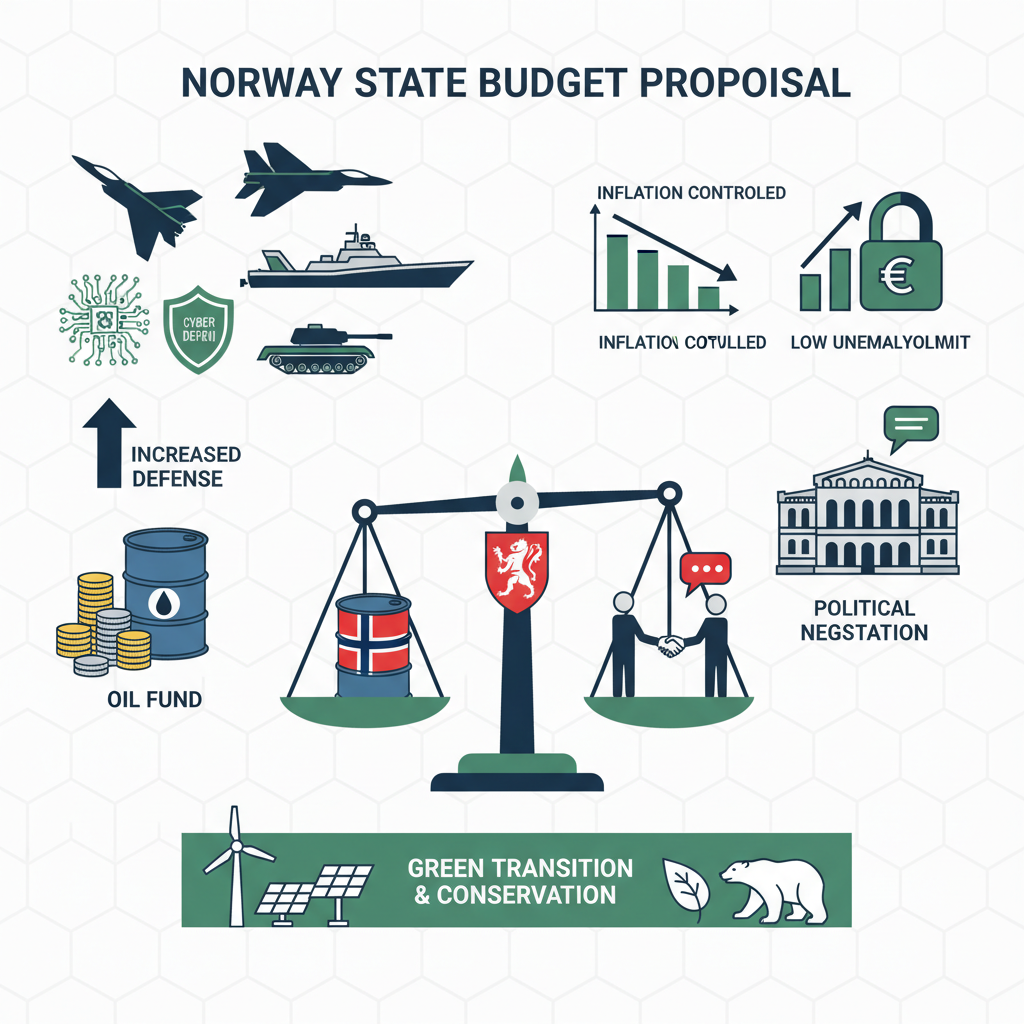
Key Takeaways: - Increased Defense Spending: The budget proposes a notable rise in defense allocations, aligning with Norway's NATO commitments. - Economic Stability: Focus on managing inflation and low unemployment to ensure economic resilience. - Oil Fund Utilization: Strategic use of the Government Pension Fund Global to balance current needs with future savings. - Political Negotiations: The proposal requires negotiation and compromise within the multi-party system of the Storting. - Environmental and Public Considerations: Integration of environmental sustainability and public welfare into economic planning.
---
Jens Stoltenberg's Vision for Norway's Economic Future
Jens Stoltenberg, with his extensive experience both as a former Prime Minister and current NATO Secretary General, has crafted a state budget proposal that reflects both domestic and international priorities. The focus on increased defense spending is not merely a response to global security concerns but also a strategic move to ensure Norway's role in international peacekeeping efforts remains robust. This approach underscores Norway's commitment to its NATO allies, especially in light of rising tensions in various global hotspots.
Defense Spending: A Strategic Necessity
Under Stoltenberg's proposal, defense spending is set to increase significantly. This decision comes at a time when global security dynamics are shifting, with Norway's geographical position making it a key player in Arctic security. The budget allocates funds towards modernizing military equipment, enhancing cyber defense capabilities, and ensuring readiness for both conventional and unconventional threats. This strategic spending not only bolsters Norway's defense posture but also supports local industries involved in defense production, thereby stimulating economic activity.
Economic Stability Through Fiscal Prudence
Norway's economy, one of the world's wealthiest, heavily relies on its oil and gas sectors. However, Stoltenberg's budget proposal aims to diversify economic reliance by focusing on sectors like technology and renewable energy. Inflation control is another cornerstone, with measures designed to keep price levels stable, ensuring that the purchasing power of Norwegians remains strong. With unemployment rates already low, the budget does not aggressively expand social spending but instead focuses on quality employment opportunities and skill development programs.
The Role of the Oil Fund
The Government Pension Fund Global, commonly referred to as the Oil Fund, plays a crucial role in this budget. With one of the largest sovereign wealth funds globally, Norway uses this fund to invest oil revenues for future generations. The budget proposal suggests a balanced approach, drawing on the fund to support current fiscal needs while ensuring its longevity. This balance is crucial as it reflects Norway's commitment to intergenerational equity, ensuring that future Norwegians benefit from today's wealth.
Navigating Political Waters
The Challenge of Consensus in Parliament
The Norwegian political landscape, characterized by a multi-party system, means that budget proposals like Stoltenberg's must navigate complex negotiations. The Labour Party, traditionally focused on social democracy, needs to align with other parties like the Progress Party, which might prioritize different aspects of the budget. The process of budget negotiations in the Storting is intricate, requiring compromise and strategic alliances to pass the budget.
Public and Environmental Considerations
Public opinion in Norway often leans towards preserving the welfare state, influencing how tax reforms and public spending are approached in budget discussions. Additionally, with Norway's identity tied to its natural resources, environmental sustainability is increasingly critical. The budget reflects this by allocating funds towards green technologies, conservation efforts, and climate change mitigation, aligning with both public sentiment and global environmental goals.
International Implications and Norway's Role
Norway's economic policies, especially concerning its Oil Fund, have global implications. Investment decisions from the fund can influence international markets, making Norway's fiscal strategy a point of interest worldwide. Moreover, Norway's NATO membership and its strategic position in the Arctic mean that its defense policies are not just national concerns but part of broader international security dynamics.
Conclusion
Jens Stoltenberg's state budget proposal for Norway is a nuanced document that seeks to address immediate defense needs while ensuring long-term economic stability. Through strategic defense spending, prudent economic management, and careful stewardship of the Oil Fund, the budget aims to navigate the challenges of both domestic politics and international relations. As it progresses through the Norwegian Parliament, the outcome of these negotiations will not only shape Norway's future but also reflect on the global stage how a prosperous nation manages its wealth and responsibilities in an uncertain world.

Frequently Asked Questions
Q: Jens Stoltenberg state budget proposal
A: Jens Stoltenberg, as Secretary General of NATO and former Prime Minister of Norway, does not directly propose national state budgets. However, during his tenure as Norway's Prime Minister, he was involved in shaping the country's budget decisions. If you are referring to a recent state budget proposal, it would be issued by Norway's current government, not Stoltenberg. For specifics on Norway's current state budget, it is best to refer to the Norwegian Ministry of Finance or official government publications.
Q: Norway defense spending 2024
A: In 2024, Norway is projected to continue increasing its defense spending, reflecting its commitment to NATO's guideline of allocating at least 2% of GDP to defense. The budget focuses on modernizing the military, including investments in advanced technology, cyber defense, and enhanced capabilities to address regional security challenges. This increase supports Norway’s strategic priorities in the Arctic and Baltic regions, addressing emerging threats and maintaining national security.
Q: Norwegian Oil Fund withdrawal rules
A: The Norwegian Oil Fund, officially known as the Government Pension Fund Global, follows strict withdrawal rules set by the Norwegian government. Withdrawals from the fund are not made for general budget purposes but are guided by the fiscal policy rule, which allows the government to spend annually an amount equivalent to the expected real return of the fund, estimated at around 3%. This approach ensures the fund’s capital is preserved and grows over time, supporting future generations. Direct withdrawals from the fund’s capital are rare and usually linked to extraordinary circumstances or legislative changes.
Q: Norway inflation and unemployment forecast
A: Norway's inflation rate is expected to moderate in the coming months, influenced by stable energy prices and targeted monetary policies. Unemployment is projected to remain low, supported by steady economic growth and strong labor market fundamentals. However, external economic uncertainties and global supply chain issues could impact these forecasts. Overall, Norway is likely to experience a balanced economic environment with manageable inflation and healthy employment levels.
Q: Norwegian Parliament budget negotiations
A: Budget negotiations in the Norwegian Parliament, known as the Storting, involve discussions and agreements among political parties to determine the government's spending and revenue plans for the upcoming fiscal year. These negotiations focus on allocating funds to various sectors such as health, education, and infrastructure, balancing public needs with fiscal responsibility. Typically, the government presents a proposed budget, which is then debated and amended by parliamentarians before final approval.
Key Entities
Jens Stoltenberg: Jens Stoltenberg is the Secretary General of NATO, responsible for coordinating alliance defense and security policies. He previously served as Prime Minister of Norway and has played a key role in NATO's response to geopolitical challenges.
Norway: Norway is a Nordic country known for its strong social welfare system and significant natural resources, including oil and gas. It is a founding member of NATO and plays an active role in international security and diplomacy.
NATO: NATO, the North Atlantic Treaty Organization, is a military alliance formed to ensure collective defense among its member states. It engages in strategic cooperation and crisis management to maintain peace and security in the Euro-Atlantic region.
Jonas Gahr Støre: Jonas Gahr Støre is the Prime Minister of Norway, leading the Labour Party and the current Norwegian government. He focuses on promoting social welfare, economic growth, and Norway’s role in international cooperation.
Trygve Slagsvold Vedum: Trygve Slagsvold Vedum is the Norwegian Minister of Finance and leader of the Centre Party. He is influential in shaping Norway’s fiscal policies and advocating for rural development within the government.
External articles
- Norway Says 'Mission Accomplished' On Going 100% EV ...
- Securing the economy, society and country
- Stoltenberg on the defense over his state budget proposal
Related Articles
- Kristian Berg Harpviken Named Director of Norwegian Nobel Institute: Shaping the Future of the Nobel Peace Prize
- The Norwegian Parliament Opens with Royal Tradition Amid Political Shifts Following 2025 Election
- Norwegian Government Cancels Stad Ship Tunnel Project Amid Rising Costs
YouTube Video
Title: Norwegian PM on Defense Spending, Ukraine, Trump Tariffs
Channel: Bloomberg Television
URL: https://www.youtube.com/watch?v=75Xg8ICOsqY
Published: 7 months ago
News