


MultiBank ECN Platform Connects BRICS and GCC Markets, Driving De-Dollarization
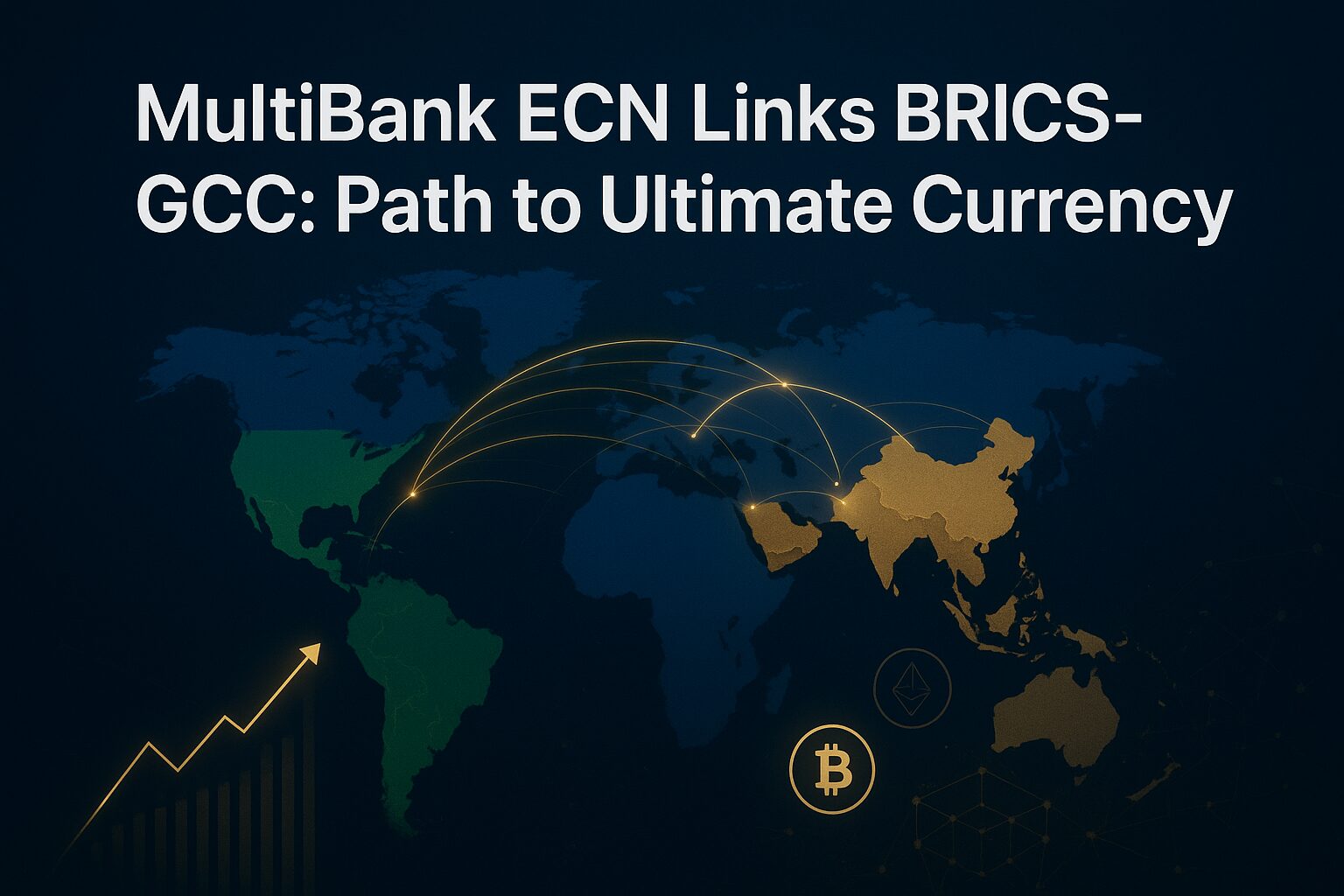
MultiBank Group has launched an innovative Electronic Communication Network (ECN) platform that connects the financial markets of BRICS and GCC countries. This platform enables direct trading between these regions, aiming to foster economic integration and reduce reliance on the US dollar by laying the groundwork for a potential new, multi-national currency. By integrating traditional finance with blockchain-based tokenization of digital assets and leveraging AI technologies for enhanced security and liquidity, MultiBank ECN creates a more efficient, transparent, and compliant trading environment under a robust regulatory framework. This initiative not only streamlines cross-border financial activities but also has the potential to influence global economic policies, promote de-dollarization, and support sustainable finance efforts.
MultiBank Group Launches ECN Platform to Bridge BRICS and GCC Financial Markets
MultiBank Group has recently launched an innovative Electronic Communication Network (ECN) platform that connects the financial markets of BRICS (Brazil, Russia, India, China, South Africa) and GCC (Gulf Cooperation Council) countries. This move is not just a step towards enhancing cross-border trading but also lays the groundwork for the concept of an ultimate currency, potentially reducing the global reliance on the US dollar.
Key Takeaways:
- MultiBank ECN facilitates direct trading between BRICS and GCC markets, aiming for economic integration.
- The platform supports the tokenization of digital assets, integrating traditional finance with blockchain technology.
- AI technology enhances platform security, liquidity, and supports alternative settlement systems.
- A robust multi-jurisdictional regulatory framework ensures compliance and investor confidence.
- The initiative could influence global economic policies and promote de-dollarization.
---
MultiBank ECN: Connecting BRICS and GCC Economies
The launch of MultiBank ECN represents a significant milestone in financial technology, bringing together two influential economic blocs. By facilitating direct trading between participants in these regions, MultiBank ECN aims to create a more transparent and efficient trading environment. This platform reduces transaction costs and speeds up the process, which is critical for the fast-paced financial markets of today. The integration of BRICS and GCC markets through this ECN could lead to a more interconnected financial ecosystem, potentially setting the stage for a new currency system.
The Vision of an Ultimate Currency
The concept of an ultimate currency, often discussed in economic forums, involves a new global or regional currency that could replace or supplement major currencies like the USD. In this context, MultiBank ECN's initiative might lead towards a currency backed by multiple nations within BRICS and GCC, aiming to reduce dependency on the US dollar. This step towards de-dollarization could reshape international trade dynamics, offering an alternative to the current Western-dominated financial systems.
Integration of Traditional Finance and Digital Assets
Tokenization: Bridging the Gap
MultiBank ECN's platform goes beyond traditional trading by integrating digital assets through tokenization. Tokenization involves converting rights to an asset into a digital token on a blockchain, which facilitates fractional ownership and global trading of assets. This process not only democratizes investment by allowing smaller investors to participate in markets previously inaccessible but also enhances liquidity and accessibility. For instance, tokenizing real estate or commodities like oil and gas from BRICS and GCC countries could open new investment avenues while aligning with sustainable finance practices if 'natur' refers to natural resources.
Regulatory Framework Ensuring Compliance
Operating under a multi-jurisdictional regulatory framework, MultiBank ECN ensures compliance with various international standards, which is crucial for reducing legal risks and fostering investor trust. This framework harmonizes the diverse regulatory environments of BRICS and GCC countries, potentially serving as a model for international finance. The challenge of navigating multiple regulations is turned into an opportunity for creating a standardized approach that could streamline global financial transactions.
AI-Powered Infrastructure for Enhanced Trading
Security and Liquidity Enhancement
The platform's AI-powered infrastructure plays a pivotal role in enhancing both security and liquidity. AI technology is used for real-time decision-making, fraud detection, and predictive analytics, which are essential for maintaining the integrity of financial transactions. By aggregating liquidity from various sources, AI ensures that traders receive the best possible execution and pricing, significantly improving the trading experience.
Support for Cross-Border Trading
Cross-border trading, which involves complexities like currency conversion and compliance with different regulations, is simplified through MultiBank ECN's unified trading environment. This reduces barriers for transactions across national borders, promoting a seamless flow of capital and goods. The platform's capability to handle these transactions efficiently supports the broader goal of alternative settlement systems, which could bypass traditional banking routes, offering faster and potentially cheaper transaction methods.
Global Economic Impact and Future Prospects
Influence on Global Economic Policies
The integration of BRICS and GCC markets via MultiBank ECN could significantly influence global economic policies. By providing an alternative financial system, it might affect currency valuation, trade agreements, and economic alliances. This shift could encourage other regions to explore similar integrations, potentially leading to a more multipolar financial world.
Technological Precedent and Environmental Considerations
The use of blockchain for tokenization and AI for operational efficiency sets a technological precedent in finance. It showcases how advanced technologies can be applied to enhance market operations, security, and liquidity. Moreover, if 'natur' indeed refers to natural resources, this platform could contribute to sustainable finance by facilitating the trade in renewable energy credits or tokenizing green assets, aligning with global sustainability goals.
Conclusion
MultiBank Group's launch of the ECN platform is a bold step towards redefining global financial interactions. By connecting BRICS and GCC markets, integrating traditional and digital assets, and leveraging AI technology under a robust regulatory framework, MultiBank ECN not only enhances trading efficiency but also positions itself as a leader in the movement towards de-dollarization and sustainable finance. As this platform evolves, it could very well become a cornerstone in the architecture of a new global financial order.
Frequently Asked Questions
Q: What is MultiBank ECN?
A: MultiBank ECN refers to a trading platform offered by MultiBank Group, which utilizes the Electronic Communications Network (ECN) model. This platform connects traders directly to liquidity providers, such as banks and financial institutions, allowing for faster and more transparent trade execution with typically tighter spreads. ECN trading reduces conflicts of interest by matching buy and sell orders among participants rather than dealing directly with the broker as the counterparty. This setup is popular among forex and CFD traders seeking professional-grade execution and market depth.
Q: How does MultiBank link BRICS and GCC markets?
A: MultiBank facilitates connections between BRICS (Brazil, Russia, India, China, South Africa) and GCC (Gulf Cooperation Council) markets by providing seamless trading platforms and financial services that enable investors and businesses from these regions to access diversified markets and investment opportunities. It offers multi-asset trading solutions, integrating currency pairs, commodities, and indices relevant to both blocs, thereby enhancing capital flow and market liquidity. Through technology-driven services and regional partnerships, MultiBank helps bridge market gaps, fostering greater economic collaboration and financial integration between BRICS and GCC economies.
Q: Details on BRICS GCC ultimate currency development
A: BRICS (Brazil, Russia, India, China, South Africa) and the GCC (Gulf Cooperation Council) countries have explored the idea of developing an 'ultimate currency' to facilitate trade and reduce dependency on the US dollar. While discussions have emphasized increasing economic cooperation and using national currencies for bilateral trade settlements, no official unified currency has been launched. The concept aims to strengthen financial ties within these regions and enhance their global economic influence by promoting alternative payment systems and currency corridors.
Q: Role of regulatory licenses in MultiBank ECN
A: Regulatory licenses play a crucial role in MultiBank ECN by ensuring the broker operates within legal frameworks that protect clients' funds and uphold market integrity. These licenses, issued by recognized financial authorities, require MultiBank ECN to comply with strict standards related to transparency, security, and fair trading practices. As a result, regulatory oversight helps build trust among traders, reduces the risk of fraud, and promotes a safer trading environment. Overall, regulatory licenses enhance the credibility and reliability of MultiBank ECN as a trading platform.
Q: Impact of tokenization on BRICS currency
A: Tokenization can significantly enhance the efficiency, transparency, and accessibility of BRICS countries' currencies by enabling digital representation on blockchain platforms. This facilitates faster cross-border payments, reduces transaction costs, and improves security against fraud. Additionally, tokenization can encourage greater financial inclusion by providing new access points for users and businesses within BRICS economies. Overall, integrating tokenized assets could strengthen economic cooperation among BRICS nations and support the modernization of their financial systems.
Key Entities
MultiBank Group: MultiBank Group is a global financial services provider specializing in online trading and brokerage services. The company offers access to forex, commodities, indices, and other markets through advanced trading platforms.
BRICS: BRICS is an association of five major emerging economies: Brazil, Russia, India, China, and South Africa. It focuses on economic cooperation and development to enhance trade and investment among member countries.
GCC: The GCC, or Gulf Cooperation Council, is a political and economic alliance of six Middle Eastern countries including Saudi Arabia, UAE, and Qatar. It aims to foster regional integration and economic collaboration among its members.
Naser Taher: Naser Taher is a prominent executive known for leadership roles within the financial services industry, particularly in brokerage and fintech sectors. He has been influential in driving business growth and innovation in trading platforms.
ASIC: ASIC (Australian Securities and Investments Commission) is Australia's corporate, markets, and financial services regulator. It enforces laws to protect consumers, investors, and creditors in the financial sector.
BaFin: BaFin is Germany's Federal Financial Supervisory Authority responsible for regulating banks, insurance companies, and financial markets. It ensures financial stability and consumer protection within Germany's financial system.
UAE’s SCA and VARA: The UAE’s Securities and Commodities Authority (SCA) regulates securities markets to protect investors and ensure market integrity. VARA, the Virtual Assets Regulatory Authority, oversees digital asset activities and ensures compliance within the virtual asset sector.
CySEC: CySEC is the Cyprus Securities and Exchange Commission responsible for regulating investment firms and securities markets in Cyprus. It ensures compliance with EU financial directives and protects investors within the Cypriot jurisdiction.
MAS: MAS, or the Monetary Authority of Singapore, is the central bank and financial regulatory authority of Singapore. It oversees monetary policy, financial institutions, and market integrity in Singapore.
External articles
- MultiBank ECN Links BRICS–GCC, Path to The 'Ultimate ...
- MultiBank Group Launches ECN Platform to Bridge BRICS ...
- MultiBank launches MEX Exchange as first BRICS/GCC ...
Related Articles
- Bitcoin Core v30 Update Expands OP_RETURN Data Capacity Amid Community Debate
- China’s Rare Earth Export Controls Escalate US-China Trade War and Impact Crypto Markets
- OpenAI's Trillion Dollar AI Investment Strategy for Market Leadership
YouTube Video
Title: 🚨 De-Dollarization ALARM: Foreign Investors Dump $130 Billion In 60 Days As Dollar Weakens
Channel: World Affairs In Context
URL: https://www.youtube.com/watch?v=U3YpL-AnYh8
Published: 1 day ago
Crypto