

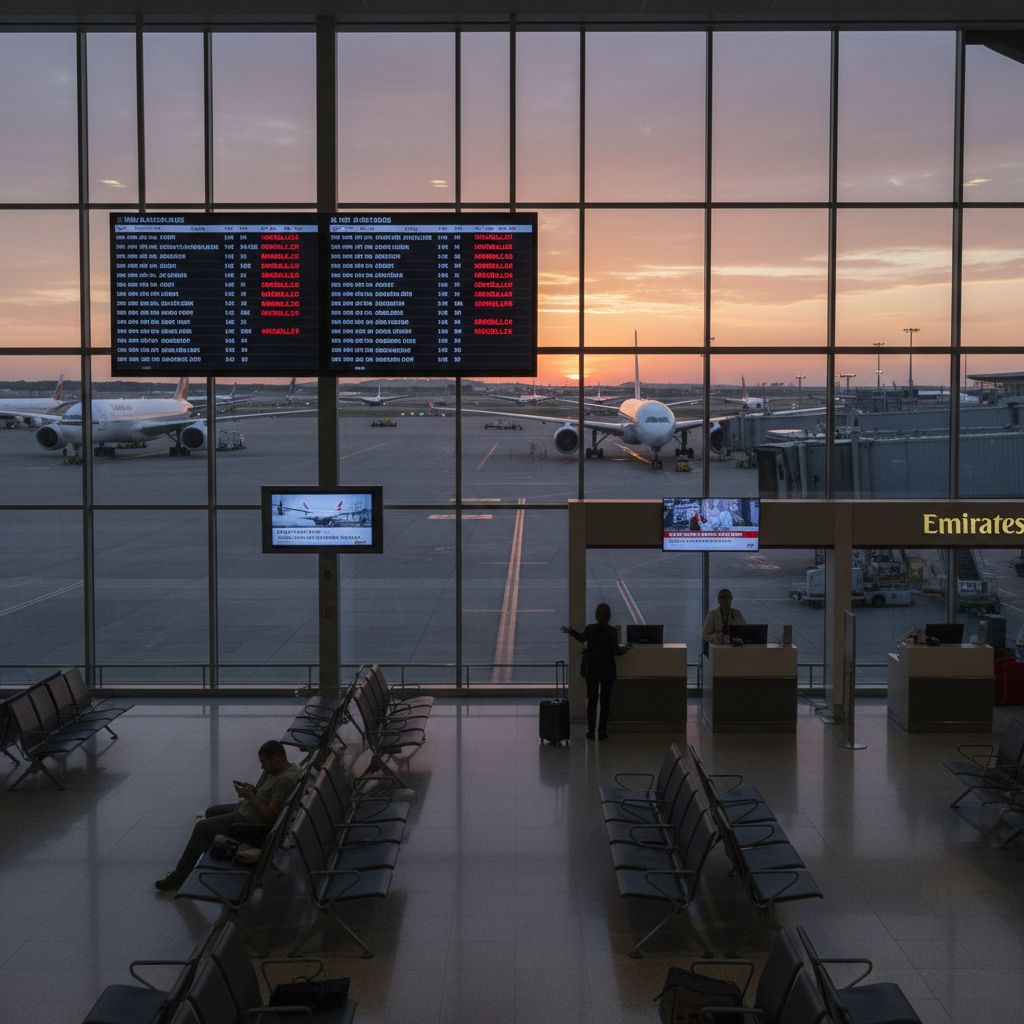
Middle East Conflict Grounds 3,000 Flights, Disrupting Global Air Travel
The recent US-Israeli strikes on Iran and retaliatory actions have forced the closure of airspace over key Middle Eastern hubs including Iran, Iraq, Kuwait, and the UAE.
Around 3,000 flights have been canceled since Saturday, disrupting global travel and silencing major airports like Dubai and Doha.
Airlines such as Emirates and Qatar Airways have suspended operations, leaving tens of thousands of passengers scrambling for alternatives.
The turmoil has sent shockwaves through global stock markets and raised oil prices, further impacting the aviation industry.
Travelers worldwide face reroutes, cancellations, and increased costs amid ongoing geopolitical tensions.
Read more:
perplexity.ai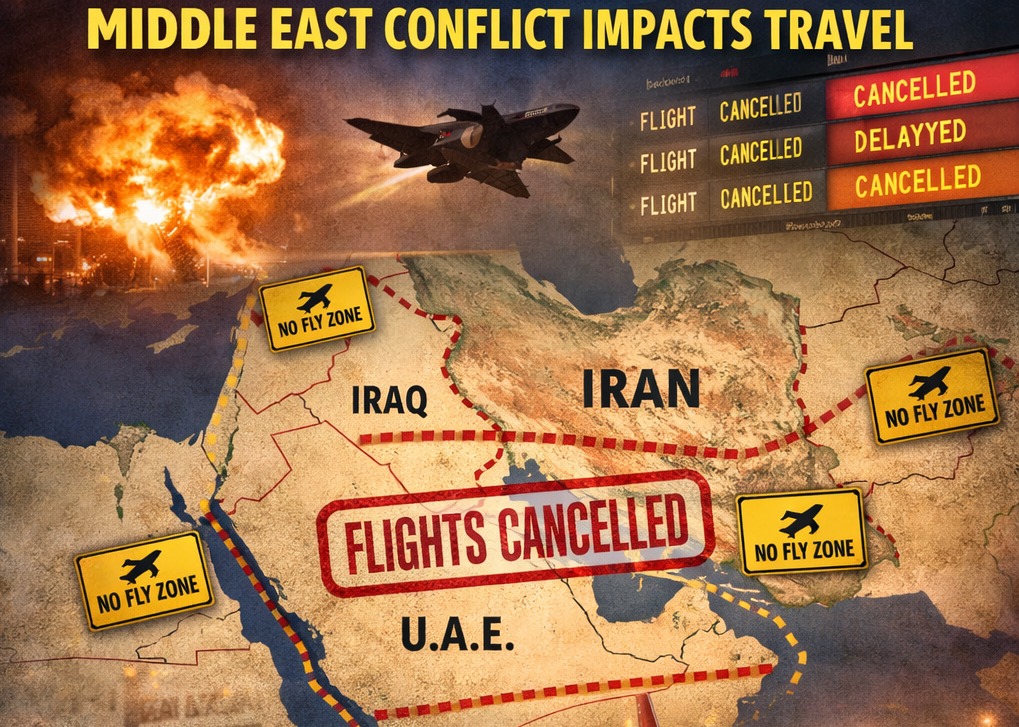
Turmoil in the Skies: Middle East Conflict Grounds Thousands of Flights and Shakes Global Travel
As the sun set on a tense weekend, the world watched air travel grounds to a staggering halt. The recent eruption of conflict involving US-Israeli strikes on Iran and retaliatory actions has forced the closure of airspace over vital Middle Eastern air hubs including Iran, Iraq, Kuwait, Bahrain, Qatar, Israel, and the UAE. The fallout has been immediate and dramatic—around 3,000 flights canceled since Saturday, with chaos rippling far beyond the region.
Major airports that usually hum with the steady flow of international travelers—Dubai, Abu Dhabi, Doha, Tel Aviv, Baghdad, and Kuwait—have fallen silent, stranded in limbo as airlines like Emirates, Qatar Airways, and Etihad are forced to suspend operations. For countless passengers, these hubs were more than pit stops; they were crossroads connecting Asia, Europe, and Africa. Now, those connections have snapped, leaving tens of thousands scrambling for alternatives.
The global aviation industry feels the pinch with stock markets echoing the turmoil. Shares of major carriers from the US’s Delta and United to Europe’s Lufthansa and Air France-KLM, and even far-reaching Qantas and Cathay Pacific in Asia-Pacific, have plunged sharply. Rising oil prices stoked by geopolitical instability only deepen the financial wound. Experts warn these disruptions could linger, rewriting travel plans and budgets worldwide.
In familiar transit hubs like Newark Airport, the ripple effect is painfully clear. Newark’s travelers face unprecedented cancellations and reroutes as flights normally passing through the Middle East make detours via smaller, less accessible airports—not only complicating journeys but hiking costs. Airlines are scrambling to offer waivers and reschedule, but the backlog and uncertainty stretch patience thin.
Meanwhile, safety advisories pulse across the region. The US Embassy in Cyprus has issued a missile threat caution for the Paphos area amid fears of drone activity—a stark reminder that the shadow of conflict is not confined to borders but creeps into neighboring sanctuaries. Even in Italy, a pro-US demonstration near the US Consulate brings more uncertainty, with travelers urged to stay alert to potential disruptions.
For travelers, these events underscore how deeply geopolitical tensions can ripple through skies and schedules. The Middle East now stands as a volatile chokepoint, reminding us that in a connected world, no flight plan is beyond the reach of unrest. As the conflict unfolds, the airwaves remain charged—not just with flights grounded or stocks tumbling, but with the hope for swift resolution amid the storm.
Questions and answers
Q: Impact of Middle East conflict on flights
A: Conflicts in the Middle East often lead to increased risks for airlines, resulting in flight rerouting, delays, and cancellations. Airspace closures and heightened security measures disrupt normal operations. Passengers may experience longer travel times and higher ticket prices due to detours and reduced flight availability.
Q: Which airlines suspended operations in Middle East
A: During periods of conflict or heightened tensions in the Middle East, several airlines, including both regional and international carriers, may temporarily suspend operations to affected areas. Specific airlines vary depending on the situation, but often include carriers based in or serving conflict zones to ensure passenger safety and comply with governmental restrictions.
Q: Flight cancellations in Dubai and Doha
A: Flight cancellations in Dubai and Doha frequently occur during geopolitical tensions or security threats in the region. Airlines may cancel or delay flights to these hubs due to airspace closures or operational challenges. Passengers are advised to check with carriers for updates as situations evolve rapidly, impacting travel plans significantly.
Q: Airport closures due to geopolitical tensions
A: Geopolitical tensions in the Middle East can lead to temporary airport closures to ensure safety and security. Such closures disrupt both passenger and cargo traffic, affecting connectivity and global supply chains. Authorities typically announce closures promptly, but the unpredictable nature of conflicts can cause sudden operational halts.
Q: How does Middle East airspace closure affect global travel
A: Closure of Middle East airspace forces airlines to reroute flights, often resulting in longer routes, increased fuel consumption, and higher operational costs. This can lead to delays, higher ticket prices, and logistical challenges worldwide. Since the Middle East serves as a key transit region, such closures significantly disrupt global flight networks and schedules.
Key Entities
Iran: Iran is a Middle Eastern country with significant geopolitical influence, particularly in regional politics and energy markets. It has historically had complex relations with its neighbors, including conflicts and diplomatic tensions affecting the Gulf region.
Iraq: Iraq is a key country in the Middle East, rich in oil resources and central to regional security dynamics. It has experienced political instability and conflicts that have impacted its relations with neighboring states.
Kuwait: Kuwait is a small Gulf country known for its substantial oil reserves and strategic location near the Persian Gulf. It has maintained relative stability and strong economic ties within the Gulf Cooperation Council.
Bahrain: Bahrain is an island nation in the Persian Gulf known for its banking and financial sectors. It is a member of the Gulf Cooperation Council and plays a role in regional political and security alliances.
Qatar: Qatar is a wealthy Gulf state with vast natural gas reserves and significant investment in global media and sports. It has emerged as an influential player in regional diplomacy and economic development.
Israel: Israel is a Middle Eastern country known for its advanced technology sector and complex geopolitical relationships with neighboring Arab countries. In recent years, it has pursued normalization agreements with several Gulf states.
United Arab Emirates: The United Arab Emirates is a federation of seven emirates with a diversified economy centered on trade, tourism, and energy. It has become a key regional hub and maintains strong diplomatic and economic ties internationally.
Emirates: Emirates is a major international airline based in Dubai, operating an extensive global network. It is known for its modern fleet and significant role in connecting the Middle East to worldwide destinations.
Qatar Airways: Qatar Airways is the national carrier of Qatar, renowned for its service quality and expansive global routes. It serves as a critical element of Qatar’s international connectivity and economic outreach.
Etihad: Etihad Airways is the national airline of the United Arab Emirates based in Abu Dhabi, focusing on luxury and long-haul international flights. It plays a strategic role in the UAE’s transportation infrastructure and global presence.
External articles
- The hole in the sky: How Middle East airspace closures are ...
- Limited flights leave UAE while disruption continues amid ...
- Global travel impacts of conflict in the Middle East
Articles in same category
- FAA Flight Reductions During Government Shutdown: Staffing Shortages or Political Motives?
- Iconic Luxury Resorts in Hawaii Featuring Polynesian Architecture and Premium Hospitality
- Luxury Hotel Openings to Watch in 2025: Exclusive Resorts and Historic Charm
YouTube Video
Title: War in the Middle East: Thousands of flights cancelled… across the globe • FRANCE 24 English
URL: https://www.youtube.com/shorts/SavVqyouU3o
Travel