

Massive Gold Discovery in China’s Hunan Province Reshapes Global Gold Markets
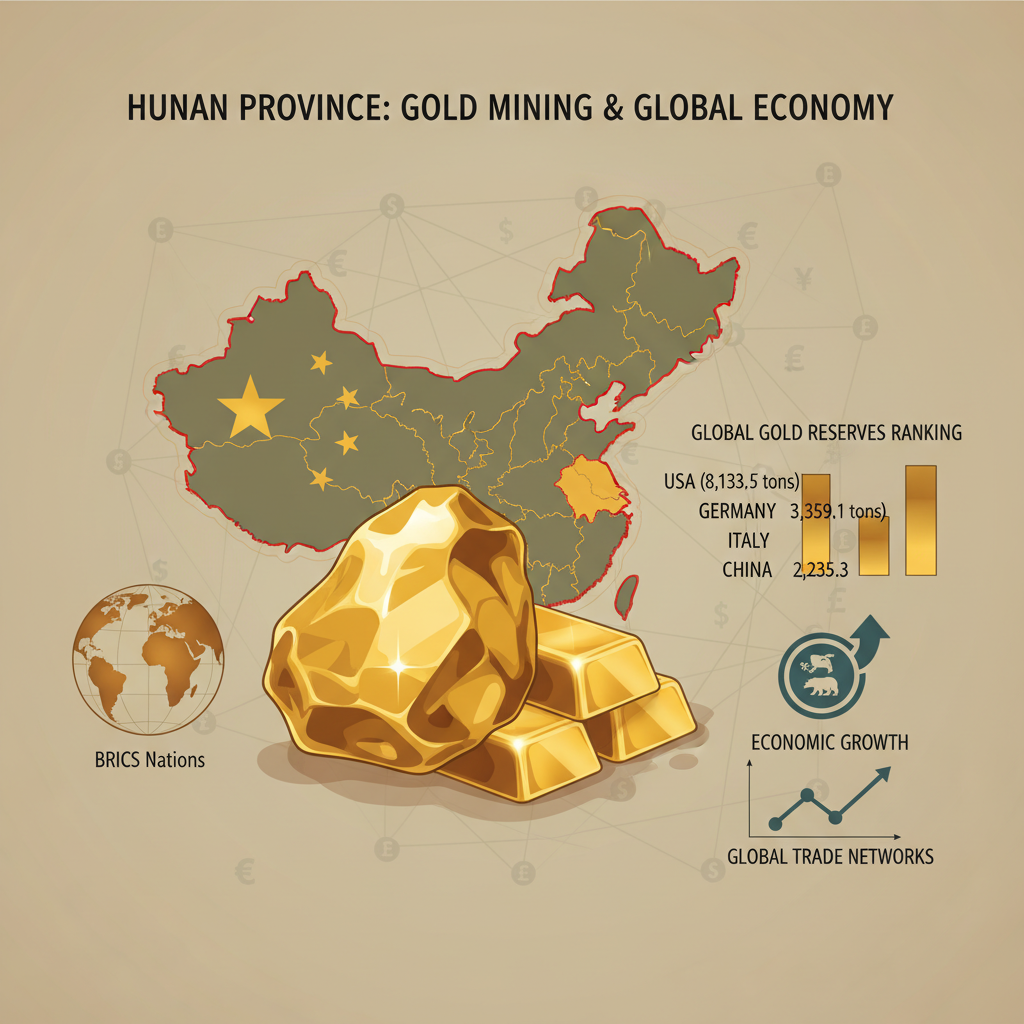
China's discovery of a massive gold reserve at the Wangu Goldfield in Hunan Province, estimated at over 1,000 metric tonnes worth up to $100 billion, is set to significantly boost its domestic gold production and global ranking. This find supports China's goal to reduce reliance on gold imports and strengthen its financial independence. Aligning with BRICS nations' strategy to accumulate physical gold, this development fosters the creation of gold-backed trade and monetary systems aimed at diminishing the dominance of the US dollar. The enhanced gold reserves among BRICS members signal a shift toward a multipolar monetary order, challenging the existing dollar-centric global financial system and emphasizing gold's enduring role in international economics.
Massive Gold Discovery in China’s Hunan Province Reshapes Global Gold Dynamics
China's recent discovery of an enormous gold reserve at the Wangu Goldfield in Hunan Province marks a significant development in the global gold sector. Estimated at over 1,000 metric tonnes and valued between $83 billion and $100 billion depending on current market prices, this single deposit ranks among the largest gold finds worldwide. This discovery holds considerable implications for China’s domestic gold production, its standing in global gold rankings, and the broader geopolitical landscape dominated by monetary strategies within the BRICS framework.
Strengthening China’s Domestic Gold Production and Global Ranking
Currently, China holds approximately 2,280 metric tonnes of gold reserves, placing it sixth globally behind countries like the United States, Germany, and Italy. The Wangu Goldfield’s substantial gold volume is poised to elevate China’s domestic gold output substantially. China annually consumes roughly three times the gold it mines, relying heavily on gold imports to meet demand. By expanding its production capacity through this newly discovered deposit, China aims to reduce its dependency on imports while reinforcing its position in the world’s gold rankings.
Strategic BRICS Gold Accumulation and Monetary Autonomy
The gold discovery aligns with the broader strategy embraced by BRICS nations—China, Russia, Brazil, India, and South Africa—to accelerate physical gold accumulation. This initiative supports the development of gold-backed trading arrangements and monetary systems that diminish reliance on the US dollar and US Treasury securities. Leverage from increased gold reserves provides tangible assets central to establishing alternative trade settlements and financial frameworks that challenge the existing dollar-centric global monetary system.
Implications for the Global Monetary Order
The enhanced gold reserves among BRICS members contribute to a shift toward a multipolar monetary system. This shift undermines the longstanding hegemony of the US dollar in international finance and trade, reducing the leverage that US Treasury holdings have over global economic dynamics. Through gold-backed mechanisms, BRICS countries seek greater economic sovereignty and resilience amid ongoing geopolitical and economic uncertainties.
This growing autonomy challenges the dominance of dollar hegemony and signals a potential transformation in global finance. The expansion of gold reserves, particularly illustrated by China’s Wangu Goldfield discovery, is a driving force behind these geopolitical and economic shifts, promoting a future in which gold plays a central role in international monetary relations.
Conclusion
China’s discovery of massive new gold reserves in Hunan Province represents more than an increase in precious metal supply—it is a strategic asset reshaping global gold rankings and reinforcing Chinese financial independence. Coupled with gold accumulation strategies across BRICS nations, this development propels a movement toward creating gold-backed trade and monetary systems. These efforts collectively challenge the US dollar’s global dominance and point toward an evolving multipolar monetary order underscored by gold’s enduring value in the global economy.

Frequently Asked Questions
Q: China gold reserves 2025
A: As of 2025, China continues to be one of the world's largest holders of gold reserves, maintaining its position as a significant holder of this precious metal. The country has steadily increased its gold reserves over recent years to diversify its foreign exchange reserves and reduce reliance on the US dollar. Official figures show China's gold reserves approaching or exceeding 2,000 tons, reflecting both domestic production and strategic purchases in the global market. This accumulation is part of China's broader economic strategy to enhance financial stability and international influence.
Q: BRICS gold standard impact
A: The concept of a BRICS gold standard involves the bloc's nations considering gold-backed currencies or reserves to stabilize their economies and reduce reliance on the US dollar. If implemented, it could strengthen the financial independence of BRICS countries and potentially reshape global trade dynamics by challenging dollar dominance. This move might increase gold demand and impact currency valuations worldwide, leading to shifts in international economic power balances. However, practical challenges and market reactions could influence the extent of its impact.
Q: Gold-backed trade systems BRICS
A: The BRICS nations—Brazil, Russia, India, China, and South Africa—have explored the concept of gold-backed trade systems to reduce reliance on the US dollar in international trade among themselves. This involves using gold or gold-backed currencies as a medium of exchange or reserve asset to stabilize trade settlements and hedge against currency volatility. While discussions have taken place to create alternative payment mechanisms incorporating gold, there is no fully established gold-backed trade system officially implemented across BRICS countries as of now. The initiative reflects broader efforts by these countries to increase financial independence and promote multipolar global trade.
Q: New gold discoveries in China
A: China continues to see new gold discoveries, particularly in its western provinces such as Xinjiang and Qinghai. Recent exploration efforts have highlighted previously underexplored regions, contributing to increased gold reserves. These discoveries are significant in maintaining China's position as the world's largest gold producer and support its growing demand for precious metals.
Q: Effects of reducing US treasury holdings
A: Reducing holdings of US Treasury securities can impact both the holder and the broader economy. For the holder, it may mean a decrease in investment income and a shift towards alternative assets. In the market, large sell-offs can lead to higher Treasury yields as prices drop, increasing borrowing costs for the US government. This can also affect global financial markets, given the role of Treasuries as a safe asset and benchmark for interest rates worldwide.
Key Entities
China: China is the world's most populous country and a leading global economic power. It has recently hosted significant international forums, emphasizing cooperation among developing economies.
BRICS nations: BRICS nations consist of Brazil, Russia, India, China, and South Africa, representing major emerging economies. They collaborate to promote economic growth and political influence outside Western-dominated institutions.
Gansu Province: Gansu Province is located in northwest China and plays a strategic role in the Belt and Road Initiative. It has recently hosted international economic meetings to boost regional development.
Russia: Russia is a major BRICS member and a key player in global energy and geopolitical affairs. It participates actively in initiatives aimed at enhancing cooperation among emerging markets.
United States: The United States is the world's largest economy and a leading international political power. It often contrasts with BRICS nations in global economic and diplomatic forums.
External articles
- BRICS Gold Glory: China's Huge New Gold Reserves
- 30+ Countries Join BRICS Gold Rush—Gold Hit 13 New ...
- China's Gold Strategy: Quietly Reshaping Global Finance ...
Articles in same category
- Bitcoin Core v30 Update Expands OP_RETURN Data Capacity Amid Community Debate
- China’s Rare Earth Export Controls Escalate US-China Trade War and Impact Crypto Markets
- OpenAI's Trillion Dollar AI Investment Strategy for Market Leadership
YouTube Video
Title: BRICS Buy BIG GOLD Reserve, Dump US Dollar As China's Gold Reserves Soar
Channel: Knowledge Net
URL: https://www.youtube.com/watch?v=zOjs3HOccSE
Published: 2 days ago
Crypto