


Mandatory Age Verification Laws for Adult Content: Child Safety and Privacy Challenges
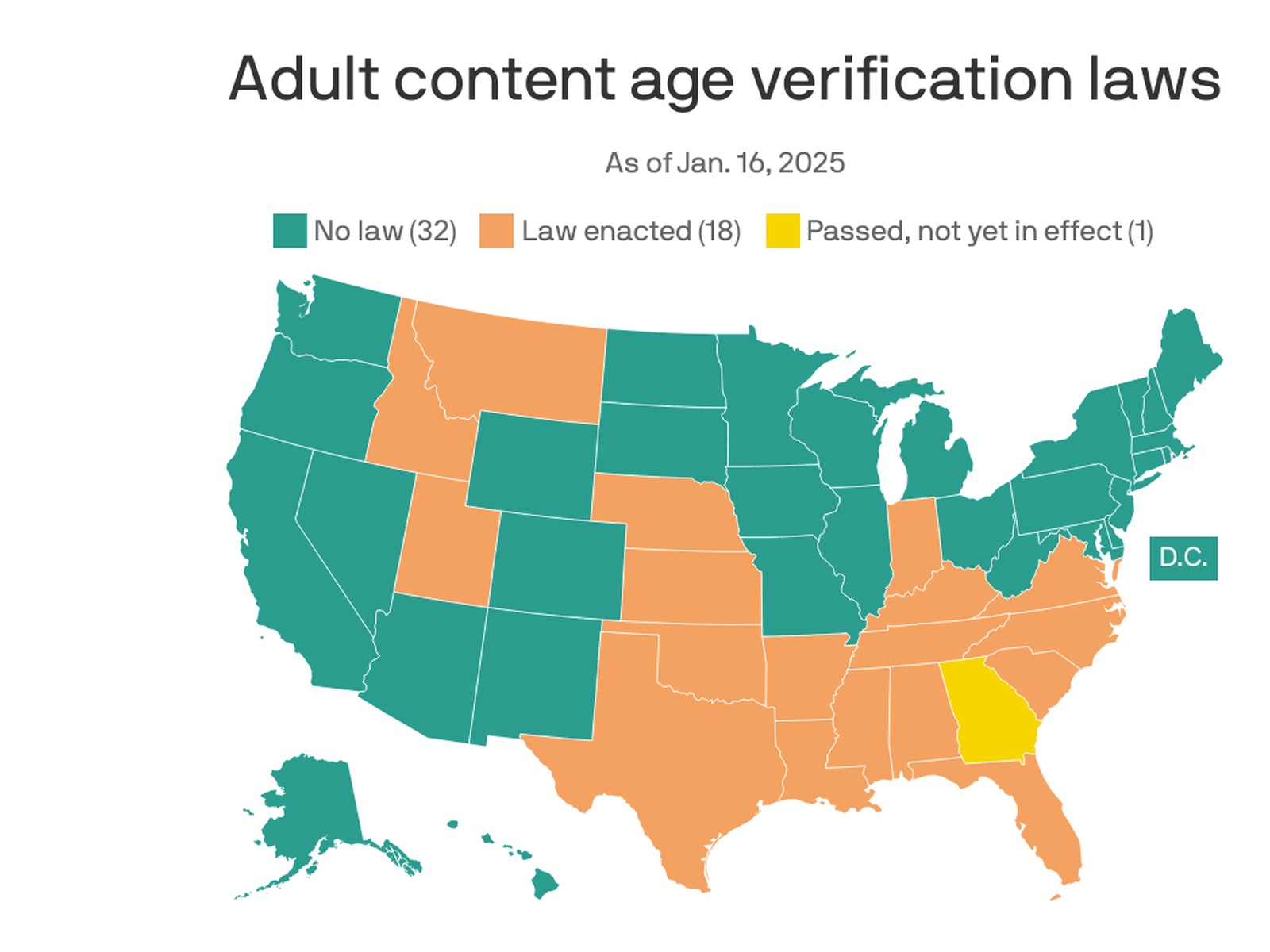
By late 2025, about half of U.S. states mandate age verification for adult content websites to protect minors.
These laws require submission of government-issued IDs or biometric data like facial age scans.
While enhancing child safety, such measures raise significant privacy concerns due to risks of data breaches and identity theft.
Courts uphold these laws, emphasizing child protection over First Amendment bypass claims.
However, some users may circumvent restrictions using VPNs or foreign sites, complicating enforcement.
International efforts similarly strive to balance age verification with privacy safeguards.
Frequently Asked Questions
Q: Which states require age verification to watch porn
A: In the United States, there is no federal law explicitly requiring age verification for viewing adult pornography online; however, various states have introduced or considered legislation to enforce stricter age verification measures to prevent minors from accessing explicit content. States like Utah and Arkansas have passed laws requiring websites that host adult content to implement mechanisms verifying that users are over 18 before granting access. Enforcement and specific requirements vary, and many states rely on existing age restrictions and industry self-regulation rather than mandated age verification systems. Overall, age verification laws remain inconsistent across states, with ongoing debates about privacy and effectiveness.
Q: How does age verification work on adult sites
A: Age verification on adult sites typically involves users confirming their age before accessing content. This can be done through simple self-declaration by entering a birthdate or checking a box, but more secure methods include verifying government-issued IDs or using third-party age verification services that cross-check data. These measures help ensure compliance with legal requirements to prevent minors from accessing adult material, although the effectiveness varies depending on the method used.
Q: Privacy risks of uploading ID for porn access
A: Uploading an ID to access adult content can expose your personal information to privacy risks such as data breaches, identity theft, or unauthorized sharing with third parties. Sensitive details like your full name, date of birth, and photo may be stored on servers that might not have strong security measures. Additionally, this information could be used to create fraudulent accounts or be leaked online, potentially leading to embarrassment or reputational harm. It's important to verify the legitimacy and security policies of websites before submitting any personal identification.
Q: Impact of age verification laws on VPN usage
A: Age verification laws can influence VPN usage by prompting individuals to use VPNs to bypass age restrictions on websites or online content. These laws often require users to prove their age before accessing certain material, leading some to use VPNs to mask their location or identity to evade verification processes. As a result, VPN usage may increase in regions with strict age verification to maintain privacy or access restricted content. However, this can also lead to challenges in enforcing age-related regulations online.
Q: Legal challenges to age verification laws in US
A: Legal challenges to age verification laws in the US often focus on privacy concerns, constitutional rights, and the effectiveness of the regulations. Critics argue that stringent verification requirements can infringe on individuals' privacy by demanding excessive personal information. Additionally, some contend that such laws may violate First Amendment rights related to free expression or due process under the Fourteenth Amendment. Courts have sometimes scrutinized whether these laws disproportionately burden lawful adult access to content or services while attempting to restrict minors. The balance between protecting minors and respecting legal rights is central to many legal disputes in this area.
Key Entities
Missouri: Missouri is a U.S. state located in the Midwest, known for its diverse geography and cultural heritage. The state is relevant in discussions about legislative actions affecting internet regulation and digital content access.
Pornhub: Pornhub is a major adult entertainment website hosting a wide range of user-uploaded and professional videos. It has been involved in legal and regulatory controversies concerning content moderation and compliance with state laws.
Cherie DeVille: Cherie DeVille is an adult film actress known for her extensive work in the pornography industry. She is often referenced in discussions about performers' rights and industry regulations.
Aylo: Aylo is the parent company that owns Pornhub and other adult entertainment platforms. It manages digital content distribution and navigates regulatory challenges in the adult media sector.
Catherine Hanaway: Catherine Hanaway is a former Missouri attorney general and political figure involved in state legislative matters. Her role is significant in shaping legal frameworks impacting digital content laws in Missouri.
External articles
- Social media age verification laws in the United States
- How Age Verification Laws Protect Young People from ...
- US supreme court backs age checks for pornography sites ...
Articles in same category
- Orca Hunting, Universe Expansion, and Ovoviviparous Amphibians Insights
- Southern Italy vs Eastern Europe for Expats: Taxes, Cost, Climate & Lifestyle
- Privacy Issues and Risks of Meta Ray-Ban Smart Glasses in Sensitive Settings
YouTube Video
Title: Attorney General Todd Rokita is defending requiring "age verification" for porn websites.
Channel: WLFITV
URL: https://www.youtube.com/watch?v=dAjBVkCS-4k
Published: 1 year ago
Technology