

How a Former AWS Team’s Startup is Solving the Data Center Energy Crisis
In an age where data is the new oil, the global thirst for cloud computing is skyrocketing — and with it, an often unseen but critical challenge: power.
A startup launched by former Amazon Web Services’ energy team has raised $7 million to tackle this energy crunch.
As AI models grow, their cloud infrastructure must also scale, increasing power consumption exponentially.
By developing smarter energy solutions, the startup aims to prevent bottlenecks that could stall digital growth.
Their mission enables faster innovation and broader access to technology.
Read more:
perplexity.aiSummary

Powering the Future: How a Former AWS Team’s Startup is Tackling the Data Center Energy Crisis
In an age where data is the new oil, the global thirst for cloud computing is skyrocketing — and with it, an often unseen but critical challenge: power. The bustling nerve centers of our digital lives, data centers, are hitting a ceiling of energy demands that threaten to throttle the very growth we depend on. Enter an ambitious startup launched by former members of Amazon Web Services' energy team, now armed with $7 million in fresh funding to innovate their way out of this looming power crunch.
These engineers and visionaries know the problem intimately. As AI models swell in size and complexity, cloud infrastructure must scale accordingly, gobbling power as if there were no tomorrow. By developing smarter, more efficient energy solutions, the startup aims to sidestep the bottlenecks that could otherwise stall the digital economy’s relentless expansion. Their story is not just about power grids and servers — it’s about enabling the dreams and breakthroughs of tomorrow’s technology, where every watt saved can mean faster innovation and broader access.
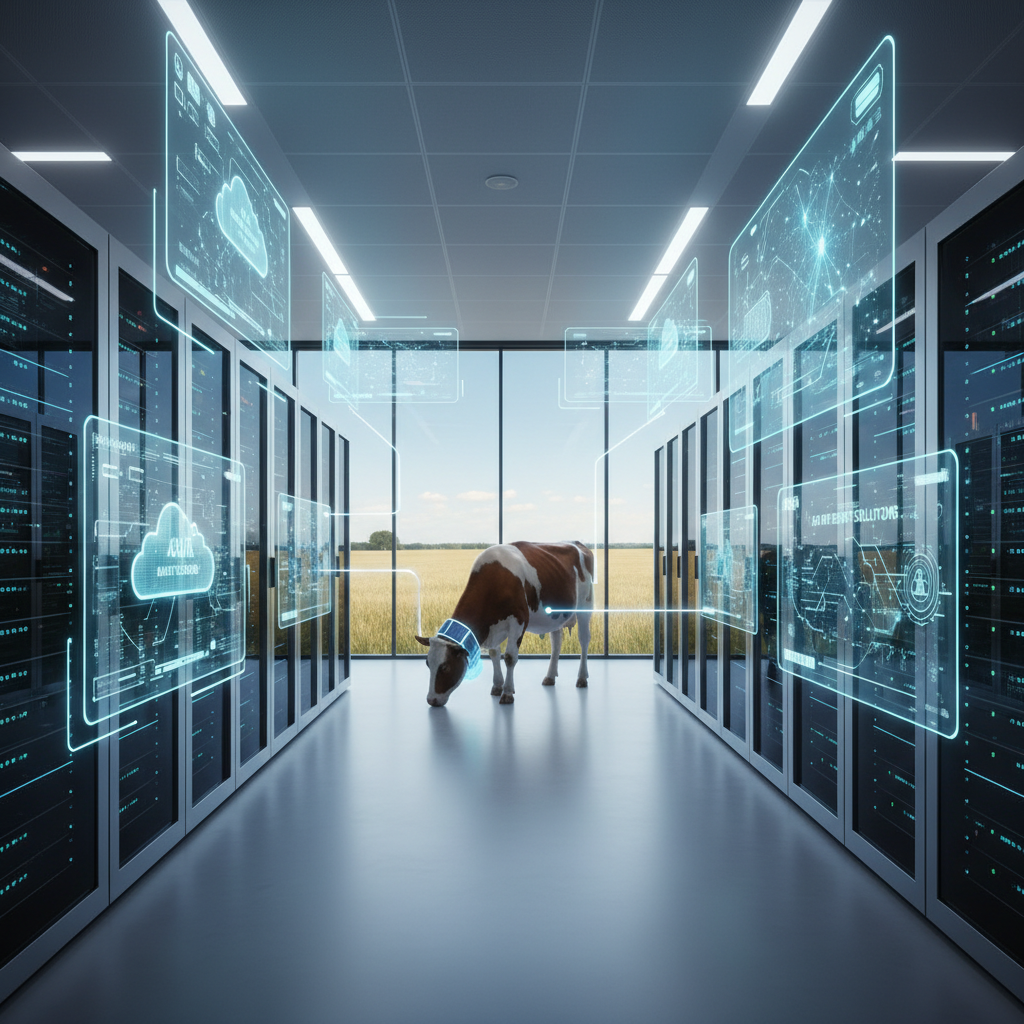
Meanwhile, across the innovation landscape, the seeds of tech’s future are also being planted in unexpected pastures. Take Peter Thiel’s latest venture: solar-powered cow collars. This blend of AI, renewable energy, and agtech isn’t just futuristic gadgetry—it’s a tactical response to global sustainability challenges. These collars promise to monitor livestock health with precision, optimizing farming practices while tapping into the sun’s endless energy. It’s a shimmering example of how cutting-edge funding and technology collide in the fields, not just the labs.
Back in the world of startups, however, not all stories are bright. The departure of Delve from Y Combinator highlights the stark realities and risks embedded in startup culture. Even top-tier accelerators aren’t immune to setbacks and challenges, underscoring that innovation is as much about resilience as it is about breakthroughs.
On a more hardware-focused front, HP’s reveal of their “Edge of Tomorrow” computing platform points towards a future where AI workloads happen closer to users — at the network edge — promising lightning-fast performance and efficiency. And with giants like Nvidia pushing robotic AI hardware and Microsoft doubling down on Windows 11’s reliability, the tech landscape remains an electrifying mix of promise and perseverance.
Taken together, these stories sketch an ecosystem racing toward a future where technology is smarter, greener, and more deeply woven into the fabric of everyday life — powered not just by electrons, but by vision and innovation.
Questions and answers
Q: How to solve data center power issues
A: Solving data center power issues involves improving energy efficiency through advanced cooling systems, optimizing server utilization, and adopting renewable energy sources. Implementing power management software can help monitor and reduce unnecessary consumption. Additionally, designing data centers with energy-efficient hardware and utilizing technologies like liquid cooling can significantly decrease power demands and costs.
Q: Startups tackling energy efficiency in cloud computing
A: Startups focusing on energy efficiency in cloud computing are developing innovative solutions such as AI-driven workload management, energy-optimized data center designs, and advanced cooling technologies. Some use machine learning to dynamically allocate resources and reduce energy waste, while others promote renewable energy integration. These efforts aim to lower the carbon footprint of cloud services and enhance sustainability in the industry.
Q: Impact of AI on data center energy demand
A: AI increases data center energy demand due to the intensive computation required for training and running models. However, it also offers opportunities to optimize energy use by improving workload distribution, predictive maintenance, and cooling systems through intelligent automation. Balancing AI's energy costs with its efficiency benefits is a growing focus for operators seeking sustainable data center practices.
Q: Peter Thiel solar-powered cow collars technology
A: Peter Thiel has supported innovations including solar-powered cow collars, which are devices designed to track livestock health and location using solar energy for power. These collars enable farmers to monitor cows remotely, improving animal welfare and farm productivity while leveraging renewable energy to reduce environmental impact. The technology exemplifies combining sustainability with advanced IoT applications in agriculture.
Q: Latest edge computing platforms for AI workloads
A: The latest edge computing platforms for AI workloads focus on delivering low-latency processing close to data sources by integrating powerful AI accelerators and efficient hardware. Platforms such as NVIDIA Jetson, Intel's OpenVINO, and Google's Coral offer robust support for running AI inference at the edge, enabling real-time analytics and decision-making in industries like autonomous vehicles, smart cities, and IoT devices. These platforms emphasize scalability, energy efficiency, and ease of deployment.
Key Entities
Amazon Web Services: Amazon Web Services (AWS) is a leading cloud computing platform offering a wide range of on-demand computing resources and services. It enables businesses to deploy scalable infrastructure and advanced technologies such as artificial intelligence and machine learning.
Peter Thiel: Peter Thiel is a technology entrepreneur and investor, co-founder of PayPal and an early investor in Facebook. He is known for his influential role in Silicon Valley and his contributions to tech innovation and startup culture.
Delve: Delve is a data analysis and intelligence platform designed to help organizations gather insights from vast amounts of information. It integrates advanced AI to enhance decision-making and data-driven strategies.
HP: HP Inc. is a multinational information technology company specializing in personal computing, printers, and related supplies. It is recognized for its hardware solutions and innovations in the IT industry.
Nvidia: Nvidia is a global technology company known for its graphics processing units (GPUs) widely used in gaming, professional visualization, and AI applications. It plays a crucial role in advancing hardware for machine learning and artificial intelligence workloads.
External articles
- Clean Energy Resources to Meet Data Center Electricity ...
- Data Centers, Energy, and the Emerging Market Equation
- How data centres can avoid doubling their energy use by ...
Articles in same category
- Orca Hunting, Universe Expansion, and Ovoviviparous Amphibians Insights
- Southern Italy vs Eastern Europe for Expats: Taxes, Cost, Climate & Lifestyle
- Privacy Issues and Risks of Meta Ray-Ban Smart Glasses in Sensitive Settings
YouTube Video
Title: Crusoe and Form Energy partner to make data centers carbon neutral #ai #datacenter #energy
URL: https://www.youtube.com/shorts/-Vi1YCksnzQ
Technology