

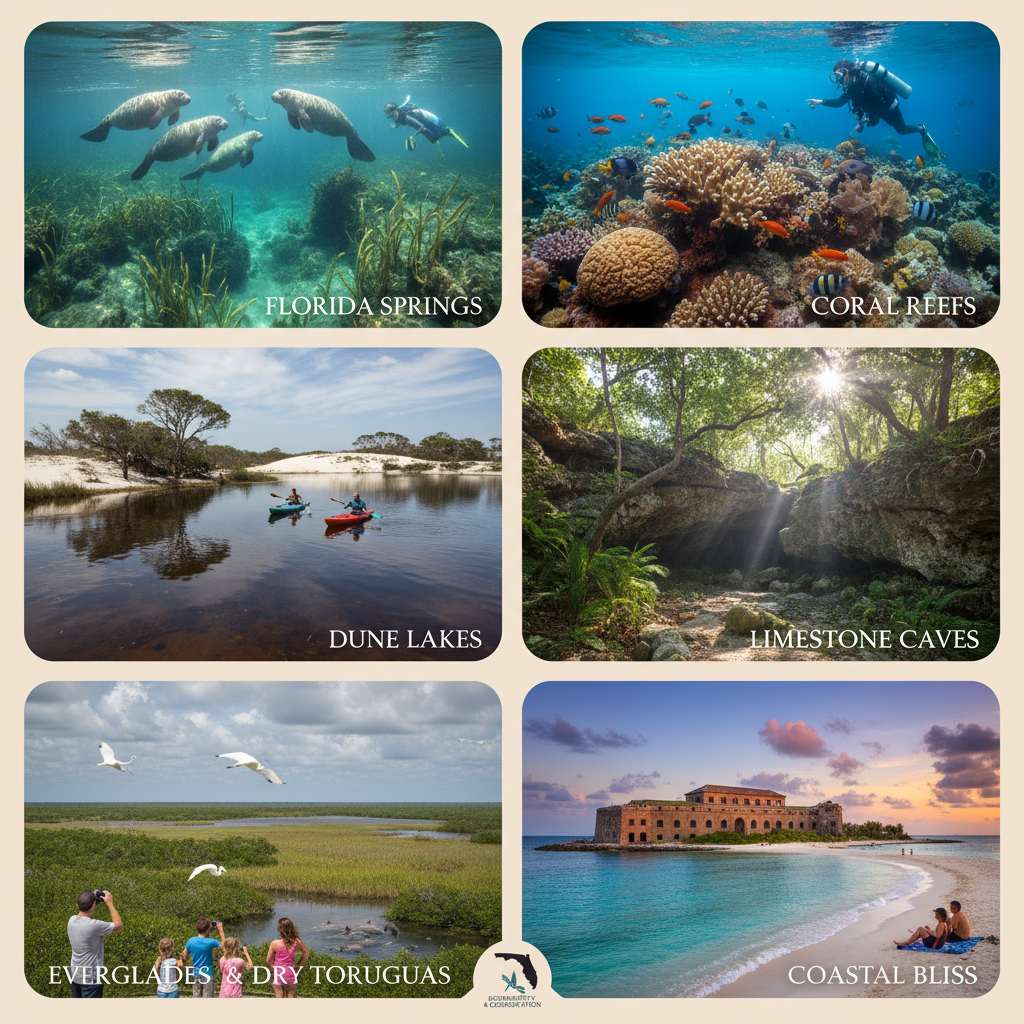
Exploring Florida’s Natural Wonders: Springs, Reefs, Parks & Wildlife
Florida is a state rich in natural wonders, offering a variety of experiences from exploring crystal-clear freshwater springs to discovering vibrant coral reefs. Home to over 700 freshwater springs and the unique Florida Reef—the third largest coral barrier reef system in the world—Florida provides ample opportunities for snorkeling, wildlife observation, and outdoor adventures in its many national and state parks. Iconic parks like Everglades and Dry Tortugas combine education and adventure, while coastal dune lakes and extensive cave systems add to the state's ecological diversity. With its famous beaches and rich wildlife, Florida caters to both relaxation and active exploration. Conservation efforts remain crucial to protect these natural treasures amid environmental challenges, ensuring that Florida's beauty endures for future generations.
Florida, known for its vibrant culture and bustling cities, is also a treasure trove of natural wonders that offer a diverse range of experiences for explorers, nature enthusiasts, and those seeking relaxation. From the crystal-clear waters of its freshwater springs to the vibrant ecosystems of its coral reefs, Florida's natural landscapes provide a unique blend of adventure and tranquility. This article delves into the state's unique natural attractions, highlighting the exploration of its landscapes, the adventure in its parks, and the diverse outdoor experiences available.
Key Takeaways: - Florida boasts some of the world's largest freshwater springs, crucial habitats for species like manatees. - The Florida Reef, the third largest coral barrier reef system, is facing conservation challenges. - National parks like Everglades and Dry Tortugas offer both adventure and educational experiences. - From wildlife observation to beach relaxation, Florida caters to various outdoor interests. - Conservation efforts are vital to preserve Florida's natural beauty amidst environmental threats.
Exploring Florida's Unique Natural Landscapes
Freshwater Springs: A Natural Wonder
Florida is home to over 700 freshwater springs, which are among the largest in the world. These springs, like the famous Manatee Springs, provide a serene environment where groundwater emerges with consistent temperatures, creating ideal conditions for various species. The clarity of the water makes these springs not only a haven for wildlife like manatees but also a prime spot for snorkeling and diving. The springs are connected to extensive aquifers, contributing to the state's rich biodiversity. Visiting these springs offers a peaceful retreat and an opportunity to engage with nature in its purest form.
Coral Reefs: Underwater Marvels
The Florida Reef, stretching from the Dry Tortugas to Miami, is the only living coral barrier reef in the continental U.S. and the third largest globally. This reef is a biodiversity hotspot, hosting a variety of marine life crucial for conservation efforts. However, it's under threat from climate change, pollution, and diseases, which affect coral health and, consequently, the entire ecosystem. Activities like snorkeling here are not just recreational but also educational, providing insights into marine conservation and the impacts of environmental changes.
Coastal Dune Lakes: A Rare Phenomenon
Unique to a few places in the world, Florida's coastal dune lakes, found along the Emerald Coast, are fascinating ecosystems where freshwater meets the sea. These lakes are part of the state's wetlands, supporting endangered species and contributing to water quality. They offer a peaceful setting for kayaking or simply enjoying the natural beauty, highlighting the importance of these environments in the broader context of global conservation.
Cave Systems: Hidden Worlds
Florida's cave systems, like those in the Florida Caverns State Park, are geological wonders formed over millennia through the dissolution of limestone. These caves are not only a spectacle for speleologists but also crucial habitats for species like bats. Exploring these systems provides a unique adventure, revealing the underground networks that are part of Florida's karst landscapes, offering both physical challenge and educational value.
Highlighting Key Natural Attractions and Parks
National Parks: Adventure and Education
Florida's national parks are gateways to its natural heritage. Everglades National Park, a UNESCO World Heritage Site, offers adventures through its mangrove forests and prairies, educating visitors on the critical role of wetlands in ecological balance. Dry Tortugas National Park, accessible only by boat or seaplane, provides an isolated adventure with its historic Fort Jefferson and pristine marine environments, ideal for snorkeling and observing marine life.
State Parks: Accessible Nature
State parks like Wakulla Springs and Honeymoon Island provide more accessible adventures, with facilities for camping, hiking, and wildlife viewing. These parks manage visitor impact while promoting conservation, ensuring that the natural beauty is preserved for future generations.
Diverse Outdoor Experiences in Florida
Wildlife Observation
Florida's diverse ecosystems make it a hotspot for wildlife observation. From bird watching in the Everglades, where you can spot over 350 species, to observing dolphins and manatees in the coastal waters, the state offers a living classroom for nature enthusiasts. Conservation efforts here are visible, with programs aimed at protecting these species and their habitats.
Beach Relaxation and Activities
Florida's beaches are legendary, from the white sands of Destin to the vibrant nightlife of Miami Beach. Beyond relaxation, these beaches are active sites for sea turtle nesting, where visitors can participate in conservation by observing from a distance. Activities like paddleboarding, surfing, or simply enjoying a sunset provide a blend of adventure and tranquility.
Conclusion
Florida's natural landscapes are not just scenic backdrops but active participants in the state's ecological, cultural, and economic fabric. The exploration of its springs, reefs, lakes, and caves, coupled with the adventure in its parks and diverse outdoor activities, makes Florida a unique destination. However, with the looming threats of environmental degradation, the importance of conservation cannot be overstated. Visiting and respecting these natural wonders contributes to their preservation, ensuring that future generations can enjoy the same adventures and serene moments that define Florida's natural allure.

Frequently Asked Questions
Q: best natural wonders in Florida
A: Florida is home to several stunning natural wonders, including the Everglades National Park, famous for its unique wetland ecosystem and diverse wildlife such as alligators and manatees. The Florida Keys offer beautiful coral reefs and clear waters perfect for snorkeling and diving. Another highlight is the crystal-clear springs found throughout the state, like Ichetucknee Springs and Silver Springs, known for their vibrant aquatic life and opportunities for kayaking and swimming.
Q: places to visit in Florida for nature
A: Florida offers numerous natural attractions ideal for nature lovers, including the Everglades National Park, famous for its unique wetlands and diverse wildlife such as alligators and manatees. The Florida Keys provide stunning marine ecosystems perfect for snorkeling and diving. Additionally, the Ocala National Forest offers beautiful hiking trails, springs, and abundant wildlife for outdoor enthusiasts to explore.
Q: Florida freshwater springs guide
A: Florida is home to over 700 freshwater springs, renowned for their clear, cool waters and unique ecosystems. Popular springs include Ichetucknee Springs, Ginnie Springs, and Silver Springs, offering activities like swimming, snorkeling, kayaking, and tubing. Many springs are located within state parks or nature preserves, providing amenities such as picnic areas, hiking trails, and camping sites. When visiting, it's important to follow guidelines to protect these delicate environments and enjoy the natural beauty responsibly.
Q: top Florida national parks
A: Florida is home to several remarkable national parks, with Everglades National Park being the most famous, known for its unique wetland ecosystem and diverse wildlife including alligators and manatees. Biscayne National Park offers stunning underwater reefs and opportunities for snorkeling and boating. Dry Tortugas National Park is renowned for its historic Fort Jefferson and crystal-clear waters, perfect for snorkeling and birdwatching. These parks showcase Florida's rich natural beauty and biodiversity.
Q: Florida beaches for relaxing
A: Florida offers numerous beaches ideal for relaxation, including Siesta Key Beach with its powdery white sand and calm waters. Clearwater Beach is popular for its clean shoreline and gentle waves, perfect for unwinding. For a quieter experience, consider Sanibel Island, known for its shell-covered beaches and serene atmosphere. These spots provide beautiful scenery and a peaceful environment to relax and enjoy the coastal charm.
Key Entities
Blue Spring State Park: Blue Spring State Park in Florida is a designated manatee refuge where visitors can observe these marine mammals during the winter months. The park also offers opportunities for snorkeling, swimming, and hiking along natural spring waters.
Rainbow Springs State Park: Rainbow Springs State Park features crystal-clear springs that form a picturesque river and series of waterfalls in Florida. It is a popular spot for swimming, kayaking, and wildlife observation, showcasing natural Floridian habitats.
Florida Aquarium: The Florida Aquarium in Tampa showcases native and exotic aquatic species, emphasizing marine conservation and education. It features interactive exhibits, including touch tanks and a coral reef habitat.
Everglades: The Everglades is a vast subtropical wetland ecosystem in southern Florida, known for its unique biodiversity and extensive network of slow-moving waters. It serves as a critical habitat for endangered species like the Florida panther and American crocodile.
Dry Tortugas: The Dry Tortugas are a group of remote islands located west of Key West, Florida, known for Fort Jefferson and vibrant coral reefs. Accessible primarily by boat or seaplane, they are a popular site for snorkeling, diving, and birdwatching.
External articles
- Explore Natural Wonders
- The Natural Wonders of Florida
- 16 Must-See Natural Wonders in Florida - The Simple Bliss
Related Articles
- Luxury Hotel Openings to Watch in 2025: Exclusive Resorts and Historic Charm
- Kristen Bell Stars in Citi Strata Elite Card Ad Campaign Highlighting Exceptional Travel Rewards
- Integrating Nature, Technology, and Wellness in Modern Office Design
YouTube Video
Title: Exploring Florida’s Best State Parks | Gilchrist Blue Springs, Rum Island, Ginnie Springs Guide Tour
URL: https://www.youtube.com/shorts/Hf6j0YLYu8g
Travel