

Bank of England Imposes Temporary Caps on Stablecoin Holdings to Safeguard Financial Stability
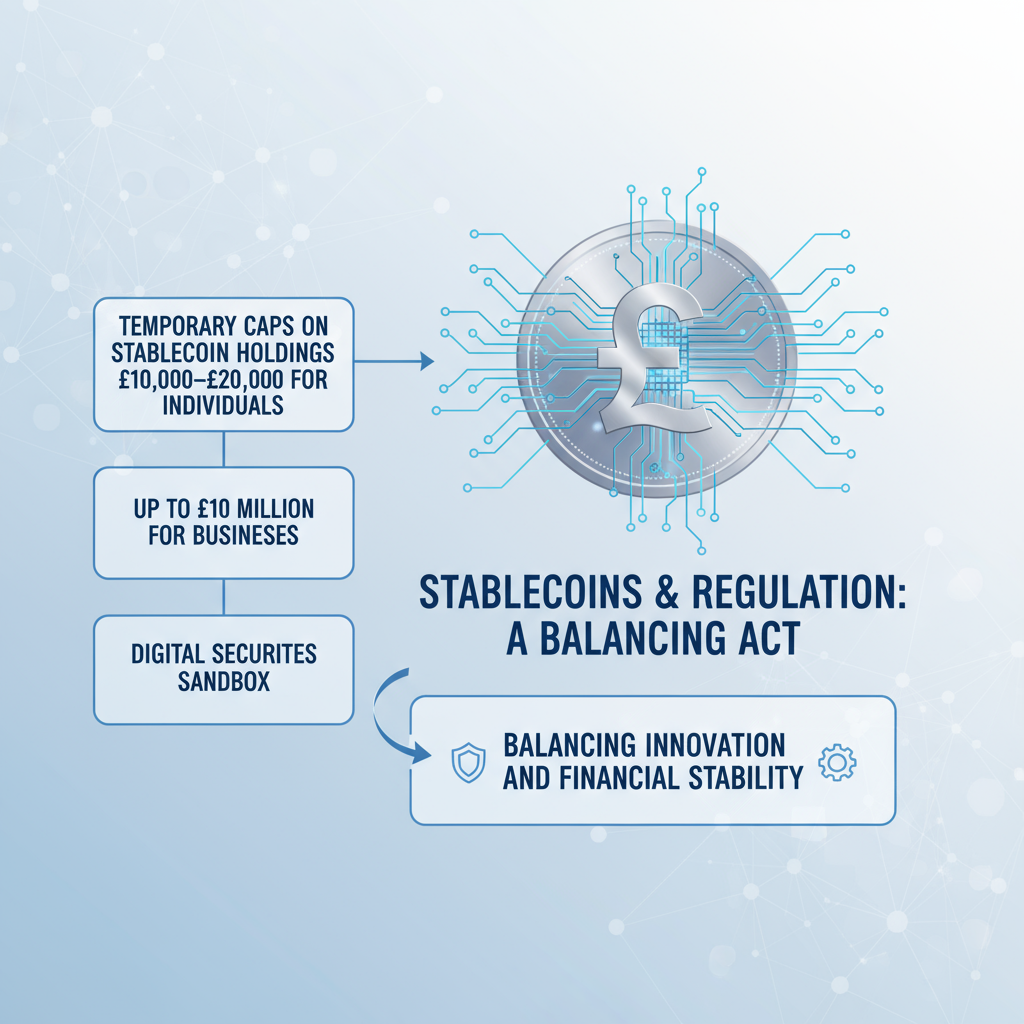
The Bank of England has introduced temporary caps on stablecoin holdings, specifically targeting sterling-pegged and systemic stablecoins, to protect the UK's financial stability while encouraging innovation in digital assets. These limits, ranging from £10,000–£20,000 for individuals and up to £10 million for businesses, aim to prevent rapid deposit outflows that could threaten credit availability. Despite industry concerns about potential impacts on innovation and competitiveness, the BoE is considering exemptions for crypto exchanges and businesses needing larger reserves. Through initiatives like the Digital Securities Sandbox, the BoE is fostering safe integration of stablecoins into the financial system. These measures are part of a broader, evolving strategy, with consultations planned by 2025 and final regulations expected in 2026, balancing economic protection with the growth of digital finance.
Introduction
The integration of stablecoins into the traditional financial system presents both opportunities and challenges, particularly concerning financial stability. The Bank of England (BoE) has recently introduced temporary caps on stablecoin holdings to navigate these complexities, aiming to safeguard the UK's economic stability while fostering innovation in the digital asset space.
Temporary Caps on Stablecoin Holdings
In a strategic move, the Bank of England has implemented temporary limits on the holdings and transaction sizes of stablecoins, specifically targeting sterling-pegged tokens and systemic stablecoins that play a significant role in the UK market. These caps, set between £10,000–£20,000 ($13,400–$26,800) for individuals and up to £10 million for businesses, aim to prevent rapid deposit outflows which could diminish credit availability and threaten financial stability. According to Deputy Governor Sarah Breeden, these measures are designed to monitor the adoption of stablecoins and manage potential shifts in the financial structure without compromising stability.
Regulatory Adjustments and Industry Response
The introduction of these caps has not been without controversy. The UK government and financial authorities have faced industry resistance due to concerns that such restrictions might stifle innovation and reduce the UK's market competitiveness. In response, the BoE is considering regulatory exemptions and relaxed caps for certain entities, particularly crypto exchanges and businesses requiring substantial stablecoin reserves for liquidity and settlement purposes. This adjustment reflects a nuanced approach to stablecoin regulation, aiming to balance regulatory oversight with the need for a crypto-friendly environment.
Integration into the Financial System
To further integrate stablecoins into the UK's financial framework, the BoE is leveraging the Digital Securities Sandbox. This regulatory sandbox provides an experimental space where approved firms can test blockchain-based financial operations, including the use of stablecoins for digital settlement. This initiative not only supports innovation but also allows regulators to evaluate the real-world implications of stablecoin use before enacting comprehensive regulations. The BoE's strategy here is to ensure that stablecoins enhance, rather than disrupt, the financial ecosystem.
Looking Forward
The temporary caps are part of a broader strategy to adapt to the evolving landscape of digital currencies. The BoE plans to remove these limits once the risks associated with stablecoins are better understood and mitigated, ensuring they do not pose systemic risks while still contributing positively to the financial infrastructure. A formal consultation on the regulatory regime is expected before the end of 2025, with final rules anticipated in 2026.
Conclusion
The UK's approach to stablecoin regulation, through temporary caps, exemptions, and the use of a regulatory sandbox, demonstrates a commitment to both financial stability and the growth of digital assets. This careful calibration aims to protect the economy while encouraging innovation, setting a precedent for how traditional financial systems might evolve with the integration of cryptocurrencies.
Frequently Asked Questions
Q: Bank of England stablecoin limits
A: The Bank of England has proposed regulatory limits on stablecoins to manage risks related to financial stability and consumer protection. These limits may include restrictions on the types of assets backing stablecoins, caps on issuance amounts, and requirements for transparency and liquidity. The aim is to ensure that stablecoins operate safely within the financial system, preventing potential disruptions. Specific limits and rules are still being developed as the Bank consults with stakeholders and monitors the evolving market.
Q: UK stablecoin regulation 2024
A: In 2024, the UK government has introduced new regulations for stablecoins to ensure their safety and reliability as payment methods. These rules require issuers to hold sufficient reserves and adhere to strict transparency and risk management standards. The Financial Conduct Authority (FCA) oversees these regulations, aiming to protect consumers and maintain financial stability while encouraging innovation in digital finance.
Q: temporary stablecoin caps UK
A: In the UK, temporary caps on stablecoins are regulatory measures proposed or implemented to limit the issuance or transaction volumes of stablecoins. These caps aim to manage risks associated with financial stability, consumer protection, and market integrity as stablecoins gain wider use. The Financial Conduct Authority (FCA) and other regulatory bodies consider such measures to ensure the crypto market's growth remains safe and controlled, especially as stablecoins can impact the broader financial system.
Q: impact of stablecoin caps on UK economy
A: Capping stablecoins in the UK could limit their growth and influence in the financial system, potentially reducing risks related to financial stability and consumer protection. However, stringent caps might also slow innovation and adoption in digital payments and decentralized finance, which could limit economic benefits and competitiveness. The overall impact depends on how effectively caps balance regulation without stifling the evolving digital asset market.
Q: Bank of England digital payments policy
A: The Bank of England's digital payments policy focuses on modernizing the UK's payment systems to enhance speed, security, and accessibility. It explores the potential introduction of a central bank digital currency (CBDC) to complement existing payment methods and support financial innovation. The policy aims to ensure the resilience of payment infrastructure while safeguarding consumers and promoting competition in the digital payments landscape.
Key Entities
Bank of England: The Bank of England is the central bank of the United Kingdom, responsible for monetary policy, financial stability, and issuing currency. It plays a key role in overseeing the UK’s banking system and managing economic challenges.
Sarah Breeden: Sarah Breeden is an executive at the Bank of England, known for her leadership in regulatory and supervisory roles. She contributes to financial stability through oversight of banking operations and risk management.
Tom Duff Gordon: Tom Duff Gordon has served in senior regulatory positions at the Bank of England, focusing on financial sector supervision. His work supports the resilience and integrity of the UK banking industry.
Andrew Bailey: Andrew Bailey is the Governor of the Bank of England, overseeing monetary policy and financial regulation since March 2020. He has guided the UK economy through periods of significant uncertainty and change.
Simon Jennings: Simon Jennings is a senior figure associated with the Bank of England, involved in financial regulation and policy implementation. His contributions help maintain the stability and effectiveness of the UK’s financial system.
External articles
- Bank of England Plans Short-Term Cap on Stablecoins
- BoE will only lift planned stablecoin cap when confident no ...
- BOE Plans Carveouts on Stablecoin Cap After Industry ...
Related Articles
- Bitcoin Core v30 Update Expands OP_RETURN Data Capacity Amid Community Debate
- China’s Rare Earth Export Controls Escalate US-China Trade War and Impact Crypto Markets
- OpenAI's Trillion Dollar AI Investment Strategy for Market Leadership
YouTube Video
Title: The Amazing Side of Stablecoins
URL: https://www.youtube.com/shorts/sPRkv7rKATI
Crypto