


Asia Leads Global Travel Growth in Early 2026 with Rising Demand
Asia is emerging as the main engine driving global travel growth in early 2026.
Eastern and Southeast Asia capture 31.7% of international travel demand, led by Japan, South Korea, and cities like Fukuoka and Sapporo.
Western Asia's GCC countries maintain a steady market share despite geopolitical tensions.
The aviation sector shows a 5.9% increase in air capacity, with Asia-Pacific experiencing 20% growth in air travel demand.
Meanwhile, the Caribbean faces softening interest amid geopolitical challenges impacting Western markets, especially the US.
Read more:
perplexity.ai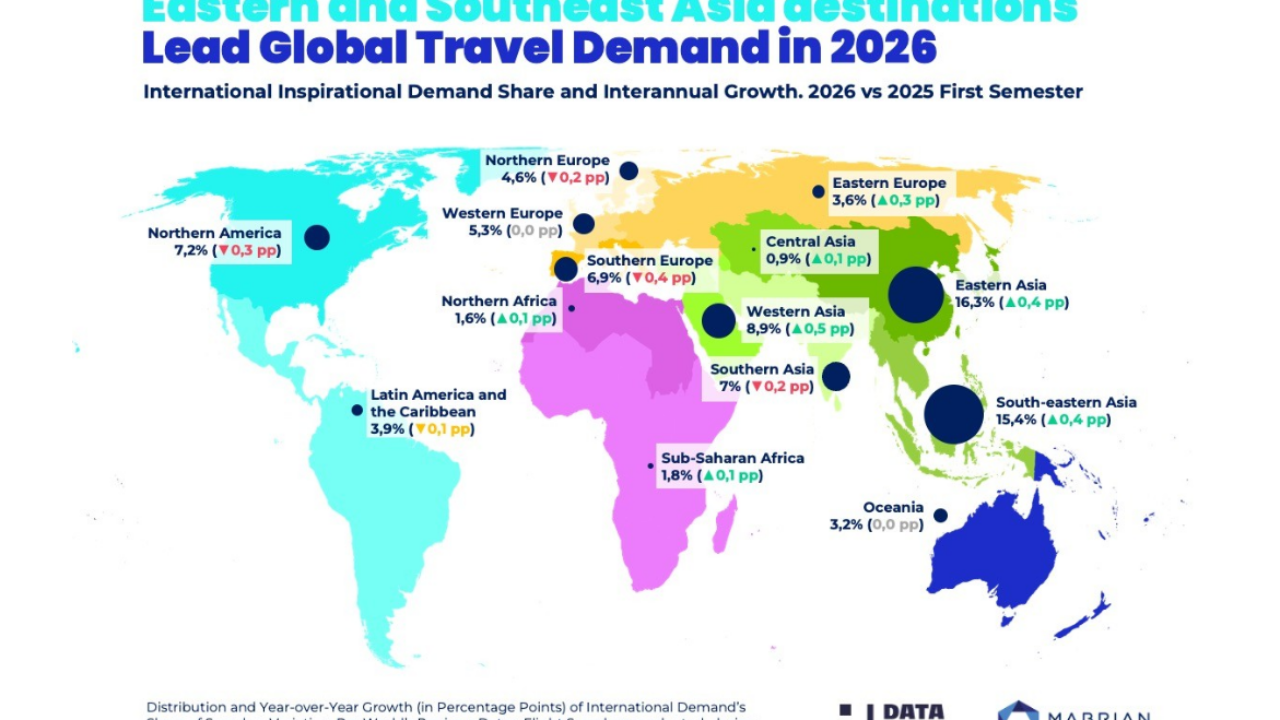
Asia Takes Center Stage in Global Travel for Early 2026 As the world shakes off the remnants of pandemic inertia, Asia is stepping into the spotlight as the main engine driving global travel growth in early 2026. Data from Mabrian reveals a striking surge in travel intent, with Eastern and Southeast Asia capturing 31.7% of the international travel demand for the first half of the year. Japan and South Korea lead this vibrant wave, alongside emerging cities like Fukuoka and Sapporo, enticing visitors with a blend of rich tradition, cutting-edge urban life, and idyllic natural escapes.
This renewed appetite for Asia signals more than just a rebound—it marks a strategic realignment in global tourism trends. Western Asia, notably the Gulf Cooperation Council (GCC) countries, maintains a steady share of the market, quietly defying the geopolitical tensions swirling around the region. Cities like Jeddah, Riyadh, and Doha are not just holding the line; they are thriving, buoyed by strong destination reputations and ongoing infrastructure investments that appeal to both leisure travelers and business visitors alike.
The aviation sector, the lifeblood of international travel, mirrors this upward trajectory with a 5.9% increase in air capacity. Airlines like IndiGo are capitalizing on this momentum, rapidly recovering from recent disruptions and ambitiously expanding their networks into vibrant hubs such as Athens, Istanbul, China, and Southeast Asia. The Asia-Pacific region itself boasts a remarkable 20% growth in air travel demand, outpacing the global average and signaling robust confidence in its market potential.
Yet, the picture is not uniform. The Caribbean, once a perennial favorite, shows signs of softening interest amid early January tensions that have dampened travel demand from key Western markets, especially the US. Destinations like the Mexican Caribbean, Dominican Republic, Jamaica, and Aruba are feeling the pinch, with experts urging stakeholders to adapt strategies to shift perceptions and await a recovery. This juxtaposition of regions underscores the delicate dance of geopolitics, perception, and travel decisions in today's interconnected world.
As the world watches, Asia’s rise is reshaping the travel landscape—not just in numbers but in narratives, experiences, and aspirations. For travelers, this means an invitation to explore a continent where ancient cultures meet modern marvels, where dynamic cities pulse with energy, and where new stories are waiting to be discovered. Whether it’s the cherry blossoms of Japan, the tech hubs of South Korea, or the warm sands of the Arabian Peninsula, 2026 promises an exhilarating journey through Asia’s vast and vibrant canvas.
Questions and answers
Q: Asia travel trends 2026
A: In 2026, travel trends in Asia are expected to focus on sustainable tourism, with a growing emphasis on eco-friendly destinations and responsible travel practices. Digital innovations like contactless services and AI-driven personalized experiences will enhance traveler convenience. Additionally, there's likely to be increased interest in lesser-known destinations as tourists seek unique cultural and natural experiences beyond traditional hotspots.
Q: Top travel destinations in Asia 2026
A: Top travel destinations in Asia for 2026 include Japan, known for its rich culture and advanced technology; Thailand, famous for its beaches and vibrant street life; and Vietnam, offering diverse landscapes and historical sites. Emerging destinations like Indonesia's Bali and South Korea's Seoul also continue to attract visitors due to their cultural appeal and modern amenities. Overall, destinations combining nature, culture, and safety will be most popular.
Q: Air travel growth in Asia-Pacific
A: Air travel in the Asia-Pacific region is projected to experience robust growth driven by rising middle-class incomes, urbanization, and increased tourism demand. Budget airlines and improved infrastructure are making air travel more accessible. This growth supports regional economic development, though it also poses challenges such as environmental concerns and the need for sustainable aviation policies.
Q: Impact of geopolitics on global travel
A: Geopolitical tensions can significantly impact global travel by affecting visa policies, airline routes, and traveler confidence. Conflicts or diplomatic disputes may lead to restricted airspace or travel advisories, reducing tourism between affected countries. Conversely, improved international relations often boost travel and tourism, highlighting the sensitive link between politics and global mobility.
Q: Caribbean travel demand decline
A: The decline in Caribbean travel demand can be attributed to factors such as economic downturns, natural disasters like hurricanes, and competition from emerging travel destinations. Additionally, changing traveler preferences and concerns over health and safety may influence visitation rates. Recovery efforts and targeted marketing will be essential for revitalizing tourism in the Caribbean region.
Key Entities
Mabrian: Mabrian is a data analytics company specializing in tourism intelligence, providing detailed insights on travel trends and destination performance. It uses big data to help governments and businesses in the tourism sector make informed decisions.
Japan: Japan is an East Asian island nation known for its rich cultural heritage and advanced technology industry. It is a major source and destination in global tourism markets, often analyzed for travel trends and visitor behaviors.
South Korea: South Korea is a technologically advanced country in East Asia with a strong cultural influence worldwide. It is a key player in the tourism sector, attracting visitors with its blend of modern cities and traditional sites.
Gulf Cooperation Council (GCC): The Gulf Cooperation Council (GCC) is a regional political and economic alliance of six Middle Eastern countries focused on economic integration and cooperation. Its member states are significant both as business hubs and source markets in global tourism.
IndiGo: IndiGo is India's largest low-cost airline, known for extensive domestic and international routes. It plays a critical role in connecting India to various global destinations and supporting tourism growth.
External articles
- Asia to redefine global tourism by 2026
- Asia Leads Global Travel Growth in 2026: Japan & ASEAN ...
- ITB Global - ITB Asia 2026 | Asia's Leading Travel Trade ...
Articles in same category
- FAA Flight Reductions During Government Shutdown: Staffing Shortages or Political Motives?
- Iconic Luxury Resorts in Hawaii Featuring Polynesian Architecture and Premium Hospitality
- Luxury Hotel Openings to Watch in 2025: Exclusive Resorts and Historic Charm
YouTube Video
Title: (untitled)
Travel