

AI in 2026: How Tech Giants are Shaping the Future of Innovation
In 2026, artificial intelligence steps boldly into daily life, blending biology, space, climate, and cyber realms into a new era.
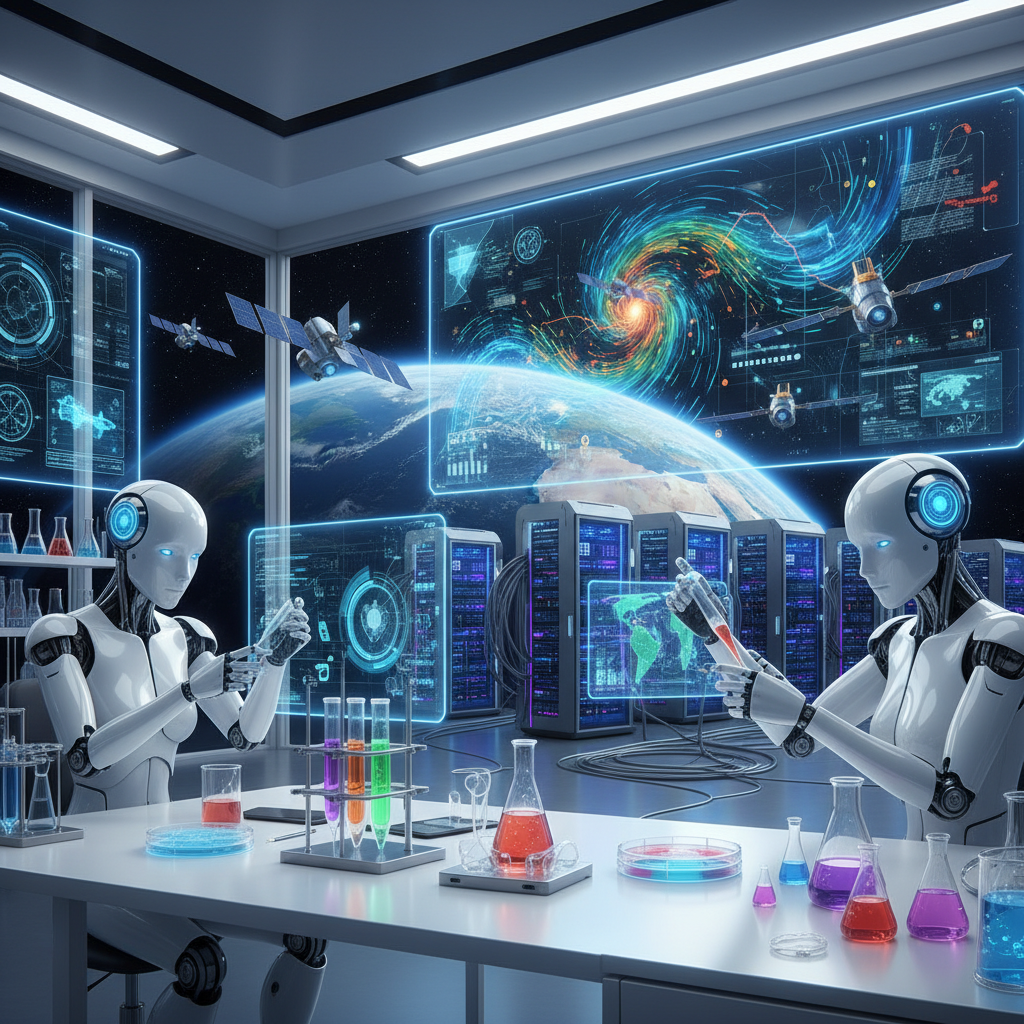
NVIDIA’s AI-powered lab robots and Earth-2 weather models revolutionize science and forecasting.
Elon Musk’s SpaceX and xAI merger signals an interstellar future, combining rockets, AI, and satellite networks.
Demand for memory chips surges, fueling this tech revolution.
Meta's AI investments and next-gen nuclear deals highlight the infrastructure powering AI’s growth.
Yet, rising AI-driven cyber threats call for vigilance in global security.
AI shapes a transformative future unfolding now.
Read more:
perplexity.ai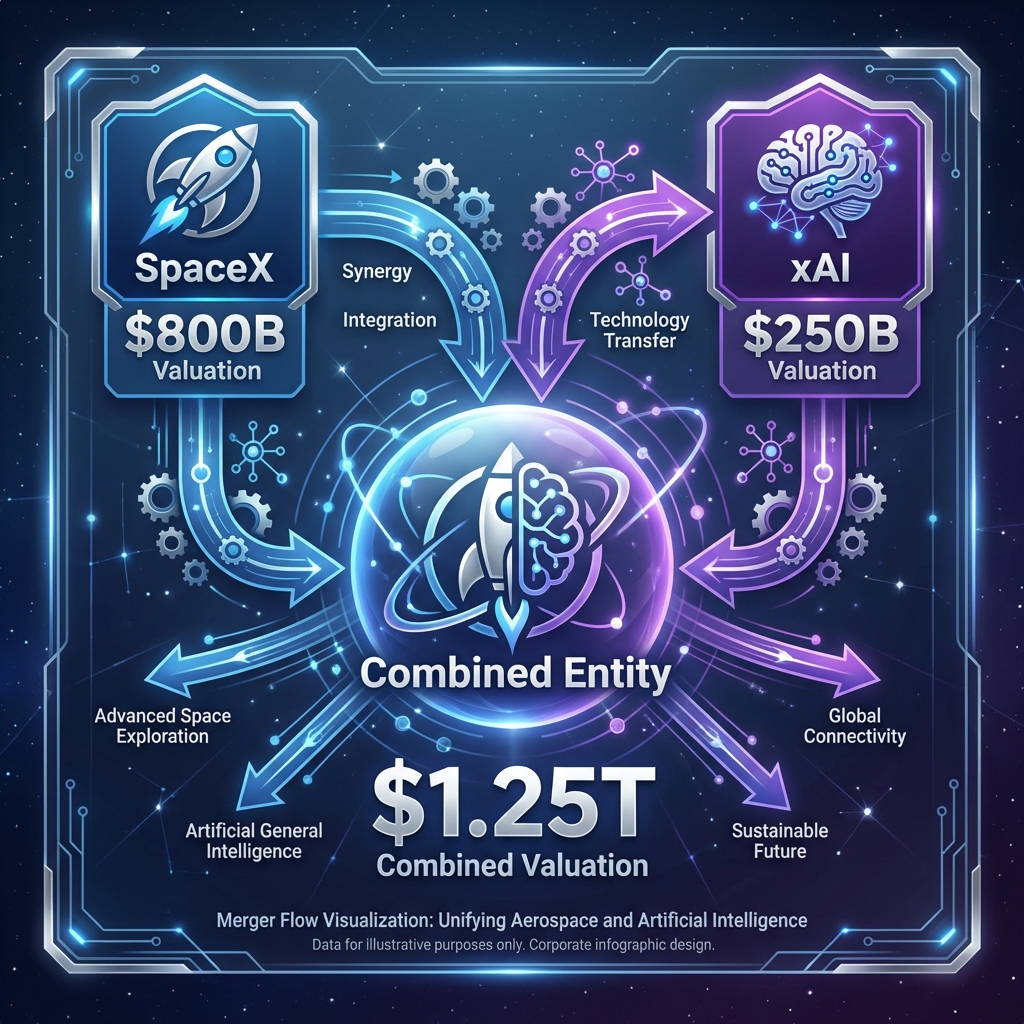
AI Ascendant: How the Tech Titans are Shaping Our Future in 2026
In the swirling maelstrom of technology's ever-accelerating pace, 2026 has already etched itself as a pivotal year where artificial intelligence ceases to be a distant dream and steps boldly into the fabric of daily life. The latest headlines reveal a landscape not just transformed by AI, but one where the boundaries between biology, space, climate, and cyber realms blur into a thrilling new era.
NVIDIA’s groundbreaking collaboration with Opentrons is nothing short of revolutionary. Imagine robots in physical labs, AI-powered to design and conduct biological experiments—this is science fiction becoming science fact. Their Earth-2 weather models open a new world in advanced forecasting that could redefine agriculture, energy management, and disaster response. The fusion of robotics and AI simulations to crack the secrets of biology signals a profound shift in how we approach research and innovation. It’s a reminder that AI’s promise transcends silicon chips and code—it’s about reshaping the tangible world around us.
Meanwhile, in the constellation of tech giants, Elon Musk’s strategic merger of SpaceX and xAI underscores a daring vision of the future. Rockets, AI, and space-based internet mesh to position Musk’s enterprises for a monumental IPO. SpaceX already dominates the launch scene with hundreds of Falcon 9 missions, while Starlink satellites spin up a global web of connectivity. Bringing AI directly into this cosmic equation isn't just business savvy; it’s a glimpse of an interstellar future where compute power and satellite networks are inseparable.
Back on terra firma, the race to fuel this new technological revolution has ignited intense demand for memory chips—DRAM, HBM, NAND—the lifeblood of AI operation. Micron, Western Digital, and SanDisk are riding this surge, their factories running full throttle to keep pace with the insatiable needs of AI systems. This chip crunch isn’t just industry news: it marks a foundational shift in global supply chains and investment priorities, with ripple effects that could redefine economic landscapes.
Meta Platforms, often a lightning rod for debate, is also riding the AI wave with vigor. Institutional investors are pouring in, betting big on Meta’s aggressive AI investments. Their bold moves, along with landmark deals for next-generation nuclear power to sustain energy-hungry data centers (hello TerraPower and Oklo, backed by Gates and Altman!), highlight how cutting-edge AI infrastructure requires massive, innovative support systems to thrive.
Yet amid this heady optimism, the World Economic Forum’s sober warning about escalating AI-driven cybersecurity threats reminds us that every leap forward invites new vulnerabilities. As AI grows smarter, so too do the cyber adversaries leveraging it—a digital arms race that will shape not just tech policy but global security.
In 2026, AI isn’t just a tool—it’s the architect of a new reality, rearranging the laboratory benches, orbiting satellites, boardrooms, and even our weather forecasts. The story of AI this year is one of bold reinvention, immense potential, and the energizing chaos that comes with transformation. For those watching the horizon, it’s a thrilling narrative of the future unfolding right now.
Questions and answers
Q: How AI is transforming technology in 2026
A: In 2026, AI continues to revolutionize technology by enabling more advanced automation, personalized user experiences, and smarter decision-making across industries. AI-powered systems drive innovation in healthcare, finance, and transportation, improving efficiency and outcomes. Additionally, AI advances in natural language processing and computer vision have made human-computer interactions more intuitive and seamless.
Q: NVIDIA and Opentrons collaboration
A: NVIDIA and Opentrons have partnered to enhance laboratory automation by integrating NVIDIA's powerful AI computing platforms with Opentrons' open-source robotic lab automation systems. This collaboration aims to accelerate scientific discovery by improving the speed, precision, and flexibility of automated experiments, particularly in biomedicine and molecular research. The partnership leverages AI to optimize experimental workflows and data analysis.
Q: SpaceX and xAI merger details
A: SpaceX and xAI have merged to combine aerospace innovation with advanced artificial intelligence research. This merger focuses on developing AI technologies that support space exploration, including autonomous spacecraft navigation and enhanced data processing from space missions. The integration allows for accelerated development of AI-driven solutions to address challenges in space travel and exploration.
Q: Memory chip demand for AI systems
A: The demand for memory chips has surged due to the rapid growth of AI systems, which require large amounts of high-speed memory to process vast datasets efficiently. AI applications, especially those involving deep learning and real-time analytics, rely on specialized memory components such as high-bandwidth memory (HBM) to handle intensive workloads. This trend is driving advancements in memory technology and increasing production capacities globally.
Q: Meta Platforms AI investments
A: Meta Platforms continues to invest heavily in AI research and development, focusing on advancing natural language processing, computer vision, and augmented reality technologies. These investments support Meta's goals of enhancing social media experiences, driving innovation in the metaverse, and developing AI systems that enable more personalized and immersive user interactions. Meta's AI initiatives are central to its long-term strategy for growth and technological leadership.
Key Entities
NVIDIA: NVIDIA is a leading technology company specializing in graphics processing units (GPUs) and AI computing. It plays a crucial role in powering advancements in machine learning, gaming, and autonomous systems.
Opentrons: Opentrons develops affordable, open-source lab automation robots aimed at transforming life science research. Their technology enables scientists to automate repetitive lab tasks with precision and ease.
SpaceX: SpaceX is an aerospace manufacturer and space transport company founded by Elon Musk, focusing on reducing space transportation costs. It has pioneered reusable rockets and plans ambitious missions to Mars.
xAI: xAI is a new artificial intelligence research company established by Elon Musk to explore AI development and safety. The company aims to contribute to understanding and advancing AI technologies.
Meta Platforms: Meta Platforms is the parent company of Facebook, Instagram, and WhatsApp, focusing on building social media and metaverse technologies. It invests heavily in virtual reality and AI to expand digital interaction.
External articles
- The role of AI and robotics in advancing space exploration ...
- Artificial Intelligence for Life in Space (AI4LS)
- AI advances robot navigation on the International Space Station
Articles in same category
- Orca Hunting, Universe Expansion, and Ovoviviparous Amphibians Insights
- Southern Italy vs Eastern Europe for Expats: Taxes, Cost, Climate & Lifestyle
- Privacy Issues and Risks of Meta Ray-Ban Smart Glasses in Sensitive Settings
YouTube Video
Title: SpaceX IPO & Starship: The Future of AI Launch?
URL: https://www.youtube.com/shorts/PLCAUMyuj6o
Technology