

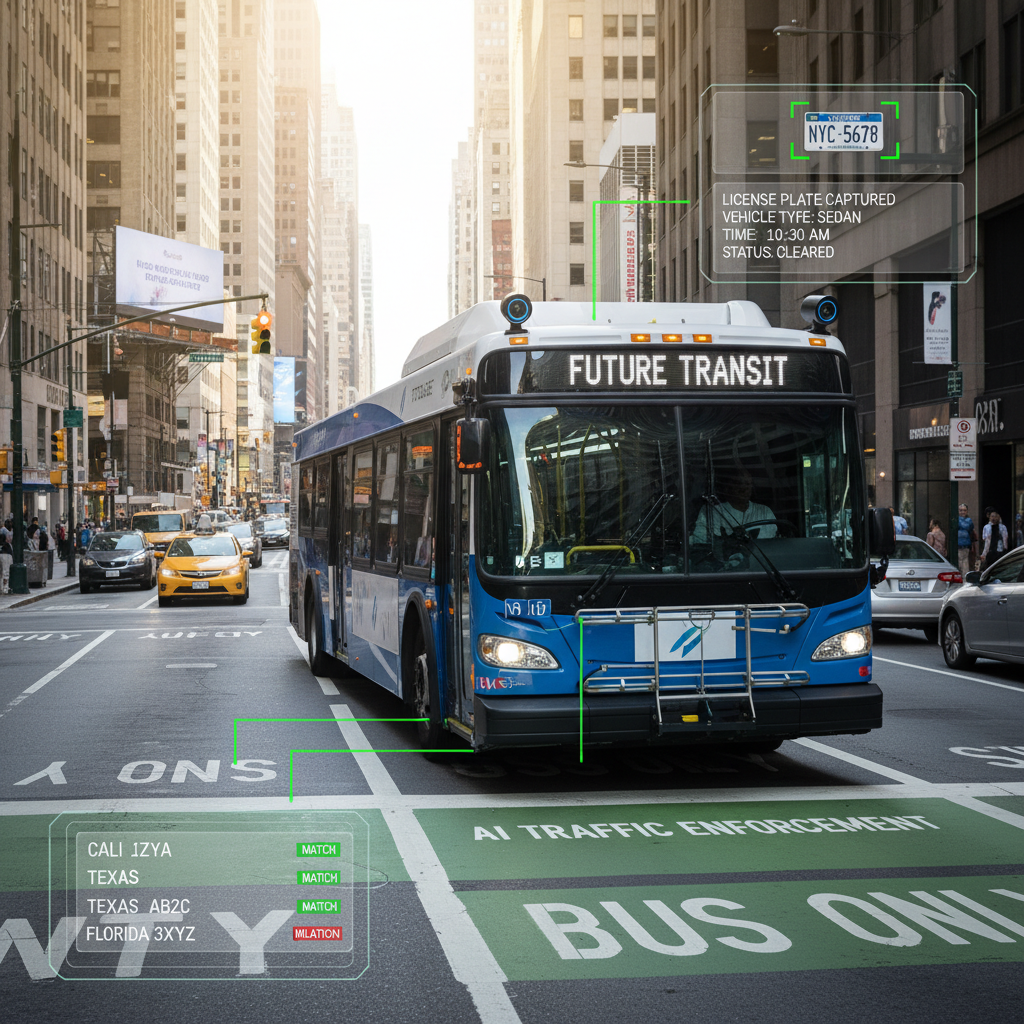
AI-Driven License Plate Recognition Enhances Bus Lane Enforcement and Traffic Management
Cities worldwide are adopting AI-driven license plate recognition (ALPR) technology to improve traffic enforcement, especially for bus lanes and illegal parking.
Pilot programs in Barcelona and Chicago demonstrate how AI-powered readers on city buses capture and analyze vehicle data in real-time to detect violations.
These initiatives highlight both operational benefits and challenges such as privacy concerns and the necessity for human oversight to ensure accuracy and maintain public trust.
Balancing AI efficiency with civil liberties remains crucial for successful deployment and enhanced urban mobility.
Frequently Asked Questions
Q: How does AI ticket bad drivers
A: AI systems can ticket bad drivers by using cameras and sensors combined with machine learning algorithms to detect traffic violations such as speeding, running red lights, or illegal turns. These systems analyze the captured data in real-time or from recorded footage, identify vehicles breaking traffic laws, and automatically issue tickets by linking license plate information to registered owners. This technology helps improve traffic safety and enforcement efficiency without requiring constant human monitoring.
Q: Cities using AI for traffic enforcement
A: Several cities worldwide are implementing AI technology for traffic enforcement to improve road safety and reduce violations. For example, London uses AI-powered cameras to detect speeding and illegal parking, while Los Angeles employs AI to monitor traffic flow and identify red-light violations. In India, cities like Bengaluru have adopted AI-based systems to automatically recognize traffic rule breaches and issue fines. These AI systems help law enforcement agencies manage traffic more effectively and enhance public safety by enabling real-time, accurate detection of violations.
Q: Hayden AI bus lane enforcement
A: Hayden AI's bus lane enforcement technology uses advanced artificial intelligence and computer vision to monitor and detect unauthorized vehicles driving or parking in bus lanes. Their system helps cities improve traffic flow and ensure bus lanes remain clear for public transit, increasing overall transportation efficiency. By capturing real-time violations, Hayden AI enables automated enforcement and supports local authorities in issuing fines or warnings, promoting compliance and safer road usage.
Q: Chicago AI parking ticket system
A: Chicago has implemented an AI-driven parking ticket system designed to automate the detection of parking violations through cameras and sensors. This technology helps streamline the enforcement process by accurately identifying infractions, such as expired meters or illegal parking zones, reducing human error and increasing efficiency. The system issues tickets based on AI analysis, which can be challenged by vehicle owners if they believe an error has occurred. The adoption of AI in parking enforcement aims to improve city revenue collection and promote better compliance with parking regulations.
Q: Problems with AI traffic tickets
A: AI-generated traffic tickets face several issues, including inaccuracies in identifying violations, misreading license plates, or misclassifying vehicle movements. These errors can lead to wrongful citations, causing inconvenience or financial penalties for innocent drivers. Additionally, the lack of transparency in how AI systems operate can make it difficult for recipients to challenge or appeal tickets. Privacy concerns also arise due to extensive video or sensor monitoring involved in issuing such tickets.
Key Entities
City of Barcelona: The City of Barcelona is the capital of Catalonia and a major urban center in Spain known for its rich history, culture, and architecture. It is actively involved in integrating smart city technologies to improve urban mobility and sustainability.
Chicago Transit Authority (CTA): The Chicago Transit Authority (CTA) operates the public transportation system in Chicago, including buses and the 'L' train network. It is one of the largest transit systems in the United States and often pioneers new technologies to enhance rider safety and efficiency.
Hayden AI: Hayden AI is a technology company specializing in AI-driven traffic and parking enforcement solutions. Its systems use artificial intelligence to increase accuracy and efficiency in urban traffic management.
Brandon Johnson: Brandon Johnson is the Mayor of Chicago, elected to lead the city and oversee its public services and policies. He has expressed support for the modernization of transit systems and urban infrastructure.
Laia Bonet: Laia Bonet is the Deputy Mayor of Barcelona, responsible for areas including urban planning and sustainability. She plays a significant role in advancing Barcelona’s smart city initiatives.
External articles
- ARTIFICIAL INTELLIGENCE IN PUBLIC TRANSPORT
- Transit systems turn to AI to catch drivers who block bus ...
- The ticket bot cometh: city is recording drivers that AI says ...
Articles in same category
- NIU Concept 06 Electric Maxi Scooter: Smart, Safe, and Sustainable Urban Mobility
- Tesla's Advertising Shift: Promoting Corporate Governance and Musk's Compensation
- Kia Boosts EV Production in Europe with New EV2 and EV4 Models
YouTube Video
Title: Some CTA buses to use new AI cameras to capture video of bus and bike lane parking violators
Channel: ABC 7 Chicago
URL: https://www.youtube.com/watch?v=voJp8BPi9bM
Published: 1 month ago
Energy