

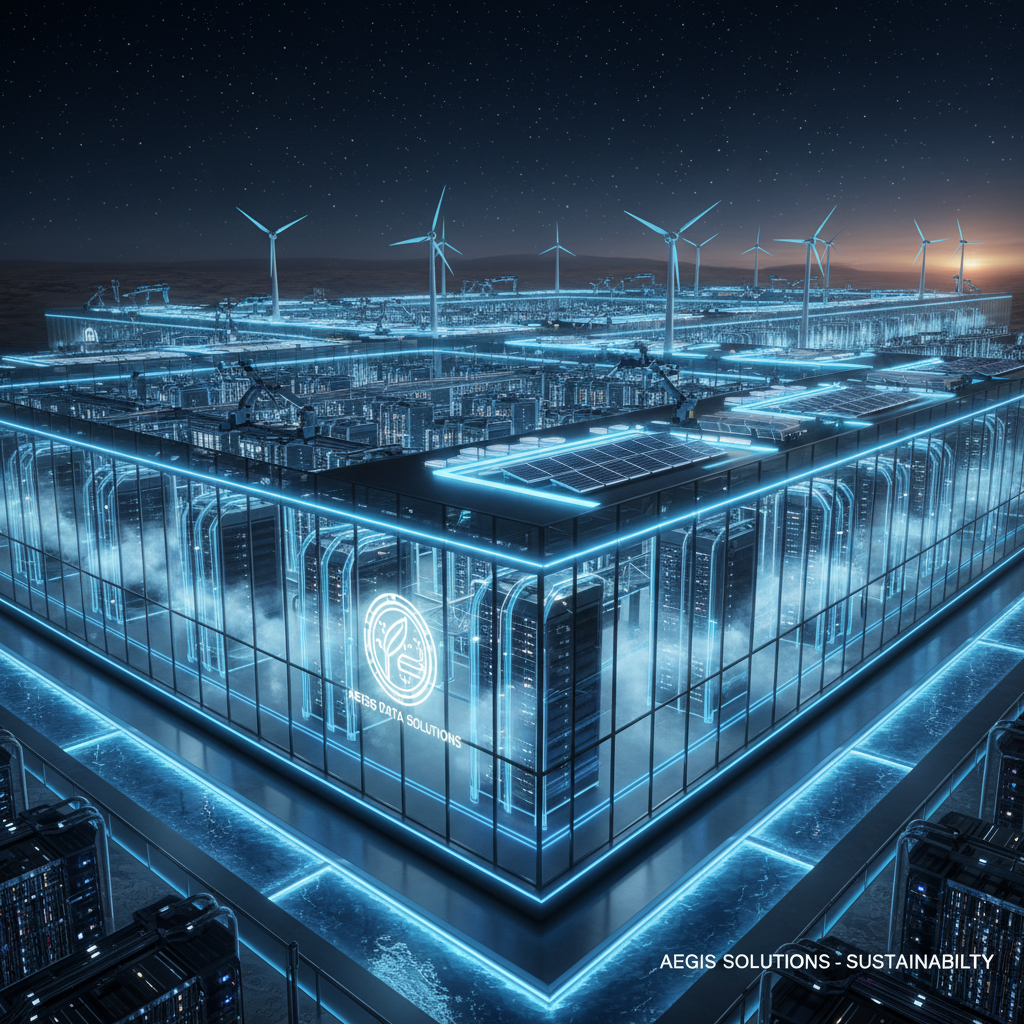
AI Infrastructure Boom: Powering Growth Amid Energy and Regulatory Challenges
As the digital world surges forward, a silent revolution is reshaping the very backbone of technology: AI infrastructure.
Data centers powering AI face soaring energy demands and environmental scrutiny, fueling innovation in sustainable power sources like nuclear and geothermal.
Cloud giants race to develop custom AI chips, deepening tech dependencies amid rising geopolitical tensions.
Governments worldwide are stepping up regulation to balance AI innovation with safety and accountability.
Meanwhile, cybersecurity threats escalate, prompting AI-driven defenses, while consumer devices gain smarter on-device AI to enhance privacy and personalization.
The AI boom demands thoughtful navigation for a sustainable future.
Read more:
perplexity.aiSummary

The AI Infrastructure Boom: Powering a New Era Amid Global Challenges
As the digital world surges forward, a silent revolution is reshaping the very backbone of technology: AI infrastructure. The global tech markets are currently electrified by a sprawling expansion of data centers — those sprawling hubs of silicon and servers where artificial intelligence dreams come alive. Yet, this rapid growth comes with a paradox as vivid as the glow of cooling towers at midnight: more power, more heat, and an escalating energy crunch that demands urgent innovation.
Across continents, major cloud and AI giants are doubling down on their commitments to build out capacity, driving an insatiable thirst for chips, electricity, and advanced cooling techniques. This is no ordinary tech sprint; it’s a sprint against the clock — and environmental consequence. Regulators are in hot pursuit, scrutinizing the environmental footprint and the strain on energy grids, demanding that these behemoth data centers evolve with sustainability at their core.
To shoulder these rising demands, companies are venturing beyond the usual energy sources. Nuclear power, geothermal wells, and even gas plants equipped with carbon capture technologies are being eyed as lifelines to sustain AI workloads without derailing the planet’s climate goals. The stakes are colossal: in just a few years, energy consumption from data centers is projected to soar like never before, making the issue one that transcends technology and touches every global citizen.
Meanwhile, this infrastructure push feeds into another dynamic front: the chip wars and the evolving landscape of cloud computing. Leading cloud providers are not just waiting for silicon to trickle in—they’re crafting custom AI accelerators and mapping out ambitious futures for hardware that will turbocharge AI applications while trying to keep costs lean. This escalating race deepens alliances and rivalries as developers find themselves weaving tighter into specific cloud ecosystems, signaling a new chapter of tech dependency and innovation.
Yet, with great power comes the equally great need for control. Governments worldwide—from the US to the EU and Asia—are accelerating efforts to regulate AI, particularly its foundational models and online safety risks. They seek a delicate balance: fostering breakthroughs without allowing the technology’s vast potential to run amok unchecked. Transparency, safety, and corporate accountability are now watchwords that define this high-stakes policy battleground.
In this shifting terrain, cybersecurity has also become a frontline concern. The weaponization of generative AI by malicious actors has given rise to smarter phishing schemes and faster threat development. Enterprises are countering with AI-driven defenses and automated incident responses, turning the technology’s double-edged nature into a relentless cycle of attack and defense.
For consumers, the AI megatrend is no longer distant or purely digital. Devices from smartphones to wearables are increasingly infused with on-device AI capabilities, promising smarter personalization and reduced cloud reliance—all while safeguarding user privacy, a growing priority in these interconnected times.
Behind the scenes, venture capital is following the pulse of innovation, funneling investments into AI infrastructure startups, developer tools, and intelligent agents that promise to redefine productivity, security, and industry-specific applications. The AI era isn’t just arriving—it’s reshaping the very landscape of technological progress and ambition.
The AI infrastructure boom paints a vivid tableau of a future electrified by incredible promise and daunting challenges alike. For businesses, policymakers, and consumers, it’s a clarion call to navigate these changes thoughtfully, ensuring that the surge of AI power is matched by responsibility, foresight, and sustainable vision.
Questions and answers
Q: AI infrastructure energy consumption challenges
A: AI infrastructure requires significant computational power, which leads to high energy consumption. The challenge lies in managing this demand sustainably as training large AI models and running extensive data centers consume vast amounts of electricity. This creates concerns about carbon emissions and operational costs, pushing industries to seek more energy-efficient hardware and optimization techniques.
Q: Sustainable data center technologies
A: Sustainable data center technologies focus on reducing environmental impact through energy-efficient design and renewable energy use. Innovations include advanced cooling systems, such as liquid cooling and free-air cooling, which reduce energy needed for temperature control. Additionally, the integration of solar and wind power alongside better power management software helps data centers decrease their carbon footprints.
Q: Impact of AI on global energy grids
A: AI impacts global energy grids by increasing electricity demand due to its computational needs, especially in sectors like cloud computing and autonomous systems. However, AI also offers solutions to optimize energy usage through smart grid management, predictive maintenance, and demand forecasting. This dual role makes AI both a challenge and a tool for enhancing the efficiency and stability of global energy infrastructure.
Q: Latest trends in cloud AI hardware
A: The latest trends in cloud AI hardware include the adoption of specialized processors like GPUs, TPUs, and custom AI accelerators designed to improve performance and energy efficiency. Providers are focusing on hardware optimized for machine learning tasks, enabling faster training and inference while reducing costs. Additionally, edge computing integration and hardware modularity are growing trends to support scalable and flexible AI deployments in the cloud.
Q: Government regulations on AI technology
A: Government regulations on AI technology aim to ensure ethical use, privacy protection, and safety in AI development and deployment. Many countries are implementing frameworks that address bias mitigation, transparency, and accountability while fostering innovation. Regulations often focus on areas such as data governance, AI in critical sectors, and the potential societal impacts of autonomous systems to balance technological progress with public interest.
Key Entities
US: The United States is a global superpower with significant economic, political, and military influence worldwide. It frequently engages with the European Union and Asia on issues such as trade, security, and technological development.
EU: The European Union is a political and economic union of 27 European countries that coordinates policies on trade, regulation, and foreign affairs. It plays a pivotal role in shaping international agreements and collaborations with the US and Asian nations.
Asia: Asia is the largest and most populous continent, home to diverse economies ranging from emerging markets to global powerhouses like China, Japan, and India. It is a central player in global trade and geopolitical dynamics, influencing relations with both the US and the European Union.
External articles
- AI has an environmental problem. Here's what the world ...
- Explained: Generative AI's environmental impact
- Sustainability of AI infrastructure
Articles in same category
- Orca Hunting, Universe Expansion, and Ovoviviparous Amphibians Insights
- Southern Italy vs Eastern Europe for Expats: Taxes, Cost, Climate & Lifestyle
- Privacy Issues and Risks of Meta Ray-Ban Smart Glasses in Sensitive Settings
YouTube Video
Title: AI Infrastructure Surge, Who Wins in 2026. #markettrends #ai #chips
URL: https://www.youtube.com/shorts/2P6maR8YGuU
Technology